Best Rechargeable Lantern for Power Cuts UK: Top Picks
Last updated: 21 October 2026
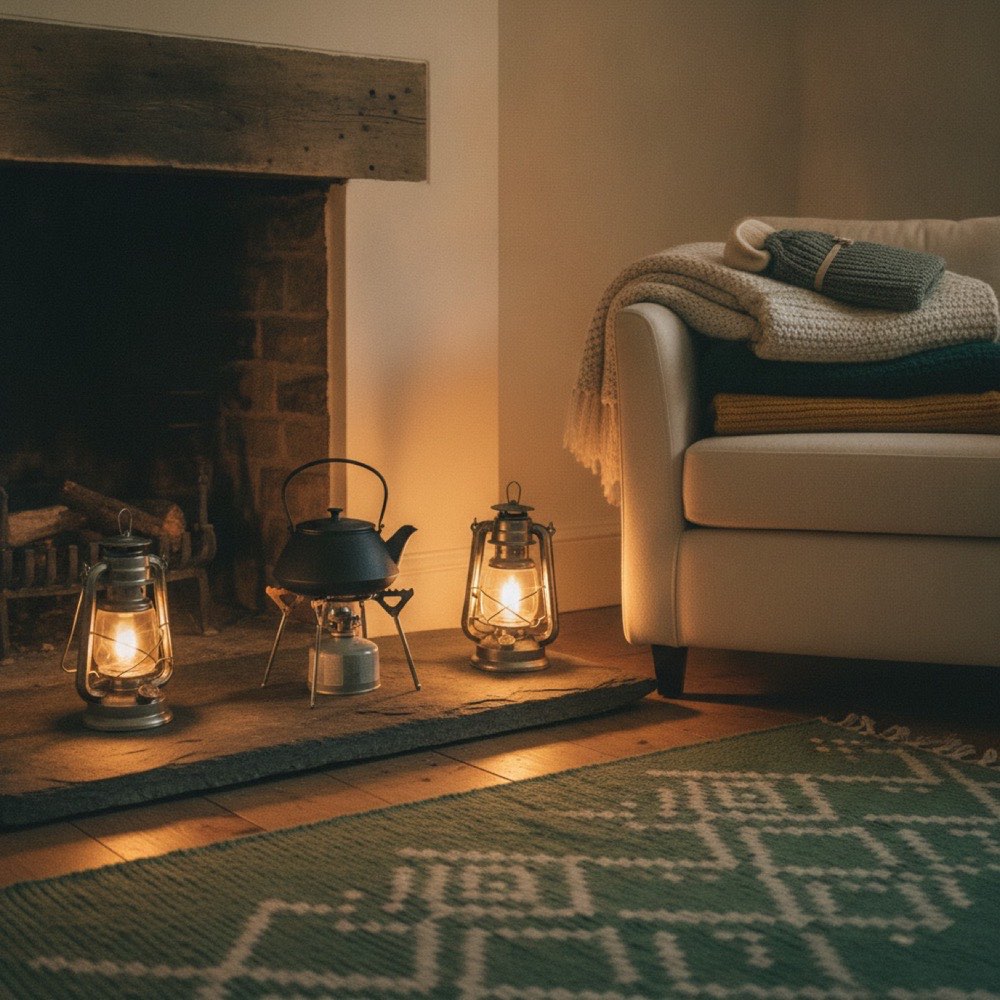
A rechargeable lantern is the most convenient way to light a room when the power goes off: no spare cells to hunt for, a USB port to top it up from, and in most cases a power bank function that puts some charge back into your phone. This guide compares the rechargeable lanterns genuinely available on amazon.co.uk right now, using only the runtime and capacity figures the manufacturers actually publish, and is specific to USB rechargeable models. If you want the full picture across every type of emergency light, start with our umbrella guide to the best emergency lights for a power cut.
| Pick | Model | Why | |
|---|---|---|---|
| Best Overall | Ledlenser ML6 Rechargeable LED Lantern | Ledlenser is a German lighting specialist and the ML6 is the lantern the rest of the category gets measured against. The headline figure is 750 lumens, which will light a kitchen properly, but the useful number for a power cut is the other end of the dial: run it low and the published rating stretches to around 200 hours, which covers even a multi day outage with room to spare. The hook, the base magnet and the power bank output make it genuinely useful rather than just bright. | Check price |
| Best for Family Rooms | BioLite AlpenGlow 500 Rechargeable Lantern | The AlpenGlow is built around diffused, even light rather than a single harsh point, which matters more than it sounds when a family is sitting around it for an evening. BioLite publishes clear figures: 6,400mAh of battery, five hours flat out, up to 200 hours on the low setting, plus an hour of reserve once the battery warning appears. The warm white modes make a dark living room feel normal rather than like a building site, and the USB A port returns a meaningful chunk of charge to a phone. | Check price |
| Best Battery Capacity | Fenix CL30R Rechargeable Camping Lantern | The CL30R takes the simple route to long runtime: more battery. Three 18650 cells give it the largest energy reserve of any pick here, which is why Fenix can publish a maximum runtime of around 300 hours and why it works properly as a power bank rather than offering a token top up. The cells are user replaceable, so when they eventually age you fit fresh ones instead of binning the lantern, and IPX7 means genuine immersion resistance rather than splash proofing. | Check price |
| Best Looking in the House | Olight Olantern Classic 2 Pro | Most emergency lanterns look like site equipment. The Olantern Classic 2 Pro is styled like an old paraffin lamp, dims steplessly with a turn of the knob, and sits happily on a shelf as an everyday object, which means it is far more likely to be charged and within reach when the lights actually go out. Olight publishes a runtime of up to seven and a half days on the lowest setting, it recharges over standard USB C, and it carries both USB C and USB A outputs for phones. | Check price |
Why a rechargeable lantern is the right first light for a power cut
When the electricity goes off, the two jobs that matter are lighting the room people are in and keeping phones alive for updates from your network operator. A good rechargeable lantern does both. Unlike a torch it lights a whole room hands first, unlike candles it cannot start a fire, and unlike disposable battery lights it never leaves you rummaging for D cells at eleven at night.
The trade off is obvious and worth saying plainly: a rechargeable lantern is only as good as the charge it holds when the power fails. That is why runtime figures and charging habits take up so much of this guide, and why most households are best served by a rechargeable lantern as the main light plus at least one backup that does not depend on remembering to charge anything. We cover those backups in our guides to battery powered lights for power cuts and the best wind up torches.
This page is deliberately specific to USB rechargeable lanterns. For the wider category, including head torches, plug in lights and the overall strategy for lighting a home through an outage, our umbrella guide to the best emergency lights for a power cut is the place to start.
How we chose these rechargeable lanterns
This is specification research, not a laboratory test. Every pick had to clear four gates. First, current availability on amazon.co.uk, confirmed at the time of writing. Second, published figures only: every lumen, milliamp hour and runtime claim above comes from the manufacturer's own specification sheet or listing, and where a maker does not publish a number we say nothing rather than guessing. Third, a genuinely useful low mode, because the difference between a lantern that lasts five hours and one that lasts a week is almost always the quality of its lowest setting. Fourth, build quality from an established lighting brand, because a lantern that fails in month thirteen is worse than no lantern at all: you believed you were covered.
One well known name is missing deliberately. The Goal Zero Lighthouse 600 is a strong lantern on paper, but it showed as unavailable on amazon.co.uk when this guide was researched, and a recommendation you cannot buy is not a recommendation.
Rechargeable lantern runtime explained: what the numbers really mean
Manufacturers quote runtime at the lowest brightness setting because it produces the biggest number. That is not dishonest, but you need to read it correctly.
- High mode figures tell you how long the lantern can light a room properly: cooking, finding things, keeping children calm. For the BioLite AlpenGlow 500 that is a published five hours at 500 lumens. Treat high mode as something you use in bursts.
- Low mode figures tell you how long the lantern can hold a background glow: enough to move around safely and keep a room from feeling pitch black. This is where the 200 and 300 hour claims come from, and they are real, but at outputs of just a few lumens.
- The practical pattern for a typical UK outage of a few hours is an hour or two of medium light in the room you gather in, then low mode overnight. On that pattern every lantern on this page covers several days of disruption on one charge.
A sensible rule of thumb: pick the lantern whose published high mode runtime covers one full evening, because everything after that is handled comfortably by the lower settings. Compare the current options side by side here: Check price on Amazon.
The charging habit that makes or breaks a rechargeable lantern
Lithium batteries self discharge slowly, a few percent a month, and a lantern bought three winters ago and never touched since may greet the next power cut half flat. The fix costs nothing: put a recurring reminder in your phone to top up your emergency lights on the first of every other month. Ten minutes on a USB charger each time keeps every lantern here effectively full for life.
Two more habits worth building. Store the lantern with its cable: the Ledlenser ML6 in particular uses a magnetic proprietary connector, and the lantern is useless for recharging without it. And keep the lantern somewhere you can find in the dark, which sounds obvious and is ignored in most homes: a fixed spot in the kitchen or hallway, the same spot forever.
If your preparedness stretches to a portable power station, a rechargeable lantern pairs naturally with it: the lantern handles light at a few watts while the station keeps the router and phones going. Our guide to the best portable power stations covers that side of the setup, and how to prepare for a power cut puts the whole plan together.
Lantern as power bank: how much phone charge do you really get?
Every pick on this page can push charge back out to a phone, but the honest answer on how much varies widely with battery size.
The BioLite AlpenGlow 500 publishes its capacity plainly: 6,400mAh, with a 2.4A USB A output. Allowing for conversion losses, that is roughly one full charge of a typical smartphone if you sacrifice most of the lantern's own runtime, or a useful partial top up if you want to keep the light going too. The Fenix CL30R carries three 18650 cells, the largest reserve here, which is why it is the pick if the power bank role matters as much as the light. The Olight gives you the convenience of both USB C and USB A outputs, and the Ledlenser's output is best treated as an emergency top up rather than a full recharge.
The sensible framing: a lantern's power bank port is for keeping one phone alive for emergencies and network operator updates, not for running a household's devices. If phone charging through longer outages is a priority, a dedicated power bank or power station does that job far better, and the lantern goes back to doing what it is best at. See the full breakdown in our portable power station guide.
Rechargeable vs battery vs wind up: building lighting layers
No single light type is the whole answer, and the households that ride out power cuts most comfortably run two or three layers.
Layer one: a rechargeable lantern
The main room light and the one you will actually use, for the reasons this whole page covers. Biggest strength is convenience, biggest weakness is that it must be charged in advance.
Layer two: disposable battery lights
AA and D cell lanterns and stick on lights hold their charge in the drawer for years, so they cover the scenario where the rechargeable lantern was left flat. Alkaline and lithium cells have shelf lives measured in five to ten years or more. Our dedicated guide to battery powered lights for power cuts covers this layer properly.
Layer three: a wind up torch
The light of last resort that works with zero preparation, at the cost of effort and modest output. A minute of cranking buys minutes of light, not hours, which is exactly why it belongs at layer three and not layer one. The honest assessment lives in our guide to the best wind up torches.
For how lighting fits alongside heat and cooking in a longer outage, see heating, cooking and lighting off mains, and for the full cupboard checklist, the emergency kit list.
What to look for when buying a rechargeable lantern for power cuts
If you shop beyond the picks above, these are the specifications that separate a good power cut lantern from a camping toy.
- A published low mode runtime. If the maker will not state it, assume it is poor. Anything above 100 hours on low is genuinely useful.
- USB C charging where possible, because it is the cable you already have everywhere. Of our picks only the Olight charges over USB C; the micro USB and proprietary connectors on the others are their one shared weakness.
- A warm light option. Cool white light at night in a powerless house is unpleasant. Warm modes on the BioLite and Olight make a real difference to how an evening feels.
- A hook and a flat base. A lantern you can hang from a door handle or cupboard knob lights a room far better than one sat at table height.
- Replaceable cells if you want the lantern to last a decade: the Fenix CL30R's three 18650s can be swapped when they age.
Browse the current field here: Check price on Amazon, or jump straight to the strongest all rounder: Check price on Amazon.
The picks in detail
Best Overall: Ledlenser ML6 Rechargeable LED Lantern
Up to 750 lumens, rechargeable lithium battery in the 18650 format, rated up to 200 hours on the lowest setting, magnetic charging connector, power bank function, rubber hook and base magnet for mounting
Ledlenser is a German lighting specialist and the ML6 is the lantern the rest of the category gets measured against. The headline figure is 750 lumens, which will light a kitchen properly, but the useful number for a power cut is the other end of the dial: run it low and the published rating stretches to around 200 hours, which covers even a multi day outage with room to spare. The hook, the base magnet and the power bank output make it genuinely useful rather than just bright.
Worth knowing: The magnetic charging cable is proprietary, so keep it with the lantern or a standard USB lead will not help you. The warm light version is sold separately, so check which tint you are ordering.
Best for Family Rooms: BioLite AlpenGlow 500 Rechargeable Lantern
500 lumens maximum, 6,400mAh lithium ion battery, published runtime 5 hours on high and up to 200 hours on low, USB A output at 2.4A for charging devices, IPX4 splash resistance, 380g
The AlpenGlow is built around diffused, even light rather than a single harsh point, which matters more than it sounds when a family is sitting around it for an evening. BioLite publishes clear figures: 6,400mAh of battery, five hours flat out, up to 200 hours on the low setting, plus an hour of reserve once the battery warning appears. The warm white modes make a dark living room feel normal rather than like a building site, and the USB A port returns a meaningful chunk of charge to a phone.
Worth knowing: It charges over micro USB rather than USB C, which feels dated and means one more cable type to keep track of. IPX4 is splash resistance only, fine indoors and under a porch, not for sitting out in rain.
Best Battery Capacity: Fenix CL30R Rechargeable Camping Lantern
650 lumens maximum from three 18650 lithium ion cells, published runtime up to 300 hours on the lowest setting, power bank discharge port, tripod mount, IPX7 water resistance
The CL30R takes the simple route to long runtime: more battery. Three 18650 cells give it the largest energy reserve of any pick here, which is why Fenix can publish a maximum runtime of around 300 hours and why it works properly as a power bank rather than offering a token top up. The cells are user replaceable, so when they eventually age you fit fresh ones instead of binning the lantern, and IPX7 means genuine immersion resistance rather than splash proofing.
Worth knowing: It is the heaviest lantern here by a distance, so it suits a fixed spot on the kitchen table rather than a grab bag. Charging is over micro USB and a full charge of three cells takes a long evening.
Best Looking in the House: Olight Olantern Classic 2 Pro
300 lumens maximum with stepless dimming down to 10 lumens, warm white and orange flame effect light, USB C charging with a published full charge of about 4 hours, runtime up to 7.5 days on the lowest setting, USB C and USB A power bank outputs
Most emergency lanterns look like site equipment. The Olantern Classic 2 Pro is styled like an old paraffin lamp, dims steplessly with a turn of the knob, and sits happily on a shelf as an everyday object, which means it is far more likely to be charged and within reach when the lights actually go out. Olight publishes a runtime of up to seven and a half days on the lowest setting, it recharges over standard USB C, and it carries both USB C and USB A outputs for phones.
Worth knowing: 300 lumens is the lowest maximum output here, plenty for a dining table but not a room flooder. You are paying a premium for the design.
Your questions, answered
What is the best rechargeable lantern for power cuts in the UK?
On published specifications the Ledlenser ML6 is the strongest all rounder: up to 750 lumens when you need real light, a rated 200 hours on its lowest setting, a power bank output and mounting options via hook and magnet. The BioLite AlpenGlow 500 is the better choice where warm, diffused light for a family room matters more than maximum output.
How long does a rechargeable lantern last in a power cut?
On manufacturer figures, between 5 hours flat out and 200 to 300 hours on the lowest settings. A realistic mixed pattern, a couple of hours of proper light in the evening then a low glow overnight, sees every lantern in this guide through several days of disruption on one charge. Most UK power cuts are restored within a few hours.
Can a rechargeable lantern charge my phone during a power cut?
The lanterns in this guide all offer a power bank output. The BioLite AlpenGlow 500 carries a published 6,400mAh battery, roughly one smartphone charge if you use most of it, and the Fenix CL30R holds three 18650 cells for a larger reserve. Treat the feature as an emergency top up for one phone rather than a replacement for a dedicated power bank.
How often should I recharge an emergency lantern that is not being used?
Top it up every two months. Lithium batteries lose a few percent of charge per month sitting idle, so a lantern charged once and forgotten can be well down after a year. A recurring phone reminder and ten minutes on a USB charger keeps it ready permanently.
Is a rechargeable lantern better than a battery powered one for power cuts?
They solve different problems and the best setups use both. A rechargeable lantern is more convenient, usually brighter and cheaper to run, but it must be charged in advance. A disposable battery lantern sits ready in a drawer for years. Keep a rechargeable lantern as your main light and a battery light as the backup that cannot be caught flat.
Are candles a sensible alternative to a lantern in a power cut?
Fire services consistently advise battery or rechargeable lighting over candles during power cuts because unattended flames in a dark, disrupted house are a genuine fire risk. A lantern on its lowest setting outlasts a candle many times over and can be left with children or pets in the room.
What is the difference between this page and your emergency lights guide?
The emergency lights guide is the umbrella: it covers every category including head torches, plug in auto on lights and fixed options, and helps you build a whole home lighting plan. This page goes deep on one category, USB rechargeable lanterns, for readers who already know that is the type they want.