Battery Powered Lights for Power Cut UK: Best Picks
Last updated: 21 October 2026
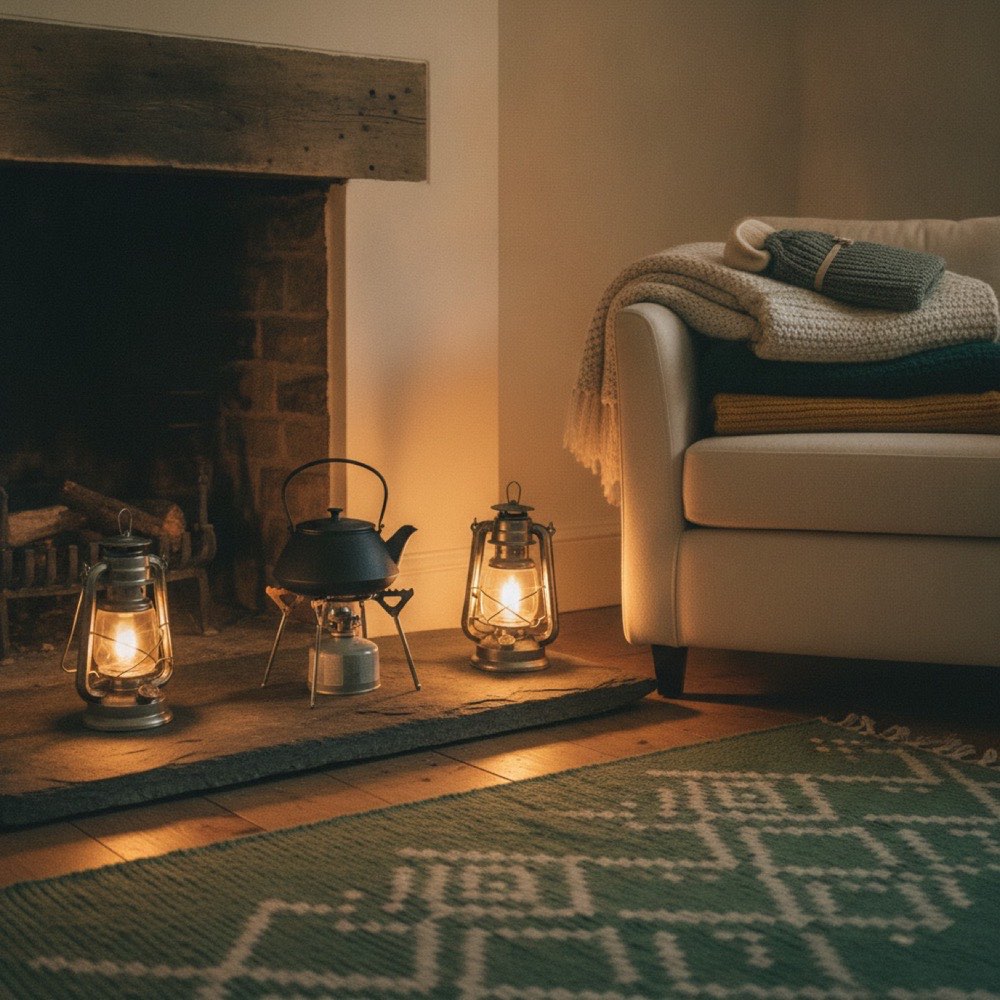
Rechargeable lanterns are convenient right up until the night you discover nobody charged one. Battery powered lights are the layer that cannot be caught out: a D cell lantern with a fresh set of cells will sit in a cupboard for five years and light first time, because the shelf life of a disposable battery is measured in years, not weeks. This guide covers the battery lanterns worth owning, which battery standard to build around, plus the stick on and plug in auto on lights that round out a UK home, with every product verified on amazon.co.uk and every runtime taken from the manufacturer's own figures.
| Pick | Model | Why | |
|---|---|---|---|
| Best Overall | Energizer LED Lantern X1500 (2 Pack) | One lantern lights one room, and a power cut happens to your whole house. This twin pack puts serious output, 1500 lumens apiece, at both ends of the home for the sort of money a single premium lantern costs, and the big D cell format is exactly right for the role: enormous energy reserve, ten year shelf life on quality alkaline cells, and no charging schedule to remember. Fit fresh cells, note the date, and forget about them. | Check price |
| Best Single Lantern | Coleman 1000L LED Lantern with BatteryGuard | Coleman's BatteryGuard system answers the classic failure of stored battery lanterns, the slow parasitic drain and leaked cells that greet you after two years in a cupboard, by disconnecting the batteries completely when the lantern is off. For a light whose entire job is to wait, that is the single most relevant feature in the category, and with 1000 lumens on tap and four modes it has the output and flexibility to serve as a household's main power cut light on its own. | Check price |
| Best Premium AA Lantern | Fenix CL23 AA Powered Camping Lantern | The CL23 is what a battery lantern looks like when a torch specialist builds it. The published runtime table is unusually honest and unusually long, up to 350 hours on its night light setting, and the clever part is flexibility: it runs on three AA cells for full performance but will still light on just one or two, so a part used packet of batteries is never a dead end. IP66 sealing and a pocketable 139g make it the one battery lantern here that also belongs in a car or a grab bag. | Check price |
Why battery powered lights still matter in a rechargeable world
The case for disposable battery lighting comes down to one word: readiness. A rechargeable lantern is better on nearly every other measure, brighter for its size, cheaper per hour of light, nicer to use, but it depends entirely on someone having charged it. A battery lantern with a sealed set of quality cells depends on nothing. Alkaline D and AA cells from the major brands carry shelf lives of around ten years, and AA lithium cells such as Energizer Ultimate Lithium are rated by the manufacturer for up to twenty years in storage. No charging rota, no cable, no habit required.
That is why the sensible UK home runs both: a rechargeable lantern as the everyday first choice, covered in our guide to the best rechargeable lanterns for power cuts, and battery lights as the layer underneath that cannot be caught flat. The umbrella view of every lighting type, including head torches and fixed options, lives in our guide to the best emergency lights for a power cut.
How we chose these battery powered lights
This is specification research, not a bench test. Each pick had to be listed and purchasable on amazon.co.uk at the time of writing, had to come from an established brand with a track record in lighting, and had to publish real runtime figures, which we quote as stated rather than rounding up. We favoured lights whose design acknowledges their actual job, waiting in storage: Coleman's BatteryGuard circuit disconnect exists precisely because stored lanterns drain and corrode cells, and Fenix's ability to run on one, two or three AA cells exists because real drawers contain odd numbers of batteries.
We also applied a price floor to the main picks and kept the genuinely cheap items, stick on lights and plug in auto on lights, in the advice sections below instead, because they belong in your plan but they are pocket money purchases you can judge for yourself.
AA or D batteries: which standard should your power cut kit use?
The quiet decision that shapes a battery lighting kit is which cell size you standardise on.
The case for D cells
Energy. A D cell holds several times the capacity of a AA, which is how a three D lantern like the Energizer X1500 sustains serious output for a whole evening and modest output for days. For a lantern that lives in one spot and lights a family room, D is the right format.
The case for AA
Ubiquity. Your house already runs on AA, remotes, clocks, toys, so spares rotate naturally and never expire unused, and the same packet feeds your lantern, your head torch and your radio. The Fenix CL23 exists exactly for this logic.
The practical answer
Standardise on AA for everything portable, accept D for one or two static room lanterns, and never buy a light that takes anything more exotic. Then hold spares properly: a ten pack of AA and a six pack of D, stored in their packaging at room temperature, replaced when the printed expiry approaches. Lithium AA cells cost more but hold their charge longest and handle cold storage best: Check price on Amazon.
Battery shelf life: the numbers that make this strategy work
The whole disposable battery strategy rests on shelf life, so here are the figures the manufacturers publish. Mainstream alkaline cells from Energizer and Duracell are rated to hold their charge for around ten years in storage. Energizer Ultimate Lithium AA cells are rated for up to twenty years. Zinc carbon cells, the cheap ones in bargain multipacks, are rated far lower and are the false economy of this category: they leak more readily and fade faster, which is exactly what you cannot afford in a light whose job is to wait.
Three storage rules keep the rated numbers real. Keep cells in their original packaging until needed, because loose cells in a drawer can short against keys and coins. Keep them at room temperature, not in a garage that freezes in January and bakes in July. And keep them outside the lantern unless the lantern, like the Coleman BatteryGuard models, is specifically designed to isolate them, because slow drain and leakage inside a stored device is how most emergency lanterns actually die. A dated note on the kit box telling you when to refresh the cells completes the system.
Stick on lights and plug in auto on lights: the supporting cast
Two cheap categories round out a battery lighting plan, and both belong in the advice column rather than the picks because almost any current example does the job.
Stick on push lights
Battery powered COB push lights stick to the inside of cupboards, the bathroom wall and the top of the stairs, and give light exactly where fumbling happens. They run on AA or AAA cells, cost little, and turn a dark landing from a hazard into a non event. Buy a multipack, place them before you need them, and put a set of cells in the storage box: Check price on Amazon.
Plug in auto on power cut lights
These sit in a mains socket, keep a small internal battery topped up, and switch themselves on the moment the socket goes dead, which solves the real first problem of every power cut: the thirty seconds of total darkness between the trip and your hands finding a torch. One in the hallway and one in the kitchen mean the house is never fully dark at all. They are technically rechargeable, but they manage themselves, so they earn their place in a battery light plan as the automatic layer: Check price on Amazon.
With those two in place, the lanterns above become the second wave you light calmly rather than the thing you scramble for.
Putting it together: a battery lighting plan for a UK home
A complete setup for a typical house costs less than a single premium rechargeable lantern and looks like this.
- Automatic layer: plug in auto on lights in the hallway and kitchen, so the house lights itself the second the power drops.
- Room layer: one big D cell lantern per main living space. The Energizer X1500 twin pack covers two rooms in one purchase: Check price on Amazon.
- Task layer: a compact AA lantern like the Fenix CL23 that moves with you, bathroom, bedside, fuse box, car.
- Fixed points: push lights inside the medicine cupboard, on the stairs, by the fuse box.
- Fuel: dated spare cells, AA and D, stored in packaging at room temperature.
Pair the plan with a wind up torch as the final backstop that needs no batteries at all, and if cuts in your area run long enough to threaten heating and cooking, the wider playbook is in heating, cooking and lighting off mains and how to prepare for a power cut. The full cupboard inventory, water and food included, is in the emergency kit list.
The picks in detail
Best Overall: Energizer LED Lantern X1500 (2 Pack)
Two lanterns, each 1500 lumens maximum from three D batteries, IPX4 water resistance, published runtime of around 5 hours at full output with much longer at lower modes
One lantern lights one room, and a power cut happens to your whole house. This twin pack puts serious output, 1500 lumens apiece, at both ends of the home for the sort of money a single premium lantern costs, and the big D cell format is exactly right for the role: enormous energy reserve, ten year shelf life on quality alkaline cells, and no charging schedule to remember. Fit fresh cells, note the date, and forget about them.
Worth knowing: Batteries are not included, so order six D cells alongside. 1500 lumens at full power is far more than a calm evening needs, so expect to live on the lower modes, which also multiplies the runtime.
Best Single Lantern: Coleman 1000L LED Lantern with BatteryGuard
1000 lumens maximum, four light modes, water resistant, BatteryGuard technology that physically breaks the circuit in storage to stop battery drain and corrosion
Coleman's BatteryGuard system answers the classic failure of stored battery lanterns, the slow parasitic drain and leaked cells that greet you after two years in a cupboard, by disconnecting the batteries completely when the lantern is off. For a light whose entire job is to wait, that is the single most relevant feature in the category, and with 1000 lumens on tap and four modes it has the output and flexibility to serve as a household's main power cut light on its own.
Worth knowing: It is a chunky unit sized for a kitchen table rather than a grab bag. As with all high output lanterns, the headline mode burns through cells quickly, so run it low by default.
Best Premium AA Lantern: Fenix CL23 AA Powered Camping Lantern
300 lumens maximum from three AA batteries, published runtimes of 7.5 hours on high and up to 350 hours on the 2 lumen setting, runs on one or two cells in an emergency, IP66 rated, 139g
The CL23 is what a battery lantern looks like when a torch specialist builds it. The published runtime table is unusually honest and unusually long, up to 350 hours on its night light setting, and the clever part is flexibility: it runs on three AA cells for full performance but will still light on just one or two, so a part used packet of batteries is never a dead end. IP66 sealing and a pocketable 139g make it the one battery lantern here that also belongs in a car or a grab bag.
Worth knowing: 300 lumens is table light rather than room flooding light, so in a larger home it partners the bigger lanterns above rather than replacing them.
Your questions, answered
What are the best battery powered lights for a power cut in the UK?
For room lighting, the Energizer X1500 twin pack on D cells gives two high output lanterns for the price of one premium light, and the Coleman 1000L adds BatteryGuard storage protection. For a portable unit the Fenix CL23 on AA cells publishes runtimes up to 350 hours on its lowest setting. Add plug in auto on lights and stick on push lights for the first seconds and the awkward corners.
How long do batteries last in storage?
Manufacturer ratings put quality alkaline AA and D cells at around ten years of shelf life, and Energizer Ultimate Lithium AA cells at up to twenty years. Zinc carbon budget cells are rated far lower and leak more readily. Store cells in their original packaging at room temperature and note the printed expiry date on your kit box.
Should I leave batteries inside an emergency lantern?
Generally no. Slow parasitic drain and cell leakage inside stored devices is the most common way emergency lanterns die, so store cells beside the lantern rather than in it. The exception is a design like Coleman's BatteryGuard, which physically disconnects the batteries when the lantern is off specifically so it can be stored loaded.
Are D battery or AA battery lanterns better for power cuts?
D cell lanterns hold several times the energy, so they suit the static role of lighting a living room for nights on end. AA lanterns win on practicality because the rest of your house already uses AA and spares rotate naturally. The strongest plan uses both: D lanterns for rooms, one AA lantern for carrying, and a single stock of spare cells for each.
What is a plug in power cut light and are they worth it?
It is a small unit that sits in a mains socket, keeps its internal battery charged, and switches on automatically the instant the power fails. For the cost involved it solves the worst moment of any outage, the initial total darkness, which makes it one of the highest value items in the whole category. One in the hallway and one in the kitchen cover most homes.
Are battery lights better than rechargeable lanterns for emergencies?
They are more dependable but less convenient. A rechargeable lantern is the better everyday tool, but it must be charged in advance, while a battery lantern with fresh cells waits for years without attention. Run a rechargeable lantern as your first light and battery lights as the layer that cannot be caught flat, rather than choosing between them.
How many emergency lights does a UK household need?
A workable minimum for a family home is one lantern per occupied room in an evening, usually two or three, plus one portable light, two automatic plug in lights for hallway and kitchen, and a handful of stick on push lights for stairs and cupboards. That sounds like a lot but the battery layer of it is a modest one off purchase.