Best Emergency Food Supply UK: A Layered Cupboard Plan
Last updated: 21 October 2026
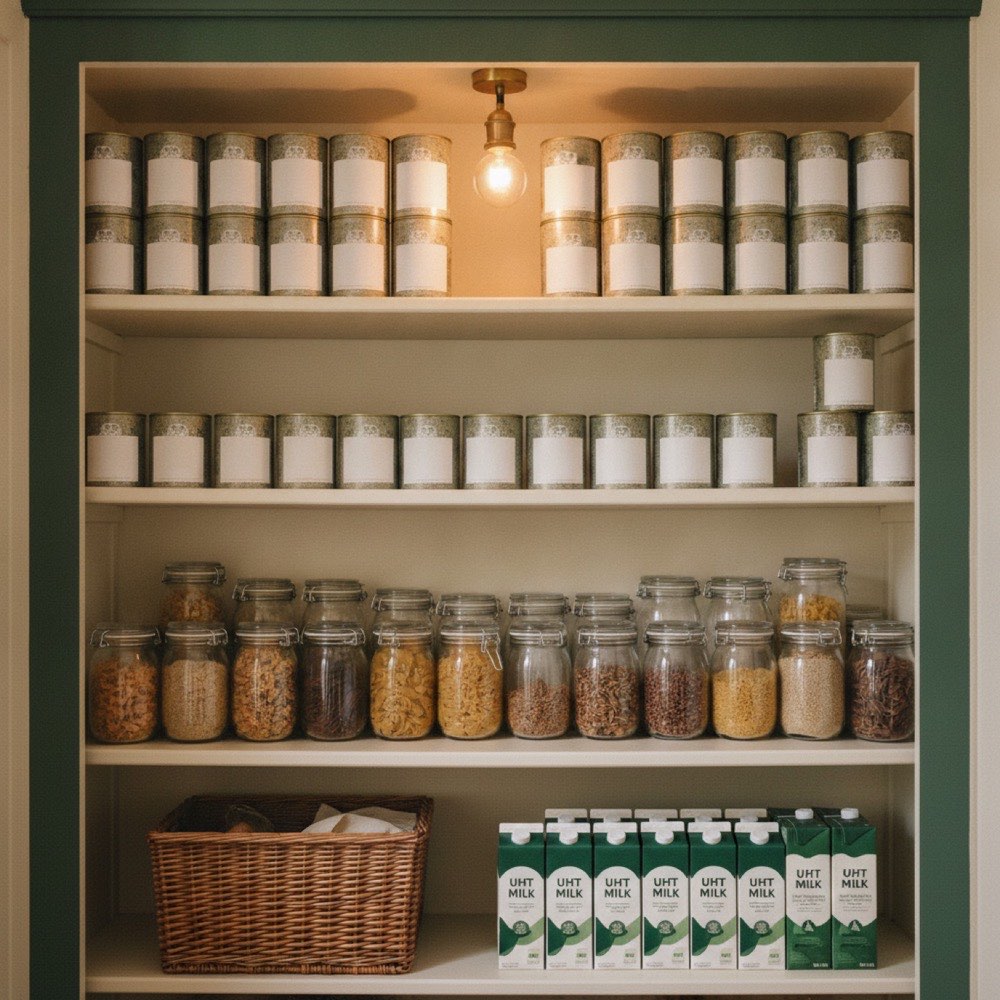
Search for emergency food in the UK and you will be shown the same answer again and again: a large plastic bucket of freeze-dried pouches with a 25 year shelf life and a four figure calorie count on the label. Buckets have a place, and we cover the good ones below, but they are the third layer of a sensible plan, not the first. The best emergency food supply for a British household starts with a deeper version of the cupboard you already run, built from tins, dried staples and UHT cartons you genuinely eat, so nothing is ever wasted. On top of that sits a smaller core of food that needs no cooking at all, or just boiled water, for the power cut scenario that is by far the most likely emergency in the UK. Only then, if you want genuine multi-day resilience, does long-dated freeze-dried food earn its shelf space. This guide builds all three layers, with the calorie arithmetic done properly, worked three-day and two-week examples for two adults, and plain words about the overpriced survival buckets that are not worth your money.
Why the best emergency food supply is layered, not bought in one bucket
The official UK guidance is quietly sensible. The government's Prepare campaign recommends keeping non-perishable food that does not need cooking, such as ready-to-eat tinned meat, fruit or vegetables, along with a tin opener, and it explicitly says you can build your supply up over time rather than buying everything at once. It does not tell you to buy a survival bucket. It tells you to have food in the house that works when the kitchen does not.
That points to a three-layer structure, and each layer does a different job:
- Layer one: the deeper everyday cupboard. Two to three weeks of tins, dried staples and UHT cartons you already eat. Because you rotate through it in normal shopping, it costs you nothing extra over a year and nothing ever goes out of date unnoticed. This is the backbone of the whole plan and it handles almost every realistic disruption: illness, snow, a late payday, supply hiccups, self-isolation.
- Layer two: the no-cook core. A subset of layer one, plus a few deliberate additions, that can be eaten cold from the tin or made with nothing more than boiled water. This is your power cut layer, and it pairs with a way to boil water off mains, which we cover in our guide to heating, cooking and light without mains power.
- Layer three: long-dated reserves. Freeze-dried pouches and ration packs with shelf lives measured in years, stored and forgotten until needed. Optional, but worthwhile if you want genuine multi-day resilience without constant rotation, or you live somewhere rural where outages run longer.
Most emergency food retailers sell you layer three first because that is where their margin lives. Building the layers in order is cheaper, produces zero waste, and leaves you better fed in the scenarios that actually happen.
Layer one: the deeper everyday cupboard, and the best tinned food to stockpile in the UK
The principle is simple: store what you eat, eat what you store. Every item in this layer should be something that already appears in your normal cooking, just held at greater depth. When you use a tin, you replace it on the next shop. The supply stays fresh forever because it is simply your larder, run deeper.
Tins worth holding in depth
Tinned food is the quiet hero of British emergency planning: dense, cheap per calorie, safe for years and tolerant of any cupboard. The tins that earn their place are the ones that deliver protein, calories or a complete meal straight from the can:
- Fish: tuna, sardines, mackerel. High protein, eaten cold with no preparation at all.
- Meat: corned beef, ham, chicken in white sauce, stewed steak, meatballs. Ready to eat as sold, exactly the category the Prepare campaign names.
- Complete meals: baked beans, beans with sausages, chilli, curry, ravioli, soup with substance (lentil, chicken and vegetable, minestrone). Edible cold if they must be, far better warmed.
- Vegetables and pulses: chopped tomatoes, sweetcorn, peas, carrots, chickpeas, lentils, kidney beans. The difference between rations and meals.
- Fruit and puddings: peaches, pears, fruit cocktail, rice pudding, custard. Morale matters more than preppers admit, especially with children in the house.
Dried staples and long-life basics
Around the tins sit the dried goods that stretch everything: rice, pasta, couscous, porridge oats, flour, noodles, instant mash, stock cubes, sugar, honey, jam, peanut butter, crackers, oatcakes, biscuits, dried fruit, nuts, longlife bread or wraps, tea, coffee and drinking chocolate. Cooking oil and a proper salt and spice selection turn storage food into dinner.
Then the cartons: UHT milk is the single most useful long-life item in a British cupboard, because tea, porridge and cereal all depend on it. Unopened, UHT milk typically keeps for six to nine months at room temperature, which is why it suits this layer so well, though once opened it needs the fridge and should be used within a week. A case of twelve one-litre cartons sits under the stairs and feeds straight into normal use. Cases of UHT milk on Amazon are one of the few genuinely boring purchases in this guide, and among the most valuable. UHT fruit juice and longlife cartons of custard earn space on the same logic.
How deep is deep enough?
For layer one, aim for two weeks of normal eating for your household, built gradually. Add two or three extra tins and one extra bag of a dried staple to each weekly shop and you will be there within a couple of months without noticing the cost. That matches the official advice to build your kit up over time, and it spreads the spend painlessly.
Layer two: food that works in a power cut
The most likely emergency in the UK is not a disaster film. It is a storm taking the lines down for somewhere between a few hours and a few days. In that scenario your freezer is a countdown clock, your hob may or may not work, and your kettle is off. Layer two is the slice of your cupboard that ignores all of that.
Sort it into two tiers:
- No preparation at all: tinned fish and meat eaten from the tin, baked beans cold, tinned fruit, crackers with peanut butter or jam, oatcakes, cereal with UHT milk, cereal bars, nuts, dried fruit, chocolate. A household should be able to eat for at least 48 hours from this tier alone without heating anything.
- Boiled water only: instant noodles, couscous, instant mash, porridge made in a mug, instant soup, and the freeze-dried pouches in layer three. One or two litres of boiled water per mealtime covers a family.
Two practical notes. First, a manual tin opener is non-negotiable and worth duplicating; the government guidance names it for good reason, and a household that has drifted to ring-pull tins only may not own a working one. Second, the boiled water tier is only real if you can actually boil water with the power off. A camping gas stove used safely, outdoors or with serious ventilation, is the usual answer, and our off-mains cooking and heating guide covers the safe options and the carbon monoxide rules in full.
Eat strategically in a longer outage: fridge first, freezer second, cupboard last. A full freezer holds safe temperatures for a day or more unopened, so the storage food is your third line, not your first.
Layer three: freeze-dried food and ration packs that are actually worth buying in the UK
Layer three is food you buy once, store somewhere cool and dark, and do not think about for years. It earns its price in shelf life and convenience, not in flavour per pound. Three freeze-dried names dominate honest UK recommendations, and all three are sold on Amazon UK at the time of writing, alongside two non-freeze-dried options worth knowing about.
ReadyWise: the long-dated bulk option
ReadyWise is the American emergency food brand that moved formally into the UK, and its supplies are the ones to look at if maximum shelf life is the goal: the maker quotes up to 25 years, with storage somewhere cool, dry and out of sunlight. Its UK range runs from a 28 serving grab bag, which ReadyWise's own listing describes as three days of food for one person, up to 60 serving bags and larger buckets. Meals are made by adding boiling water. Note that serving arithmetic carefully, because it matters: 28 servings covering three person-days means a ReadyWise serving is a modest portion, not a meal, and that is typical of the whole bucket category. Judge every supply by total calories, never by the serving count on the lid. ReadyWise supplies on Amazon are the sensible version of the bucket concept: genuinely long-dated, from an established maker, at a price per calorie you should still walk into with open eyes.
Expedition Foods: British-made, higher calorie pouches
Expedition Foods makes freeze-dried meals in Britain, aimed at expeditions and mountain use, which is exactly why they suit emergencies: high calorie pouches rehydrated with boiling water in the bag. The company's own guidance quotes a shelf life of up to five years, with unopened pouches stored in cool, dry conditions and protected from puncture. You will see UK retailers advertising far longer figures on special ranges; we have anchored to the number the manufacturer publishes on its own FAQ, and you should read the printed date on anything you buy. Its 7 day multipack of meals and desserts, sold on Amazon UK, is a tidy single purchase that puts a genuine week of hot food for one person on a shelf. Expedition Foods multipacks on Amazon suit households who want fewer, bigger calories per pouch.
Summit to Eat: the palatable middle ground
Summit to Eat pouches are widely stocked across UK outdoor retailers and on Amazon UK, prepared by pouring boiling water straight into the pouch and waiting a few minutes. They are generally regarded as among the better tasting freeze-dried meals sold here, which matters more than it sounds: emergency food you would happily eat on a campsite is emergency food that gets rotated and replaced. Retailers list multi-year shelf lives on the main meals, but the maker's own figures were not published where we could verify them, so treat the best-before date printed on each pouch as the only number that counts. Summit to Eat pouches on Amazon are the right choice if you want layer three to double as camping and walking food, which is the single best rotation habit there is.
Ration packs and lifeboat biscuits
Two non-freeze-dried options round out the layer. Genuine British Army style 24 hour ration packs, sold on Amazon UK, carry roughly 4,000 kcal of ready-to-eat and boil-in-bag food per pack, which makes the calorie arithmetic refreshingly simple: one pack is more than one person-day. Check the stated dates before buying, because surplus packs can carry shorter remaining life than new production. 24 hour ration packs on Amazon are a strong grab-and-go option for an emergency kit.
At the austere end sit Seven OceanS emergency ration biscuits, the Norwegian-made lifeboat ration carried on ships worldwide. Each 500g pack holds nine vacuum-sealed bars totalling 2,500 kcal, and the maker quotes a shelf life of at least five years from the production date on the pack. They are dense, plain and need no water or heat, which is precisely the point: this is survival arithmetic in a foil wrapper, best kept in a car or grab bag rather than planned as dinner. Seven OceanS rations on Amazon cost little, weigh little and never need thinking about.
Plan by calories, not vibes: the arithmetic that exposes bad buckets
Almost every weak emergency food purchase traces back to the same mistake: counting days and servings instead of calories. The NHS figure for an average adult is 2,500 kcal a day for a man and 2,000 kcal a day for a woman. In a genuine emergency you might run slightly leaner for a few days without harm, but a plan built on those figures is a plan that actually feeds you.
So for two adults:
- Three days: roughly 13,500 kcal between you.
- Two weeks: roughly 63,000 kcal between you.
Now hold any product against that bar. A bucket advertising weeks of food starts looking very different when you divide its total calories by 4,500 per day for a couple. Many heavily marketed survival buckets pad their serving counts with thin soups and sweetened drink powders, so the days claimed on the lid can translate to well under half rations in practice. The honest brands publish total calories; make that number, not the day count, your basis for comparison.
A worked 3 day no-cook example for two adults
Entirely from layer one and layer two, no mains power assumed, boiled water available:
- Breakfasts: porridge oats or cereal with UHT milk, honey, dried fruit (6 adult breakfasts).
- Lunches: tinned fish or corned beef with crackers and oatcakes, tinned fruit after (6 lunches).
- Dinners: baked beans with instant mash, tinned chilli with couscous, tinned stew with noodles (6 dinners).
- Padding to hit the calorie bar: peanut butter, nuts, chocolate, biscuits, rice pudding, jam.
Total cost: a normal week's cupboard, already owned. Nothing bought specially, nothing wasted.
A worked 2 week example for two adults
The same pattern, held at depth: around 30 tins across meat, fish, meals, vegetables and fruit; 3 to 4 kg of dried staples (rice, pasta, oats, couscous, mash); 8 to 12 litres of UHT milk; a full jar each of peanut butter, honey and jam; plus the morale shelf of biscuits, chocolate and hot drinks. That stack comfortably clears 63,000 kcal, costs a fraction of any commercial two-week bucket, and every item of it gets eaten in normal life anyway. Add one freeze-dried multipack or a few ration packs from layer three if you want hot, zero-thought meals inside the plan, not instead of it.
Water sits alongside all of this and deserves its own plan: the World Health Organisation minimum quoted in UK government guidance is 2.5 to 3 litres of drinking water per person per day, and around 10 litres per person per day covers basic cooking and hygiene as well. Our emergency water guide covers storage and treatment properly.
Storage, rotation and what the dates really mean
Where you keep this food matters nearly as much as what you buy. The rules are the same ones the manufacturers print: cool, dry, dark and stable. A cupboard under the stairs, the bottom of a wardrobe, or shelving in a dry garage that does not freeze or cook in summer all work. Avoid lofts and conservatories, where summer heat quietly shortens the life of everything, and keep tins off bare concrete floors where damp rusts them from the base.
On dates, UK labelling draws a line worth knowing. The Food Standards Agency distinguishes use by dates, which are about safety, from best before dates, which are about quality. Tins, dried goods and freeze-dried pouches carry best before dates, meaning food in sound, undamaged packaging is generally still safe somewhat beyond the printed date, though texture and taste decline. That is a reason to rotate calmly rather than bin a cupboard in a panic, not a licence to ignore dates for years. Any tin that is bulging, badly dented on a seam, rusted through or hissing on opening goes in the bin, no exceptions.
Rotation habits that make the system run itself:
- First in, first out. New shopping goes to the back, older stock comes forward. One minute per shop.
- Date the awkward items. A marker pen on each UHT carton and multipack top means no squinting at embossed print by torchlight.
- One cupboard audit per season. Anything within six months of its date moves into the weekly meal plan.
- Eat your layer three occasionally. Take a freeze-dried pouch camping, or make one for lunch on a lazy Saturday. You learn what you actually like before you are relying on it, and replacement becomes routine.
Babies, pets, allergies and medical diets
A supply that feeds the average adult and fails the most vulnerable member of the household has failed. Plan for the hardest mouth first.
- Babies and toddlers: if you formula feed, hold at least a week of your usual formula at all times and rotate it through normal use, and remember that safe preparation needs water boiled and cooled, which ties straight back to your off-mains boiling plan. Ready-to-drink formula cartons need no preparation and are the strongest power cut option, within their shorter dates. Pouched and jarred baby food stores well; hold two weeks of it.
- Pets: the government's Prepare guidance makes a point of saying do not forget food for pets. Dry food stores superbly; keep an unopened bag ahead of need. Tinned pet food follows the same rotation rules as yours. Two weeks per animal is the sensible bar.
- Allergies and coeliac disease: check layer three before you buy, not after. Freeze-dried ranges and ration packs vary widely on gluten, milk and soya, and some, like the Seven OceanS biscuits, are wheat based through and through. Build the allergic person's supply from specific named products you have read the labels on, and hold more depth of them, since substitution mid-emergency is exactly what you cannot do.
- Medical diets and medication: anyone whose condition is managed partly through diet, diabetes above all, should plan their own layer with their usual foods and talk to their pharmacist about medication buffers. Sugary morale food doubles as hypo treatment, but it must be planned, not assumed.
What not to buy
The emergency food market contains some of the worst value food sold in Britain, and it is usually the loudest-marketed. The pattern to avoid:
- Novelty survival buckets with vague calorie totals. If a bucket shouts about days and servings but makes you dig for total calories, assume the worst. Divide total kcal by the NHS daily figures and many of these promise a fortnight while delivering a hungry week. Measured per 1,000 kcal, they can cost several times what the same calories cost as ReadyWise or Expedition Foods, and ten to twenty times what they cost as rice, oats and tins.
- Buckets padded with drink powders. Sweetened drink mixes counted as servings inflate the lid number while adding little you would call food.
- Anything you would never eat. A cupboard of unfamiliar survival food you cannot bring yourself to rotate will quietly expire and get binned. That is the most expensive food of all.
- Short-dated surplus sold as long-life. Army rations and clearance freeze-dried can be excellent buys, but only at the right remaining date. Check before paying.
- Single points of failure. A supply that is entirely boil-only collapses if your stove fails. Keep the no-cook tier genuinely no-cook.
None of this makes freeze-dried food a con. It makes it a tool with a specific job: long-dated, zero-rotation, hot-meal resilience, bought from established makers whose shelf lives and calorie counts are published and checkable. The con is paying freeze-dried prices for what is mostly flavoured starch in a commemorative bucket.
The complete picture: food is one leg of three
A fed household still needs water and a way to make heat. The full structure looks like this: two weeks of layered food as built above; stored and treatable water against the WHO minimums in our emergency water guide; and safe off-mains boiling and warmth from our heating and cooking guide. The grab-and-go subset of all three, the version that fits in a rucksack, lives in our emergency kit list.
Start with layer one this week: three extra tins and a bag of pasta on the next shop. It is the least dramatic purchase in this guide, and the one that will almost certainly get eaten, which is exactly the point.
The kit that earns its place
ReadyWise 60 Serving Emergency Food Supply
The straightest route to a genuinely long-dated reserve: freeze-dried breakfasts, lunches and dinners in a grab bag, made with boiling water, with the maker quoting up to 25 years of shelf life stored cool, dry and out of sunlight. Buy it as the top layer of a plan and judge it by total calories, not the serving count. (investment)
ReadyWise 28 Serving Grab and Go Bag
The sensible entry point to the brand: ReadyWise's own UK listing describes it as three days of food for one person, which is also a useful honesty lesson in how modest a 'serving' is across this whole category. A tidy single purchase for a grab bag or car kit. (mid)
Expedition Foods 7 Day Multipack
British-made expedition pouches with high calories per bag, rehydrated with boiling water in the pouch. The manufacturer's own FAQ quotes up to five years of shelf life in cool, dry storage, and a single multipack puts a real week of hot food for one person on the shelf. (investment)
Summit to Eat Freeze-Dried Meal Selection
Among the better tasting freeze-dried meals stocked in the UK, made by pouring boiling water into the pouch. Palatability is a feature, not a luxury: meals you happily take camping are meals that actually get rotated. Treat the printed best-before date on each pouch as the governing number. (mid)
British Army 24 Hour Ration Pack
Roughly 4,000 kcal of ready-to-eat and boil-in-bag food per pack makes the arithmetic simple: one pack is more than one person-day. Excellent grab-and-go depth bought as a multi-pack; check the stated remaining dates before buying, as surplus stock varies. (mid)
Seven OceanS Emergency Ration Biscuits (Multi-Pack)
The Norwegian lifeboat ration: each 500g pack holds nine vacuum-sealed bars totalling 2,500 kcal, needs no water or heat, and the maker quotes at least five years from the production date. Survival arithmetic in a foil wrapper, ideal for cars and grab bags; buy the multi-pack for meaningful depth. (entry)
Lakeland Dairies Long Life Whole Milk, 12 x 1L
UHT milk is the most useful long-life item in a British cupboard, keeping six to nine months unopened at room temperature and feeding straight into tea, porridge and cereal in normal life. A case of twelve rotates itself; the least glamorous purchase here and one of the most valuable. (entry)
Your questions, answered
How much emergency food should a UK household keep?
Work to calories, not days on a lid. The NHS average is 2,500 kcal a day for a man and 2,000 for a woman, so two adults need roughly 13,500 kcal for three days and about 63,000 kcal for two weeks. Three days of no-cook food is the sensible minimum for every household; two weeks of rotated cupboard depth is the comfortable standard, built gradually through normal shopping as official guidance suggests.
What is the best tinned food to stockpile in the UK?
Prioritise tins that are complete food on their own: fish (tuna, sardines, mackerel), meat (corned beef, ham, stewed steak), ready meals (baked beans, chilli, curry, substantial soups), pulses and vegetables, and tinned fruit and puddings for morale. Ready-to-eat tinned meat, fruit and vegetables are exactly what UK government preparedness guidance names, along with a manual tin opener.
How long does tinned food really last?
Tins carry best before dates, which the Food Standards Agency explains are about quality rather than safety, so sound, undamaged tins are generally still safe somewhat past the printed date even as taste and texture decline. Store them cool, dry and off damp floors, rotate first in first out, and discard any tin that is bulging, rusted through, leaking or damaged on a seam.
What food should I keep for a power cut?
Keep a tier that needs no preparation at all: tinned fish and meat, cold baked beans, tinned fruit, crackers, peanut butter, cereal with UHT milk, nuts and chocolate, enough for at least 48 hours. Behind that, keep boil-only food such as porridge, couscous, instant mash, noodles and freeze-dried pouches, plus a safe off-mains way to boil water. Eat the fridge first, then the freezer, and save the cupboard for last.
Are 25 year shelf life emergency foods real?
The long figures apply to specific products under proper storage, and they vary by maker, so always anchor to what the manufacturer itself publishes. ReadyWise quotes up to 25 years on its freeze-dried supplies stored cool, dry and out of sunlight, while Expedition Foods' own FAQ quotes up to five years on its pouches. Whatever the marketing says, the printed date on the pack you are holding is the number that governs.
How do I build an emergency food supply cheaply?
Deepen the cupboard you already run rather than buying a kit. Add two or three extra tins and one extra dried staple to each weekly shop, store new stock at the back and eat from the front, and you will reach two weeks of depth within a couple of months for no net cost, because all of it gets eaten in normal life. Long-dated freeze-dried food is an optional final layer, not the starting point.
Is freeze-dried emergency food worth buying?
Yes, for one specific job: hot meals with multi-year shelf lives that need no rotation and only boiled water. ReadyWise, Expedition Foods and Summit to Eat are all sold in the UK on Amazon and are established makers with checkable claims. It is poor value as your main calorie base compared with rice, oats and tins, so buy it as the top layer of a plan, and judge any bulk supply by its total calories rather than its serving count.
What about emergency food for babies and pets?
Plan them first, not last. Hold at least a week of your usual formula, favouring ready-to-drink cartons for power cuts, plus two weeks of pouched or jarred baby food, all rotated through normal use. Government preparedness guidance specifically reminds households to store food for pets: keep an unopened bag of dry food ahead of need and rotate tins exactly as you do your own.