How to Heat a Room Without Electricity in the UK
Last updated: 21 October 2026
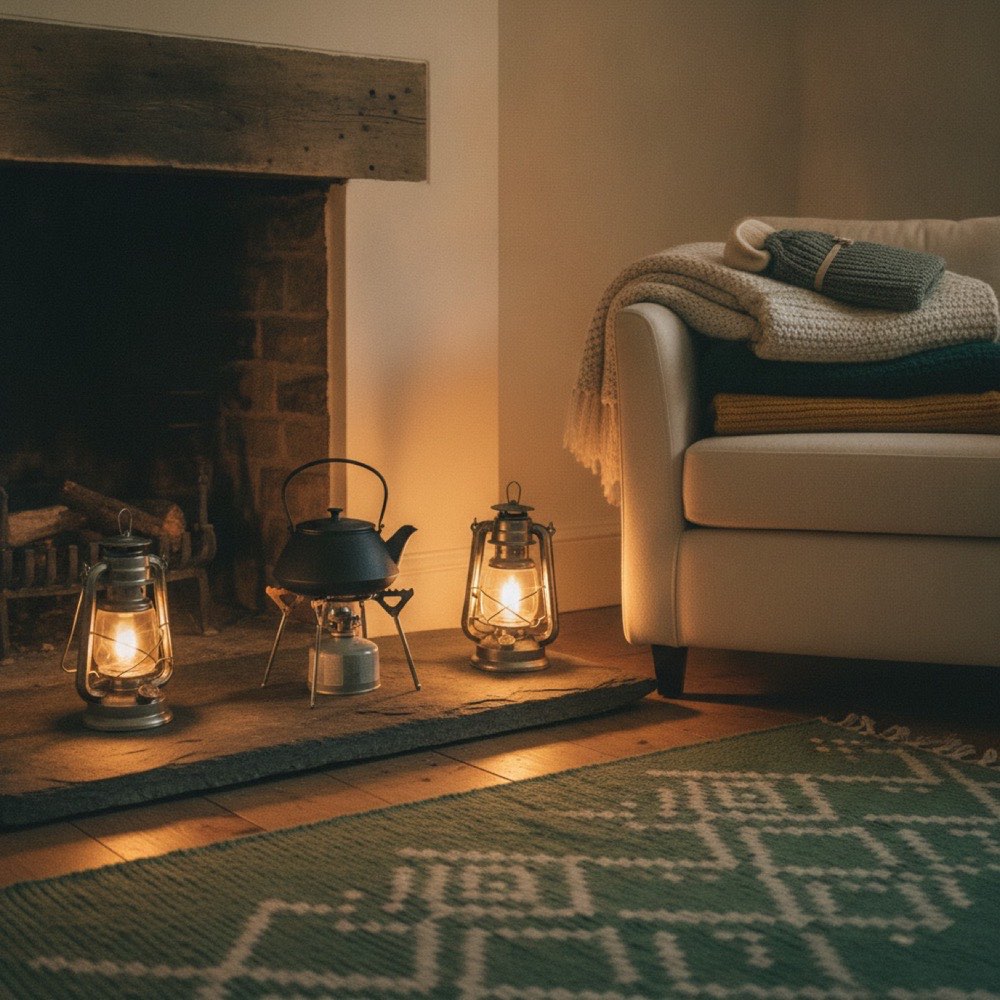
<p>When the power goes off in a British winter, most homes lose their heating within minutes, because almost every modern system depends on mains electricity somewhere in the chain. The good news is that a cold house is a solvable problem. The method that works is simple and proven: keep the heat you already have, shrink your living space to one room, warm people before warming air, and only then add a fuel-burning heat source, with the ventilation and carbon monoxide rules followed to the letter.</p>
Why most UK heating fails in a power cut
It surprises many people that a gas boiler stops working the moment the electricity goes off. Combi and system boilers need mains power for their pumps, fans, control boards and ignition, so a gas supply alone will not keep your radiators warm. The same applies to oil boilers, heat pumps, electric storage heaters and underfloor systems.
What still works with no mains power at all: a wood burning stove or open fire, a butane cabinet heater, and a wick type paraffin heater. Some older gas fires with a permanent pilot and no electronic controls also keep going, but check your model's manual before relying on it. Anything with a plug, a pump or a digital display should be assumed dead for the duration.
This is why a power cut plan is worth making before you need it. Our pillar guide to heating, cooking and lighting off the mains covers the whole picture; this page deals with the single most important part, keeping one room warm.
The one warm room strategy
Do not try to heat the house. Heat one room, properly, and live in it until the power returns. This is the approach energy networks and resilience planners recommend for outages lasting more than a few hours, and it multiplies the value of every watt of heat you can produce.
Choose the room carefully:
- Small beats large. A compact living room warms far faster than an open plan space.
- Fewest outside walls. A room in the middle of the house, or with neighbours on the other side of a wall, loses heat slowest.
- Not a bedroom or bathroom. If you may use a fuel-burning heater, manufacturer instructions prohibit bedrooms, bathrooms and other wet or damp rooms outright, so plan around a living room from the start.
- Curtains and doors. A room with heavy curtains and a door that closes properly holds heat dramatically better than one without.
Move the whole household in, including pets. Four people in one small room contribute several hundred watts of body heat between them, which is genuinely significant once the walls and door are doing their job.
How to keep heat in a room during a power cut
Retention comes before generation. A typical UK home loses heat steadily through windows, door gaps and ventilation paths, and most of the fixes cost nothing on the day.
- Close every curtain at dusk. Windows are the weakest point in the room. Heavy lined curtains can cut window heat loss substantially; a duvet or blanket hung over a curtain rail works when the curtains are thin.
- Block door draughts. A rolled towel along the bottom of the door is the classic fix. Close every door in the house, not just the warm room's, so the rest of the building acts as a buffer.
- Get off the floor. Rugs, folded blankets or even flattened cardboard under where people sit makes a noticeable difference, especially on tiled or laminate floors.
- Trap the heat you make. Every time the warm room door opens, warm air leaves. Agree a rule: gather what you need, then settle.
- Insulate at the window overnight. Bubble wrap pressed against the glass, or a blanket pinned across the frame, holds the room's warmth through the small hours.
If you want to prepare the room properly in advance, two purchases do most of the work: a set of full length thermal lined curtains Check price on Amazon and a large pure wool blanket Check price on Amazon. Both earn their keep all winter, not just during outages.
Warm people first: layers, hot water bottles and flasks
Heating a person takes a fraction of the energy of heating a room, so dress for the situation before reaching for fuel. The effective order is a base layer, a mid layer such as fleece or wool, then a loose outer layer, plus a hat and thick socks. Loose layers trap air; one tight jumper does not.
Hot water bottles are the most efficient heat delivery system in the house. If you have a gas hob that lights with a match, or a butane camping stove used with the safety rules covered in our guide to cooking without electricity, you can refill bottles for everyone every few hours for pennies of gas.
Flasks matter more than people expect. When a storm is forecast or the network operator warns of outages, fill every vacuum flask in the house with boiling water before the power goes. You bank hours of hot drinks, hot water bottle refills and instant meals with zero fuel burned during the cut itself.
Safe ways to heat a room without electricity, honestly assessed
If retention and layering are not enough, these are the realistic options for UK homes, with their genuine limitations stated plainly.
Butane cabinet heater
The portable gas cabinet heater is the standard UK answer, a 4.2kW unit running on a butane cylinder with no mains connection at all. It will genuinely warm a living room. It also burns fuel inside your home, which makes the manufacturer's rules non-negotiable. The instructions for a typical 4.2kW model, the Sealey CH4200, specify a minimum room volume of 15 cubic metres on the lowest setting, 28.5 on medium and 42 on the highest, with a ventilation opening of 105 square centimetres running to the outside in every case. The same instructions prohibit use in bedrooms, bathrooms and wet rooms, high rise flats, basements and caravans, and require 1 metre of clearance in front of the heater. Modern units carry an oxygen depletion sensor and flame failure device, which shut the gas off if air quality falls, but these are backstops, not a licence to skip ventilation. Expect some condensation too: burning butane releases water vapour into the room. If this is your route, see our full buyer's guide to the best non electric heaters in the UK, or go straight to the category here: Check price on Amazon.
Wick paraffin heater
Wick type paraffin heaters need no mains power and run for many hours on a tank of fuel. Brands such as Zibro have sold them in the UK for decades Check price on Amazon. Be aware that the electronic laser type paraffin heaters from the same brands DO need a plug, so for power cut use it must be a wick model. The honest downsides: a paraffin smell at lighting and extinguishing, fuel you must store, and the same ventilation and CO discipline as any flame.
Wood burning stove or open fire
If you already have one with a swept chimney, it is the best option in the house: proper heat, no mains dependency, fuel that stores indefinitely. Installing one costs four figures, so it is a long term project rather than a power cut purchase.
What about candles?
As a heat source, candles are useless, a single candle produces roughly 80 watts, and UK fire services consistently urge battery powered lighting instead of candles during power cuts because of the fire risk. Treat candles as neither lighting nor heating; our guide to the best emergency lights for power cuts covers what to use instead.
What never to use to heat a room
Every winter, UK fire services attend carbon monoxide incidents caused by outdoor equipment brought inside during power cuts. Devon and Somerset Fire and Rescue reported a worrying rise in exactly these callouts. The list is short and absolute:
- Barbecues, including spent ones. Charcoal gives off carbon monoxide for hours after cooking, even when it looks dead. Never indoors, never in a garage, never in a tent or porch.
- Patio heaters and outdoor propane heaters. Designed for open air only.
- Camping stoves run as heaters. A stove is for brief, attended cooking with ventilation, not hours of space heating.
- Generators anywhere enclosed. Petrol generators belong outside, well away from windows, doors and air bricks, never in a garage even with the door open.
- A gas oven with the door open. Domestic ovens are not designed for continuous open door running and the CO risk is real.
The rule of thumb: if the manufacturer calls it outdoor equipment, no emergency changes that.
Carbon monoxide alarms: the rule that sits over everything
Carbon monoxide has no colour, smell or taste. The NHS lists headache, dizziness, weakness, tiredness, confusion, chest and muscle pain and shortness of breath among the symptoms, and advises calling 999 or going to A&E if someone exposed is struggling to breathe, confused or loses consciousness.
Before any flame burns in your warm room, fit an audible carbon monoxide alarm that complies with British Standard BS EN 50291 and carries a recognised approval mark such as the Kitemark. This is the standard UK fire and rescue services, including Greater Manchester and North Yorkshire, specifically recommend, and battery powered models keep working through the power cut itself. Put one in any room where fuel burns, test it before each winter, and if it sounds, stop the appliance, get everyone into the open air and call 999.
A CO alarm costs little and belongs in your preparation box alongside torches and water. Our UK emergency kit list covers the full set of items worth having ready before the next storm name is announced.
Your questions, answered
Does gas central heating work in a power cut?
No, in almost every modern home. Combi and system boilers need mains electricity for their pumps, controls and ignition, so the heating stops even though the gas supply is unaffected. Only a few older systems with no electrical components keep running.
Can I use a gas cabinet heater in a bedroom?
No. Manufacturer instructions for butane cabinet heaters prohibit use in bedrooms, bathrooms and other wet or damp rooms, high rise flats, basements and caravans. Plan your warm room around a living room with the required ventilation instead.
What is the cheapest way to warm a room with no power?
Retention and body heat: close every curtain, block door draughts with a rolled towel, put rugs or blankets underfoot, gather the household into one small room and dress in loose layers with a hat. All of that costs nothing on the day and typically keeps a closed room liveable for many hours.
Are candles a sensible backup heat source?
No. A candle produces roughly 80 watts, so even a dozen would not meaningfully warm a room, and UK fire services consistently advise battery powered lighting instead of candles during power cuts because of the fire risk.
How long does a 15kg butane cylinder last on a cabinet heater?
Manufacturer figures for a typical 4.2kW cabinet heater put a 15kg butane cylinder at around 49 hours of running on the highest setting, and considerably longer on low. A single cylinder comfortably covers several days of sensible, intermittent use.
Do carbon monoxide alarms work during a power cut?
Battery powered CO alarms do, which is exactly why fire services recommend them for homes using any fuel-burning appliance. Choose a model certified to BS EN 50291 with a Kitemark or equivalent approval mark, and test it before winter.
How cold is too cold for a home in the UK?
Public health guidance treats 18 degrees Celsius as the sensible minimum for living spaces, with older people, babies and anyone with heart or lung conditions most at risk below that. If you cannot hold a safe temperature in one room during a long outage, check on neighbours and consider moving to friends, family or a council rest centre.
Sources
- NHS, Carbon monoxide poisoning
- Dorset and Wiltshire Fire and Rescue Service, Power cuts
- Scottish Fire and Rescue Service, Power cuts
- Sealey CH4200 4.2kW cabinet heater instructions (ventilation table and prohibited rooms)
- Greater Manchester Fire and Rescue Service, Carbon monoxide
- Devon and Somerset Fire and Rescue Service, CO incidents in power cuts