Emergency Kit List UK: Everything Your Home Needs (2026)
Last updated: 21 October 2026
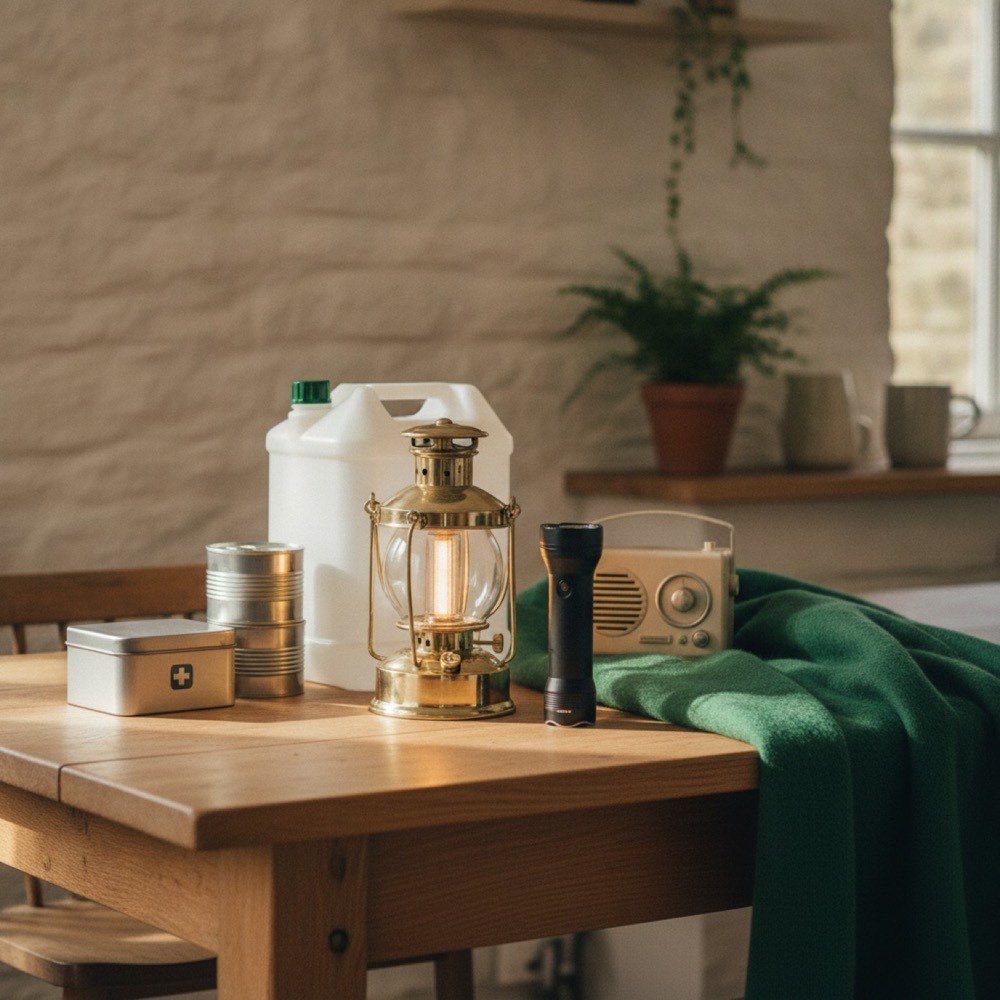
A well stocked emergency kit is not about expecting disaster. It is about making the next storm-related power cut an inconvenience rather than a crisis. This is our complete, room-by-room kit list for UK homes, built on the official gov.uk Prepare guidance and expanded with the quantities, storage advice and upkeep routine the official pages leave out.
First, the honest picture: what you are actually preparing for
Let us be clear about the risk before spending a penny. National blackouts are not the realistic scenario for British households. NESO, the National Energy System Operator, forecasts a comfortable de-rated margin of 5.5GW for winter 2026/27, in line with recent winters, with demand expected to be met throughout. The grid is in decent shape.
What does happen, every year, is local and storm-driven. The Met Office names storms when they are likely to cause amber or red warnings, and those storms bring down lines. Storm Arwen in November 2021 left nearly one million homes without power, and close to 4,000 of them waited more than a week for reconnection, according to Ofgem's review. That is the realistic planning case: your street, your village, hours to days, usually in winter, usually in bad weather.
Two numbers to write down before anything else:
- 105: the national power cut line. Dialling it from a mobile or landline in England, Scotland or Wales connects you to your local electricity network operator to report a cut or get updates. In Northern Ireland, NIE Networks is on 03457 643 643.
- Your network operator's name: you do not choose them and they are not your supplier. Knowing who they are before a storm saves fumbling in the dark.
The government's own Prepare campaign gives a sensible starter list. What follows covers everything on it, then goes further: how much per person, which versions are worth buying, where to keep it all, and how to stop it quietly expiring in a cupboard. If you want the full playbook for an outage itself, read our guide on how to prepare for a power cut.
Light: one source per person, plus one for the house
Light is the first thing you will reach for and the easiest thing to get right. The Prepare campaign recommends battery or wind-up torches over candles, and fire services agree: an unattended candle in a dark, disrupted house is how power cuts turn into house fires.
What to stock, per household
- One torch per person, plus one spare that lives in a fixed spot everyone knows. Keep them where you would actually be when the lights go: bedside drawers, the kitchen, by the fuse box.
- One headtorch per adult. The difference between a torch and a headtorch is having both hands to make dinner, change a nappy or reset a boiler.
- One proper lantern for the main living room. A single ceiling-filling lantern does what six phone torches cannot. We rate the Ledlenser ML6: a 750 lumen boost mode for the first scramble, up to 200 hours on its lowest setting for a long evening, and it doubles as a small phone charger.
- Spare batteries: at least two full changes for every battery-powered light, in the sizes they actually take. Check the sizes now, not by torchlight.
Rechargeable lights are excellent until day three of an Arwen-length outage. The resilient pattern is a mix: one rechargeable lantern, plus battery torches whose cells store for years. For the wider question of lighting a whole evening, plus heating and cooking without mains, see our guide to heat, cooking and light off the mains.
Warmth: the one-room strategy
A British home in January loses heat fast once the boiler's pump and controls lose power, and almost every heating system, gas included, needs electricity to run. The sensible approach is not heating the house. It is keeping one room warm and moving the household into it.
What to stock
- One warm layer set per person kept findable: thermal base layer, fleece, woolly hat. You lose surprising warmth through an uncovered head while sitting still.
- A sleeping bag or thick duvet per person. A decent four season sleeping bag turns a cold night into a camping trip rather than an ordeal, and children tend to treat it as an adventure.
- Hot water bottles, one per person. Paired with a way to boil water off-grid (covered under Food below), they are the cheapest warmth money buys.
- Draught kit: a couple of rolled towels for door gaps and a blanket to curtain off the chosen room.
On portable heaters: caution, not fear
A portable gas heater can be a sensible buy for longer rural outages, but only with eyes open. The Mr Heater Portable Buddy is the best known option: 4,000 to 9,000 BTU, a 1lb cylinder lasts roughly three to six hours depending on setting, and the manufacturer rates it for indoor use because it carries an oxygen depletion sensor and tip-over shut-off. Even so, treat the manual's ventilation instructions as law, never run it while sleeping, and pair it with a carbon monoxide alarm meeting BS EN 50291. The CO alarm belongs in your kit regardless; it is cheap and it is the item on this list that can save a life. Our off-mains heat guide compares the options room by room.
Water: the per-person numbers, from the source
Power cuts rarely cut water, but storms, floods and burst mains do, and water is the part of a kit with actual official numbers attached. The gov.uk Prepare campaign, citing the World Health Organisation, recommends a minimum of 2.5 to 3 litres of drinking water per person per day, and notes that 10 litres per person per day covers basic cooking and hygiene as well.
What that means in practice
- Baseline for a family of four, three days: around 36 litres of drinking water. That is six standard supermarket multipacks, stored under the stairs, rotated through normal use.
- Comfort level: 120 litres for the same family. Few homes will store that, which is why containers matter: two or three sturdy 10 to 25 litre containers you can fill from the taps the moment a storm warning lands, while the mains still runs.
- Extra for babies (formula preparation), medical devices and pets, per the official guidance.
Purification as the backstop
Stored water covers days one to three. A purifier covers the awkward tail beyond it. The LifeSaver Liberty, from a British firm, is the standout for home kits: a pump-and-bottle purifier rated for up to 2,000 litres that removes 99.9999% of bacteria and 99.999% of viruses, which matters because cheap hiking straws filter bacteria but not viruses. Water storage, rotation and purification choices get their full treatment in our emergency water guide.
Food: three days, no cooking required
The official advice is simple: non-perishable, ready to eat, with a tin opener. The practical version is a three-day menu per person that nobody needs to cook, because assuming you can cook is the classic kit mistake.
The no-cook core, per person for three days
- Six tins that eat cold without misery: baked beans, sweetcorn, fruit in juice, tuna, chickpeas, rice pudding.
- A jar of peanut butter or similar dense spread, plus oatcakes or crackers (longer shelf life than bread).
- Cereal bars, dried fruit, nuts, and a bar of chocolate. Morale is a supply category.
- UHT milk, teabags and instant coffee. The first hot drink of a power cut does more for household mood than anything else on this page.
- Two manual tin openers. The second one is for when the first disappears.
Boiling water without mains
One step up from cold tins is the ability to boil water outdoors in any weather. A camping gas stove with spare cartridges does the job. For storm country, the Kelly Kettle Base Camp earns its cupboard space: a stainless steel chimney kettle that boils 1.6 litres on twigs and pine cones, no fuel to stockpile or run out of, just over a kilo to store. Garden or doorstep use only, never indoors.
Freezer tactic worth knowing: kept shut, a full freezer holds safe temperatures for around 24 to 48 hours. Eat from the fridge first, the freezer second, tins last. For longer-life options and what a sensible two-week cupboard looks like, see our emergency food supply guide.
Power and communications: the modern core of the kit
This is where a 2026 kit differs most from the old candles-and-blankets picture. Your phone is your torch backup, your information line, your contact with the 105 service and, with mobile banking, your wallet. Keeping it alive is the single highest-value preparation.
The three-tier approach
- Tier 1, a serious power bank. Not the credit-card freebie-style trinkets, a proper high-capacity unit. The Anker 737 Power Bank carries 24,000mAh (86.4Wh), enough for roughly four to five full charges of a typical smartphone, and its 140W output will also run a laptop. Keep it charged on a shelf by the router.
- Tier 2, a portable power station for outages past the first evening. Around 256Wh is the sweet spot for a first unit: enough to recharge phones many times over or run a broadband router for the better part of a day where the line itself stays up. The Jackery Explorer 240 v2 (256Wh, 300W output, LiFePO4 cells rated for 3,000 cycles, about 3.6kg) and the EcoFlow RIVER 2 (256Wh, 300W, and a full mains recharge in about an hour, which matters when power flickers back briefly mid-storm) are the two we would shortlist. Sizing up for fridges, medical devices or home working is covered in our portable power stations guide.
- Tier 3, a way to recharge with the grid down. A folding solar panel like the BigBlue 28W solar charger (three USB ports, IP44 rated) will top up phones and power banks even under British winter cloud, slowly but dependably. Your car's 12V socket is the other quiet recharging asset; keep the tank above a quarter.
Information when the apps go quiet
Mobile masts have backup power measured in hours, not days. A battery or wind-up radio, as the Prepare campaign recommends, is how you follow local updates when coverage drops. Write the 105 number and your network operator's name on paper and tape it inside the kit lid, because the outage map you would normally check lives behind a dead router.
First aid and medicines: the week-deep rule
The Prepare campaign's first aid list is a good baseline: plasters, bandages, sterile dressings, a thermometer, antiseptic, gloves, tape and tweezers. Buy a ready-made kit or build one, but either way check it against that list, because many cheap kits are nine-tenths plasters.
Add what the standard lists miss
- A one-week buffer of every prescription medicine in the household, rotated so it never expires. Pharmacies lose power too, and their systems go down with it.
- A paper list of medications and doses for each person, plus repeat prescription numbers. If anyone needs urgent care during a disrupted period, this paper does the talking.
- Paracetamol, ibuprofen, antihistamines, rehydration sachets and any child-specific versions.
- Hand sanitiser and wet wipes, which the official list does include, and which carry extra weight when hot water is off.
- Spare glasses for anyone who needs them. An old prescription beats no glasses in the dark.
If anyone in the house depends on powered medical equipment, two actions now: register with your electricity network operator's Priority Services Register (no cost, via your operator or supplier, backed by Ofgem), which gets you advance contact and priority support during cuts, and discuss backup power for the device with the equipment provider. This is also the strongest single reason households step up to a larger power station.
Documents, cash and the grab-and-go principle
Card machines, ATMs and contactless all run on mains power and connectivity. In a multi-day local outage, the corner shop that stays open is often cash only by the second morning.
- Cash in small notes and coins, enough for several days of essentials. Small denominations, because a shop with no till float cannot break a £50.
- Paper copies of home insurance details, key phone numbers (family, GP, vet, insurer, network operator), and your medication list from the section above. Phones die; paper does not.
- A spare house key and car key stored sensibly, because disrupted routines are when keys get lost.
- Phone numbers written down for the two or three people you would actually need to reach. Most of us cannot recite a single number beyond our own.
Keep these together in one waterproof pouch inside the main kit. That pouch is also the seed of a separate idea: the emergency grab bag, a single bag you can lift in one motion if you ever had to leave the house quickly during a flood or evacuation. It is a related but distinct exercise with its own logic, and we cover it in its own guide. For a power cut, the kit stays home and so do you; the pouch simply means the household's critical paperwork is already in one place either way.
Babies, older relatives and pets
The standard kit quietly assumes able-bodied adults. The official guidance flags three groups that need deliberate additions.
Babies and young children
- Ready-made formula, not powder, per the Prepare campaign. Powder needs water heated to 70°C, which is exactly what you may not have. Rotate cartons through normal use.
- Nappies, wipes and nappy sacks for at least three days beyond your normal stock.
- One small torch a child can own and operate. It removes fear and stops them borrowing yours.
Older or less mobile relatives
- Get them on the Priority Services Register now, not during a storm. Operators proactively contact registered households during cuts and can prioritise welfare visits.
- Duplicate the medicine-buffer and paper-list rules at their address, and check whether their phone is a digital landline, which stops working in a power cut without a battery backup unit.
- Stair-safe lighting: plug-in rechargeable nightlights that switch on automatically when sockets lose power are a genuinely good buy for an older relative's hallway and stairs.
Pets
- Three days of food (the official list includes pet food), plus bowls and any daily medication.
- Extra stored water: animals are not in the 2.5 to 3 litre human figure.
- A lead or carrier stored with the kit, in case a gas leak or flood ever means leaving quickly.
Where to keep it, and the twice-yearly check that keeps it real
A kit that takes twenty minutes to assemble from six cupboards is not a kit. The working pattern is one core box plus satellites.
The layout
- Core box: a lidded plastic crate somewhere dry, reachable in the dark, and known to every adult. Under the stairs is the classic for good reason. It holds the lantern, radio, spare batteries, first aid kit, document pouch, tin opener and the no-cook food core.
- Satellites: torches at bedsides and by the fuse box, the power bank living charged near the router, water stock wherever it fits, the power station in a cupboard at a partial charge.
- Label the box lid with the 105 number, your network operator, and the date of the last check.
The maintenance routine: tie it to the clocks
Kits do not fail dramatically, they expire quietly. Do a fifteen-minute check twice a year, on the weekends the clocks change, which is also the smoke alarm ritual, so the habit carries itself:
- Check dates on food, water, medicines and formula; rotate anything within six months of expiry into the kitchen and replace it.
- Test every torch and the radio; replace tired batteries and confirm the spares match the devices.
- Top up the power bank and power station. Lithium units in storage want topping up every few months; follow your manufacturer's storage guidance.
- Press the test button on the CO alarm and the smoke alarms while you are at it.
- Re-read the document pouch: numbers change, prescriptions change, insurers change.
Do that twice a year and this stops being a list on a website and becomes the quiet reason a named storm costs your household an odd candle-lit evening and nothing more. For the step-by-step of the outage itself, from fuse box checks to fridge discipline, keep our power cut preparation guide bookmarked.
The kit that earns its place
Ledlenser ML6 Rechargeable Lantern
One lantern that lights a whole living room: 750 lumen boost, up to 200 hours on low, doubles as a small phone charger. (under £80)
Anker 737 Power Bank (PowerCore 24K)
24,000mAh (86.4Wh) and 140W output: roughly four to five full phone charges and enough grunt to run a laptop. (around £100)
Jackery Explorer 240 v2 Portable Power Station
The sensible first power station: 256Wh LiFePO4 cells rated for 3,000 cycles, 300W AC output, about 3.6kg. (under £200)
EcoFlow RIVER 2 Portable Power Station
256Wh with a full mains recharge in about an hour, ideal when power flickers back briefly mid-storm. (under £200)
BigBlue 28W Foldable Solar Charger
Grid-down recharging for phones and power banks: 28W, three USB ports, IP44 rated, folds flat into the kit box. (under £70)
LifeSaver Liberty Water Purifier Bottle
British-firm pump bottle rated for up to 2,000 litres; removes 99.9999% of bacteria and 99.999% of viruses, which basic hiking straws miss. (around £100)
Kelly Kettle Base Camp 1.6L Stainless Steel
Boils 1.6 litres on twigs and pine cones with no fuel to stockpile; just over 1kg and built for outdoor use in any weather. (under £100)
Mr Heater Portable Buddy MH9BX
4,000 to 9,000 BTU portable heat with an oxygen depletion sensor and tip-over shut-off; use strictly per the manual, with a CO alarm. (under £150)
Your questions, answered
What should be in an emergency kit in the UK?
The gov.uk Prepare campaign recommends a battery or wind-up torch and radio, a portable power bank, spare batteries, a first aid kit, bottled water, non-perishable ready-to-eat food with a tin opener, hand sanitiser and wet wipes, plus baby supplies and pet food where relevant. A thorough household kit adds a lantern, warm layers and sleeping bags, cash in small notes, paper copies of key documents, a week's buffer of prescription medicines and a carbon monoxide alarm.
How much water should I store per person in the UK?
The official Prepare campaign guidance, citing the World Health Organisation, recommends a minimum of 2.5 to 3 litres of drinking water per person per day, and around 10 litres per person per day to also cover basic cooking and hygiene. For a three-day plan, that means roughly 9 litres of drinking water per person as the baseline, plus extra for babies, medical needs and pets.
How long should an emergency kit last for?
Plan for a minimum of three days of self-sufficiency, which comfortably covers the vast majority of UK power cuts and storm disruption. Ofgem's review of Storm Arwen found nearly 4,000 homes were off supply for over a week, so rural and exposed households sensibly extend food, water-purification and off-grid charging capability toward the one-week mark rather than storing a week of everything.
What is the 105 number?
105 is the national power cut phone line for England, Scotland and Wales. Calling it from a mobile or landline connects you to your local electricity distribution network operator, the company that runs the wires, so you can report a power cut, report damage to lines, or get updates on restoration. Northern Ireland uses NIE Networks on 03457 643 643 instead. Write both your operator's name and the number on paper inside your kit.
Are blackouts likely in the UK this winter?
A national blackout is very unlikely. NESO, the National Energy System Operator, forecasts a comfortable de-rated margin of 5.5GW for winter 2026/27, in line with recent winters, with demand expected to be met throughout the winter. The realistic risk for households is local, storm-driven power cuts lasting hours to a few days, which is exactly what a home emergency kit is designed to absorb.
What food is best for a power cut?
Build around food that needs no cooking at all: tinned beans, fish, fruit and rice pudding, peanut butter, oatcakes, cereal bars, dried fruit, nuts and UHT milk, with two manual tin openers. Eat from the fridge first, then the freezer, which keeps food safe for roughly 24 to 48 hours if kept shut, and save the tins for last. A camping stove or chimney kettle used outdoors adds hot drinks and simple hot meals.
How often should I check my emergency kit?
Twice a year is the practical standard. Tying the check to the clock-change weekends in spring and autumn makes it automatic. Each check takes about fifteen minutes: rotate any food, water or medicines within six months of expiry, test torches and the radio, confirm spare battery sizes, top up power banks and power stations, press the test buttons on smoke and carbon monoxide alarms, and update the paper document pouch.