Best Non Electric Heater UK: Power Cut Picks 2026
Last updated: 21 October 2026
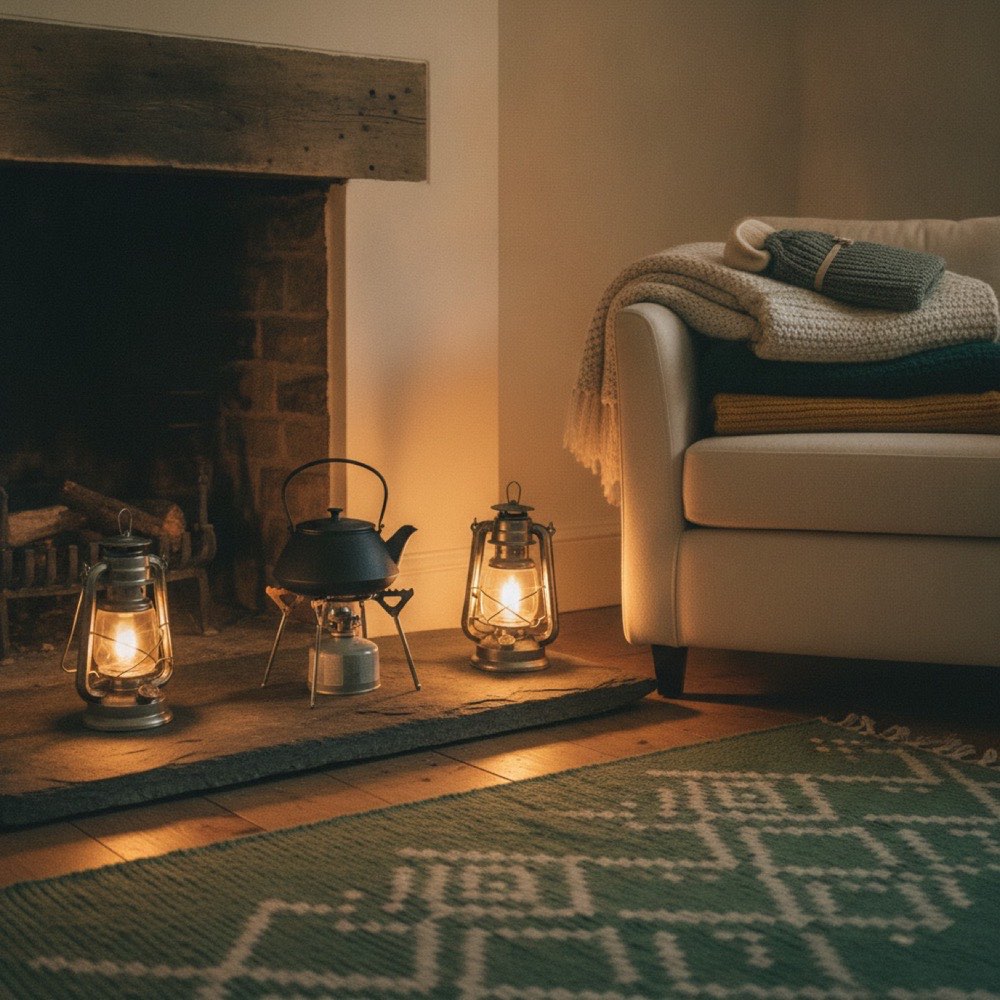
When the electricity goes off in winter, gas central heating goes with it in most UK homes, because the boiler's pump and controls need mains power. A non electric heater is the honest answer to that problem, but it is also a combustion appliance running inside your home, so this guide treats safety rules with the same weight as heat output. Every pick is confirmed as listed on amazon.co.uk at the time of writing, and every one of them demands ventilation and a carbon monoxide alarm. That part is not optional.
| Pick | Model | Why | |
|---|---|---|---|
| Best Overall for Room Heat | Portable 4.2kW Butane Cabinet Heater (with regulator and hose) | The classic cabinet heater is still the most heat per pound of any non electric option, and it is the format UK homes have used through power cuts for decades. A 15kg butane cylinder runs for days of intermittent use, the three ceramic panels throttle from background warmth to full output, and modern versions include an oxygen depletion sensor that shuts the gas off if room air quality falls. Several near identical models are listed on amazon.co.uk; buy one that explicitly includes the regulator, hose and safety cut-offs. | Check price |
| Best for Smaller Rooms and Controllability | Mr. Heater Portable Buddy (F232000) | The Portable Buddy is the rare small gas heater whose manufacturer explicitly addresses indoor emergency use, and it backs that with an oxygen depletion sensor and tip-over cut-off as standard. The low setting is enough to take the edge off a single closed room, which is exactly the power cut job, and it lights in seconds with no cylinder cabinet to wheel around. The US manual specifies minimum fresh air openings of 9 square inches each at floor and ceiling level during indoor use. | Check price |
| Best for Long Burns | Zibro 3.0kW Paraffin Wick Heater | Paraffin wick heaters are the quiet survivor of the category. Zibro, the Japanese-designed brand that dominates it in Europe, builds wick models that need no electricity whatsoever, not even for ignition once you have batteries for the igniter, and a single tank runs for many hours of continuous output. Fuel stores for years in sealed containers, which suits an appliance that may sit unused between emergencies. For an extended outage measured in days rather than hours, the burn time per fill is the best here. | Check price |
Why most UK heating fails in a power cut, and what a non electric heater solves
Around four in five UK homes heat with mains gas, but almost none of them can run that heating without electricity: the boiler's circulation pump, fan and controls all stop the moment the power goes. Heat pumps and electric heating stop outright. In a winter outage the house then cools at the mercy of its insulation, and after several hours the temperature in an average UK home falls to the point where vulnerable people are genuinely at risk.
A non electric heater breaks that dependency. The realistic strategy is not to heat the whole house but to pick one room, close its door, and keep that single space warm. One properly sized combustion heater, used by the book, does that for days. For the full room-by-room approach, including the no-cost measures that come before any purchase, see how to heat a room without electricity.
Safety first: carbon monoxide rules for any non electric heater
Every heater on this page burns fuel indoors, and anything that burns fuel can produce carbon monoxide if it is faulty, dirty or starved of air. CO is invisible, has no smell and kills people in their homes every winter. The NHS lists headaches, dizziness, nausea and confusion as the warning symptoms, and they are easy to mistake for coming down with something. So these rules apply to every pick above, without exception:
- Fit a carbon monoxide alarm certified to BS EN 50291 in any room where fuel burns, test it before the heating season, and take it with you to the room you are heating. Check price on Amazon
- Ventilate. Combustion heaters consume room oxygen. Manuals require permanent ventilation, and blocking vents or sealing the room to keep heat in is exactly how poisonings happen.
- Never run a combustion heater while you sleep, and never in bedrooms, bathrooms or caravans unless the appliance is specifically approved for it.
- Never bring outdoor kit indoors. Barbecues, patio heaters, camping stoves and generators are outdoor appliances, and fire services repeatedly link them to CO deaths after power cuts. A barbecue in a living room or tent is lethal, even as embers.
- Oxygen depletion sensors are a backstop, not a licence. Modern heaters shut off when air quality falls, but the sensor protects against gross failure, not against ignoring the manual.
Fire and rescue services publish plain guidance on portable heater safety, and the HSE covers carbon monoxide in detail. Both are linked in the sources below and are worth ten minutes of your time before the first cold snap.
How we chose the best non electric heaters
This is specification research against the power cut use case, not laboratory testing. Each pick had to be listed on amazon.co.uk at the time of writing, had to run with no mains electricity at all, including ignition, and had to carry the baseline safety hardware: flame failure or oxygen depletion protection and a tip-over cut-off where the format allows it. We then compared heat output, running time per fuel load, fuel storability and the honest downsides the adverts skip.
We excluded three whole categories deliberately: outdoor-only appliances such as patio heaters and firepits, because they must never come indoors; tealight and terracotta contraptions, because their output is negligible and the fire risk real; and Zibro's electronic paraffin models, because they need a mains plug and therefore fail the basic test of this page.
Butane cabinet heater vs paraffin heater: the honest comparison
The two serious contenders for days-long heating are the gas cabinet heater and the paraffin wick heater, and the choice comes down to fuel logistics.
Cabinet heaters: cheap heat, heavy cylinder
A 15kg butane cylinder holds an enormous amount of energy and runs a cabinet heater on its low setting for days of intermittent use. The heater itself is inexpensive and the format is familiar. The downsides are the cylinder itself, which is heavy, bought through gas suppliers with a deposit scheme, and awkward to store, and butane's cold weather weakness: below roughly freezing, butane stops vaporising well, although indoors this rarely bites once the room has any warmth at all.
Paraffin heaters: dearer kit, easier fuel
Paraffin is bought in 4 and 20 litre containers from hardware shops and online, stores for years, and pours into the tank without any cylinder logistics. Wick heaters are mechanically simple and utterly independent of the grid. Against that, the heater costs more up front, quality fuel costs more per kWh than butane, and the lighting and extinguishing smell is real, which is why the routine is to light it and put it out with brief extra ventilation.
Both produce water vapour and both demand the same CO discipline. For how heating fits alongside cooking and light in a whole-house plan, see heat, cooking and light off mains.
Sizing a non electric heater to the room
Bigger is not better, because an oversized combustion heater in a small room cycles between too hot and off while consuming the room's air faster. A rough planning figure for a closed UK living room is around 100W per square metre, so a typical 15 to 20 square metre room is well served by 1.5 to 2kW of output, which is the low setting of a cabinet heater, the high setting of a Portable Buddy, or a mid-sized wick heater burning steadily.
- Single small room, short outages: the Portable Buddy's lower setting is ample. Check price on Amazon
- Main living room, multi-day outage: a cabinet heater on its lowest panel, cylinder already at home before winter. Check price on Amazon
- Long rural outages, fuel stored ahead: a Zibro wick heater plus 20 litres of Class C1 paraffin. Check price on Amazon Check price on Amazon
Whatever you choose, respect the manual's stated minimum room size, keep a metre of clearance from anything that can burn, and put the heater where nobody will trip over it in a dim room.
Fuel storage and the rest of the plan
A heater without fuel on day three is an ornament. Butane cylinders live outdoors or in a ventilated outbuilding, upright, away from drains and ignition sources, and never in living spaces beyond the cylinder actually connected inside a cabinet heater. Paraffin stores in its original sealed containers in a shed or garage, clearly labelled, and Class C1 grade keeps for years. Buy fuel in autumn, not during the cold snap when everyone else is buying it.
Heat is one leg of the power cut tripod. The others, cooking and light, have their own guides: our indoor portable gas stove guide covers safe off-grid cooking, and the rechargeable lantern roundup covers light. Pull it all together with the master checklist in how to prepare for a power cut and the emergency kit list.
The picks in detail
Best Overall for Room Heat: Portable 4.2kW Butane Cabinet Heater (with regulator and hose)
4.2kW maximum output across three heat settings from 1.5kW, runs on a 15kg butane cylinder housed inside the cabinet, piezo ignition, oxygen depletion sensor and tip-over cut-off, castors for moving between rooms
The classic cabinet heater is still the most heat per pound of any non electric option, and it is the format UK homes have used through power cuts for decades. A 15kg butane cylinder runs for days of intermittent use, the three ceramic panels throttle from background warmth to full output, and modern versions include an oxygen depletion sensor that shuts the gas off if room air quality falls. Several near identical models are listed on amazon.co.uk; buy one that explicitly includes the regulator, hose and safety cut-offs.
Worth knowing: The cylinder is bought separately from gas suppliers and adds real cost and weight. Manuals prohibit use in bedrooms, bathrooms and high rise flats and require permanent ventilation in the room. It produces water vapour as it burns, so expect condensation on cold windows.
Best for Smaller Rooms and Controllability: Mr. Heater Portable Buddy (F232000)
Radiant propane heater with two settings around 1.2kW and 2.6kW (4,000 and 9,000 BTU), oxygen depletion sensor and tip-over shut-off, piezo ignition, fold-down handle, designed by the manufacturer for recreational and emergency indoor use with stated ventilation
The Portable Buddy is the rare small gas heater whose manufacturer explicitly addresses indoor emergency use, and it backs that with an oxygen depletion sensor and tip-over cut-off as standard. The low setting is enough to take the edge off a single closed room, which is exactly the power cut job, and it lights in seconds with no cylinder cabinet to wheel around. The US manual specifies minimum fresh air openings of 9 square inches each at floor and ceiling level during indoor use.
Worth knowing: It runs on propane, and the small disposable cylinders it was designed around are patchily available in the UK, so most UK owners run it from a refillable cylinder using the manufacturer's hose and filter, which adds cost. Follow the ventilation openings requirement exactly and never run it while sleeping.
Best for Long Burns: Zibro 3.0kW Paraffin Wick Heater
Wick burner around 3kW, quoted space output of 60 to 110 cubic metres, needs no mains power at all, runs on Class C1 heating paraffin, long burn time per tank fill
Paraffin wick heaters are the quiet survivor of the category. Zibro, the Japanese-designed brand that dominates it in Europe, builds wick models that need no electricity whatsoever, not even for ignition once you have batteries for the igniter, and a single tank runs for many hours of continuous output. Fuel stores for years in sealed containers, which suits an appliance that may sit unused between emergencies. For an extended outage measured in days rather than hours, the burn time per fill is the best here.
Worth knowing: Fresh paraffin has a noticeable smell at lighting and extinguishing, and fuel must be Class C1 paraffin, bought ahead because local availability varies. The same hard rules apply as for gas: permanent ventilation, no bedrooms, no unattended or overnight running. Zibro's electronic laser models need mains power, so for power cuts make sure you buy a wick model.
Your questions, answered
What is the best non electric heater for a power cut in the UK?
For heating a main living room through a multi-day outage, a 4.2kW butane cabinet heater gives the most heat per pound and runs for days on a 15kg cylinder. For a single smaller room, the Mr. Heater Portable Buddy is more controllable. For the longest burns with easily stored fuel, a Zibro paraffin wick heater is the strongest choice. All three require ventilation and a carbon monoxide alarm to BS EN 50291.
Are gas cabinet heaters safe to use indoors?
Yes, when used exactly as the manual requires: in a room with permanent ventilation, never in bedrooms, bathrooms or high rise flats, with clearance from furnishings and a working carbon monoxide alarm. Modern models include oxygen depletion sensors and tip-over cut-offs. The accidents happen when vents are blocked, rooms are sealed, or heaters run overnight.
Can I use a Mr Heater Portable Buddy indoors in the UK?
The manufacturer designed the Portable Buddy for recreational and emergency indoor use and fits an oxygen depletion sensor, but its manual requires minimum fresh air openings of 9 square inches each at floor and ceiling level during indoor use. In the UK it is usually run from a refillable propane cylinder via the manufacturer's hose and filter, since the small disposable cylinders are patchily available here. Never run it while sleeping.
Are paraffin heaters any good, or are they outdated?
Modern wick paraffin heaters are a genuinely strong option for long power cuts: no electricity needed at all, long burn times per tank and fuel that stores for years. Their honest downsides are purchase price, a smell at lighting and extinguishing, and the need to source Class C1 paraffin ahead of time. Avoid Zibro's electronic laser models for this job, as they need mains power.
What should I never use to heat a room in a power cut?
Never use a barbecue, patio heater, camping stove, firepit or generator indoors, in a garage or in a tent. All of them produce carbon monoxide at levels that kill in enclosed spaces, and UK fire services link them to deaths after storms and power cuts every year. A gas oven left on with the door open is also not a heater and is unsafe for the same reason.
Do I need a carbon monoxide alarm for a portable heater?
Yes. Fit an alarm certified to BS EN 50291 in any room where any fuel burns, whether gas, paraffin, wood or coal, and test it regularly. Battery powered alarms keep working during the power cut itself, which is exactly when you need them. They cost little and they are the single most important purchase on this page.
How long will a 15kg butane cylinder last in a cabinet heater?
A 15kg cylinder holds roughly 200kWh of energy. On a 1.5kW low setting that is of the order of 130 hours of actual burn time, so several days of continuous low heat or a couple of weeks of evening-only use. Real figures vary with the heater and how often it cycles, but a full cylinder comfortably outlasts almost any UK power cut.