How to Cook Without Electricity UK: Power Cut Plan
Last updated: 21 October 2026
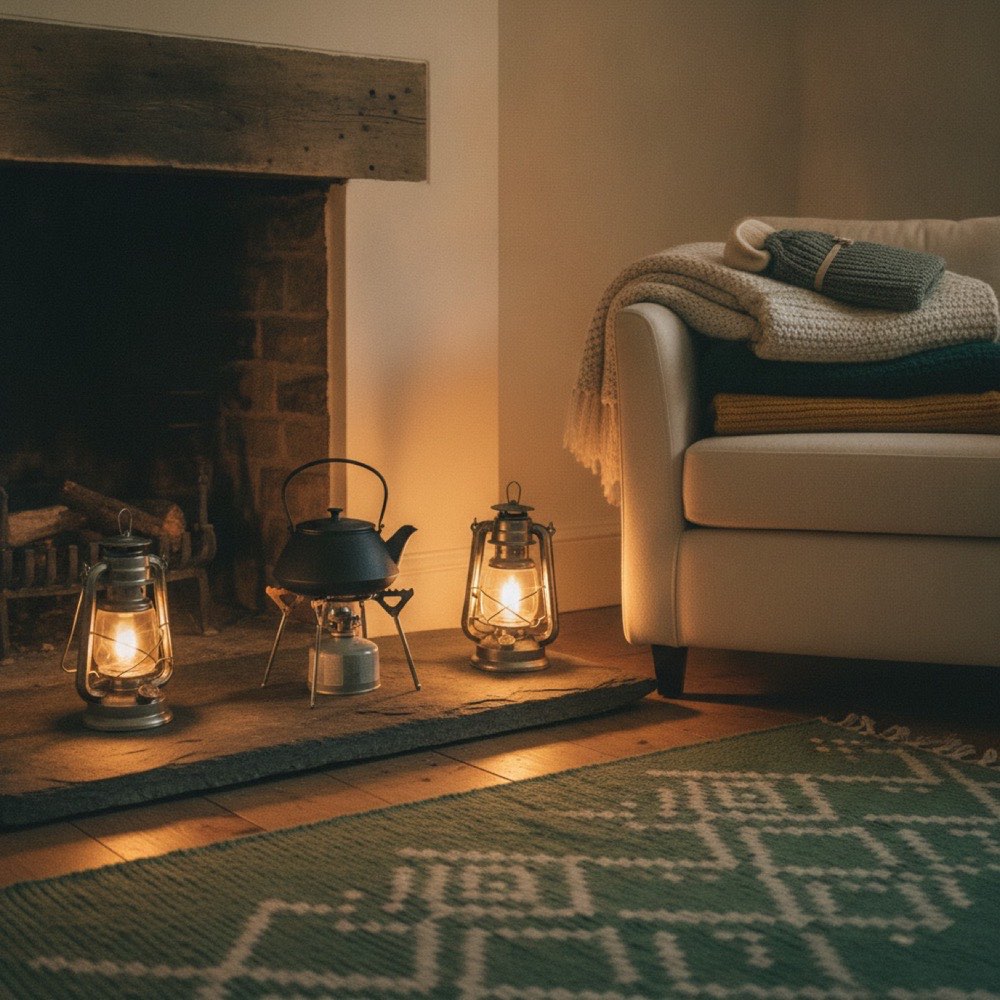
A power cut does not have to mean cold beans eaten straight from the tin. With a little planning you can serve hot drinks within minutes and proper hot meals for days, without mains electricity. This guide works through the options in the order that makes sense for a UK home: what needs no cooking at all, the flask method, your existing gas hob, and camping stoves with the safety rules spelled out honestly.
What to do in the first hour of a power cut
Before you think about cooking anything, protect the food you already have. Keep the fridge door shut: a closed fridge holds a safe temperature for around four hours, and a full, unopened frozen food compartment keeps its contents solid for roughly 24 to 48 hours. Every time you open the door you lose cold air, so decide what you want before you reach in.
Next, check what still works. Call 105 from any phone to reach your network operator and get an estimated restoration time. A two hour outage needs nothing more than sandwiches and a flask. A two day storm outage is a different job, and the rest of this guide covers it.
If you have a gas hob, test it now with a match rather than assuming it is dead. Many UK gas hobs only use electricity for the spark igniter, so the burners themselves still work when lit by hand. Gas ovens with electronic controls and fan assistance usually will not run, and a combi boiler will not fire without power, so plan around hob-top cooking only.
No cook meals for a power cut: what actually works
The easiest hot-meal problem to solve is the one you avoid entirely. A sensible UK store cupboard covers two full days of eating with zero heat:
- Tinned fish, cooked meats and beans: protein that keeps for years and needs nothing but a tin opener. Keep a manual opener in the drawer, a ring-pull-only cupboard runs out of luck eventually.
- Oatcakes, crackers, wraps and long-life bread: the base for quick meals without a toaster.
- Nut butters, hard cheese, UHT milk: calorie-dense and happy at room temperature, cheese keeps well for a day or two out of the fridge if it stays cool.
- Fruit, dried fruit, nuts, cereal bars: snacks that keep morale up, which matters more than people expect on day two.
- Overnight oats: oats soaked in UHT milk make a proper breakfast with no heat at all.
Build meals, not just snacks: tuna and bean wraps, cheese and oatcakes with chutney, rice pudding straight from the tin. Our emergency kit list includes a two day no-cook menu you can copy onto one sheet of paper.
The flask strategy: hot food and drinks for 12 hours
When a storm is forecast, fill every vacuum flask in the house with boiling water before the lights go out. A decent 1 litre flask keeps water hot enough for tea, instant coffee, instant soup, noodle pots and baby bottle warming for eight to twelve hours. Two large flasks cover a family for a full evening and the next morning.
A wide-mouth food flask goes further. Pour in boiling water, leave it two minutes to warm the steel, tip it out, then load it with just-cooked porridge, stew or pasta. It will still be properly hot at lunchtime. You can also cook in one: couscous, instant noodles and quick oats all cook from a kettle pour inside a preheated food flask.
The flask method has no flame, no fumes and no risk, which is why it comes before any stove in this guide. It pairs naturally with the one-warm-room approach in our guide to heating a room without electricity: hot food and drink do real work keeping people comfortable when the heating is off.
Can you use a camping stove indoors in a power cut?
This is the question that matters most, so here is the honest answer. Official UK guidance is blunt: the NHS says do not use a barbecue or camping stove indoors, because burning gas in an enclosed space can build up carbon monoxide, a gas you cannot see, smell or taste. Opening a window does not make an outdoor stove safe inside.
At the same time, some cartridge stove manufacturers publish specific ventilation conditions for use in a room, and that detail matters if you are choosing kit. We have unpacked exactly what those manuals say, model by model, in our guide to the best portable gas stoves for indoor use. The short version: default to cooking outside or at a wide-open doorway, keep sessions short, never use a stove for heating, and fit a carbon monoxide alarm certified to BS EN 50291 in any room where fuel ever burns.
What is never negotiable: charcoal barbecues, disposable barbecues and patio heaters stay outside, always, even after they look out. Smouldering charcoal gives off carbon monoxide for hours, and bringing a used barbecue into a house, garage, shed or tent has killed people in the UK.
Cooking outdoors: gas stoves, barbecues and kettle options
If you have any sheltered outdoor space, a doorstep, yard, balcony with clearance, or garden, a proper gas camping stove turns a power cut into a minor inconvenience. A two burner stove handles family cooking much like a hob: pasta, fry-ups, curry, boiled kettles for flasks. See our full comparison of the best gas camping stoves for power cuts for models worth owning.
Three options stand out for home standby:
- A double burner cartridge stove such as the Campingaz Camping Kitchen 2, which cooks real meals for a household on removable pan supports. Check price on Amazon
- A fast boil system such as the Jetboil Flash, which boils half a litre in around 100 seconds and sips gas, ideal for refilling flasks all day. Check price on Amazon
- A folding two burner bundle with gas included, such as the Kemper 4600 W folding stove supplied with four 450 g cartridges, so you are not caught with a stove and no fuel. Check price on Amazon
A charcoal barbecue also cooks well outdoors, but it is slow to light, hard to simmer on and carries the carbon monoxide warnings above. Gas is the better standby tool.
How long will gas last? Simple cartridge maths
Fuel planning is easier than it looks. A typical single burner cartridge stove runs at about 2.2 kW flat out and empties a 220 g butane cartridge in roughly 60 to 80 minutes at full power, noticeably longer at simmer. A 450 g cartridge on one 2 kW burner gives around two and a half to three hours of full-power cooking.
In practice you rarely run full power. Boiling a kettle takes a few minutes, a pan meal perhaps fifteen. A sensible household reserve is four to six 220 g cartridges, or two to three 450 g cartridges, which covers hot meals and drinks for several days. Store cartridges upright, away from sunlight and heat, and never change a cartridge near a flame: do it outside or in a well ventilated spot, exactly as every manufacturer manual instructs.
Match the cartridge to the stove: bistro-style stoves take 220 g to 250 g clip-in or slot-in butane cartridges, while many camping stoves take screw-thread EN417 canisters or valve cartridges such as Campingaz CV470. Check before you buy fuel, they are not interchangeable.
A simple 48 hour power cut meal plan
Put together, here is a workable two day plan for a UK family with one gas stove used outdoors and two flasks:
Day one
- Morning: flask-water tea and coffee, overnight oats or cereal with UHT milk.
- Midday: instant soup and noodle pots from flask water, cheese and crackers.
- Evening: one stove session outdoors: a one-pot chilli or pasta, plus a full kettle boiled to refill both flasks for the night.
Day two
- Morning: porridge made in one stove session, kettle boiled again for flasks.
- Midday: tuna bean wraps, fruit, no cooking.
- Evening: curry from tins and pouches in one pan, rice pouches warmed in the same pan.
Two stove sessions a day, each with a kettle boil tacked on, keeps fuel use low and keeps every hot drink off the flame. After dark, do all of this under battery light, not candles: see our guide to the best emergency lights for power cuts, and the wider off-mains heat, cooking and light pillar for how the whole system fits together.
Your questions, answered
Does a gas hob work in a power cut?
Usually yes. Most UK gas hobs only need electricity for the igniter, so you can light the burner with a match or stove lighter. Gas ovens with electronic controls generally will not work, and boilers need power, so plan hob-top meals only. If in doubt about your appliance, check its manual.
How long does food last in the fridge during a power cut?
Around four hours if you keep the door shut. A full frozen compartment holds its contents for roughly 24 to 48 hours unopened, a half-full one for about a day. After that, use common sense: anything that has warmed above fridge temperature for long, especially meat, fish and dairy, should not be eaten.
Is it safe to use a camping stove indoors?
Official NHS and fire service guidance says no: camping stoves and barbecues should not be used indoors because of carbon monoxide. Some cartridge stove manuals set out strict ventilation conditions for use in a room, which we cover in our indoor portable gas stove guide, but the safe default is outdoors or at a wide-open doorway, with a BS EN 50291 certified CO alarm fitted.
Can I use a barbecue in a garage or shed with the door open?
No. Charcoal gives off large amounts of carbon monoxide while burning and keeps producing it for hours while smouldering. An open door does not clear it. Barbecues stay fully outdoors, well away from doors and windows, and never come inside even after they appear to be out.
What is the best way to boil water without electricity?
On a gas hob lit with a match if you have one, otherwise a gas camping stove used outdoors. A fast boil system such as a Jetboil is the most fuel-efficient option for water only. Boil more than you need each time and store the surplus in vacuum flasks so each flame session goes further.
What should I keep in the cupboard for power cut meals?
Two days of no-cook food: tinned fish and beans, long-life bread or crackers, nut butter, hard cheese, UHT milk, fruit and cereal bars, plus a manual tin opener. Add instant soup, noodle pots, porridge oats and rice pouches that only need boiling water, and you can run almost entirely from flasks and one short stove session a day.