Best Gas Camping Stove for Power Cut UK: 2026 Guide
Last updated: 21 October 2026
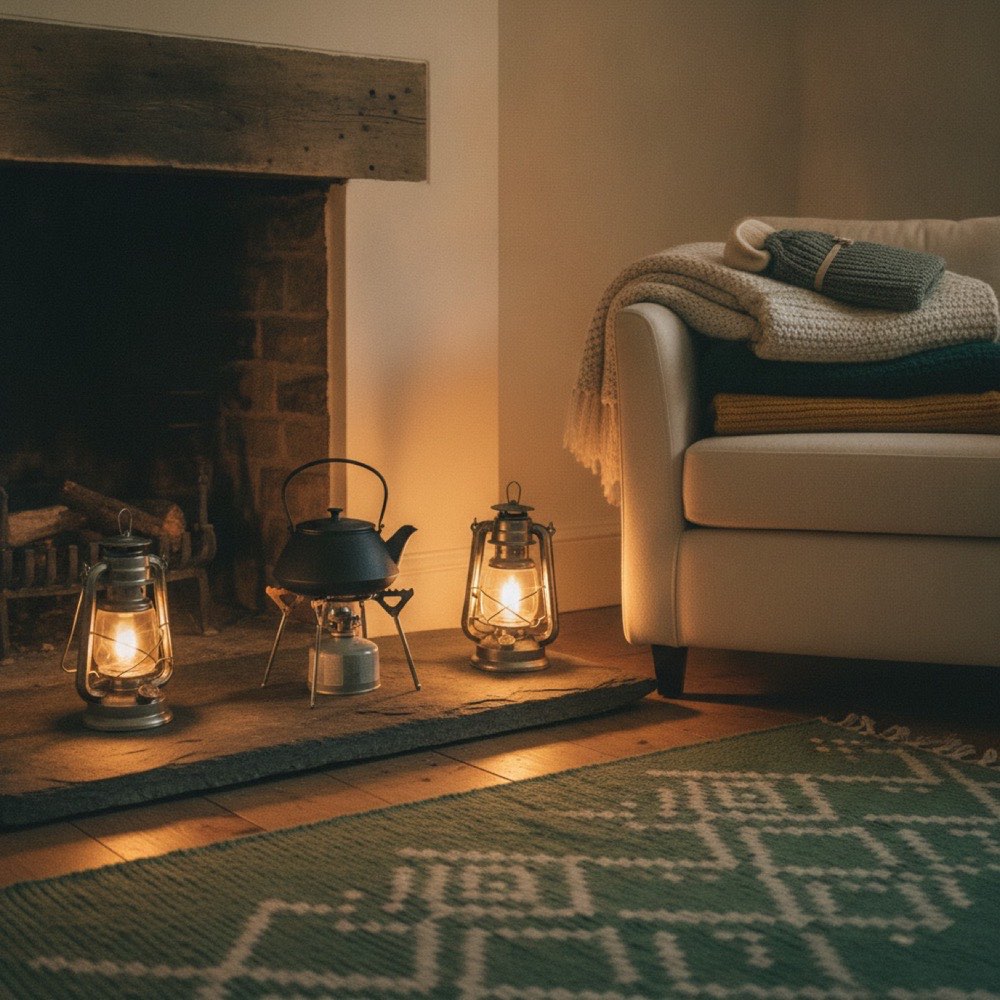
A gas camping stove is the single most useful piece of power cut kit a UK household can own: it boils kettles, cooks real meals and costs nothing to keep in a cupboard for years. But a stove chosen for backpacking is not automatically the right stove for feeding a family at home with the grid down. This guide compares the formats that make sense for home standby, with honest fuel maths and the safety rules that come with burning gas near a house.
| Pick | Model | Why | |
|---|---|---|---|
| Best double burner for home standby | Campingaz Camping Kitchen 2 | Two independent burners is the difference between camp snacks and proper cooking: pasta on one ring, sauce on the other, then a kettle for flasks. It packs flat, sets up on any stable outdoor table and the big CV470 cartridge gives hours of cooking per can. | Check price |
| Most cooking power | Campingaz 400 ST | When you are feeding more than two people in a long outage, output matters: 4,400 W across two burners boils big pans quickly and keeps up with family cooking in cold outdoor air, where smaller stoves struggle. | Check price |
| Fastest boil for hot drinks and flasks | Jetboil Flash | In a power cut the thing you boil most is water: tea, instant meals, hot water bottles, flask refills. The Flash does that one job faster and on less gas than anything else here, and its wind-shielded burner works in weather that defeats open stoves. | Check price |
| Best bundle with gas included | Kemper Folding Gas Stove 2 Burner with 4 Cartridges | The classic standby failure is owning a stove and no fuel. This bundle solves it in one order: four 450 g cartridges is enough cooking gas for the longest UK outages, and the folding frame stores in a cupboard until needed. | Check price |
Why a gas camping stove is the best power cut cooker
Electricity fails, gas cartridges do not. A camping stove needs no charging, no servicing and no fuel that goes stale, and it waits in a cupboard for years at full readiness. Compared with the alternatives, it wins on every axis that matters in an outage: a charcoal barbecue is slow, hard to control and dangerous anywhere near enclosed space; a wood fire needs a stove installation; and battery cooking appliances drain a power station that you probably want for lights, phones and the fridge.
For the wider picture of running a home with the grid down, our pillar guide to off-mains heat, cooking and light shows where the stove fits alongside heating and lighting. This page is about choosing the stove itself.
What to look for in a camping stove for power cuts
Home standby changes the priorities compared with camping:
- Burner count beats weight. You are carrying it to the garden, not up a mountain. Two burners means meals, not just boils.
- Fuel format decides everything. Stoves take one of three systems: slot-in 220 g to 250 g butane cartridges (bistro stoves), screw-thread EN417 canisters (backpacking stoves such as the Jetboil), or valve cartridges and cylinders (Campingaz CV470 and larger). None are interchangeable. Pick a format, then stock it.
- Wind performance. Open burners lose most of their heat in a breeze. Look for windshields, recessed burners or integrated systems, or plan to cook in a sheltered spot.
- Stability. A wide base and solid pan supports matter more at home, where you are cooking full-size pans, than they do with camping cookware.
- Ignition. Piezo igniters work with wet cold hands in the dark. Keep matches as backup anyway.
The best gas camping stoves for power cuts
Campingaz Camping Kitchen 2: best double burner for home standby
This is the stove this guide exists to recommend. Two independent 2,000 W stainless burners with removable pan supports take real kitchen pans up to 24 cm, which means one session cooks a family meal and boils a kettle for flasks. It runs on the CV470 Plus valve cartridge, a big 450 g can that clips on without tools and reseals when removed, so a part-used cartridge keeps for the next outage. Check price on Amazon
Campingaz 400 ST: most cooking power
The 400 ST brings 4,400 W of combined output in a portable two burner format, which is hob-like power: big pans, fast boils, and headroom for cooking outdoors in cold moving air where lesser stoves crawl. For households of four or more planning around multi-day storm outages, the extra output is worth the extra bulk. Check the listing for the gas connection supplied and order matching fuel with the stove. Check price on Amazon
Jetboil Flash: fastest boil for hot drinks and flasks
The Flash is a specialist: an integrated burner and 1 litre heat-exchanger cup that boils half a litre in around 100 seconds on EN417 screw canisters. In a power cut it is the flask-filling machine, producing hot water faster and on less gas than any open stove, with a push-button igniter and a burner that shrugs off wind. Pair it with a double burner, or use it alone if you mostly need hot water rather than cooked meals. Check price on Amazon
Kemper Folding 2 Burner with 4 Cartridges: best bundle with gas included
Kemper's folding stainless stove delivers 4,600 W across two burners and arrives with its hose and four 450 g cartridges in the box. That matters because fuel is the half of the system people forget: this is the one-order route to a complete standby cooking setup with days of gas on the shelf from day one. Check price on Amazon
How long does a gas cartridge last? Honest fuel maths
Butane holds about 12.7 kWh of energy per kilogram, so the sums are simple. A 2 kW burner at full flame uses roughly 150 to 170 g of gas per hour. That means:
- A 220 g bistro cartridge gives about 60 to 80 minutes at full power.
- A 450 g cartridge on one 2 kW burner gives around two and a half to three hours flat out, and far longer at simmer.
- A 100 g EN417 canister on a fast boil system is good for roughly ten litres of boiled water.
Real cooking rarely runs full power, so treat these as worst-case figures. A household that cooks two stove sessions a day, as in the meal plan from our guide to cooking without electricity, uses roughly one 220 g cartridge per day or one 450 g cartridge every two days. Stocking four to six cartridges in the format your stove takes covers any realistic UK outage. Store them upright, cool and out of sunlight.
Camping stove safety at home: the rules that are not optional
Every stove on this page burns gas and produces combustion fumes, including carbon monoxide if the flame is starved of air. The rules, drawn from NHS guidance and manufacturer instructions:
- Default to outdoors. NHS guidance says do not use a barbecue or camping stove indoors. A doorstep, yard or garden table is the right venue, sheltered from wind but open to the air.
- Thinking about indoor use? That is a separate question with its own manufacturer rules and limits, and we cover it honestly, manual quotes included, in our guide to the best portable gas stoves for indoor use. Do not improvise it.
- Fit a CO alarm certified to BS EN 50291 in any room where fuel ever burns, including the room adjoining a doorway you cook at. Gas Safe Register recommends an audible alarm in every room with a fuel-burning appliance.
- Change cartridges outside or in a well ventilated space, away from any flame, exactly as the manuals instruct.
- Never use a cooking stove as a heater. That is the single most common route to CO poisoning in outages. For staying warm, see how to heat a room without electricity.
- Keep a fire blanket or extinguisher nearby and cook away from anything that can catch: fence panels, parasols, washing lines.
Which stove format should you buy for power cuts?
Three honest recommendations by household:
- Most households: one double burner stove (the Camping Kitchen 2 or the Kemper bundle) plus four cartridges. It cooks everything and costs little to keep ready.
- Couples and flats with limited outdoor space: a Jetboil Flash plus a no-cook cupboard. Hot water solves most meals via instant food and flasks, with the smallest kit and the least flame time.
- Larger families and rural homes with longer outages: the 400 ST for output, plus a fast boil system so water never competes with cooking for burner space.
A single-burner bistro stove also works as a budget starting point, and because it is the one format some manufacturers address for indoor use, we have given it its own guide rather than squeezing it in here. Add the stove, fuel and a CO alarm to the one-box kit in our emergency kit list and the cooking problem is permanently solved.
The picks in detail
Best double burner for home standby: Campingaz Camping Kitchen 2
Two 2,000 W stainless steel burners, removable dishwasher-safe pan supports for pans up to 24 cm, piezo ignition, runs on Campingaz CV470 Plus valve cartridges
Two independent burners is the difference between camp snacks and proper cooking: pasta on one ring, sauce on the other, then a kettle for flasks. It packs flat, sets up on any stable outdoor table and the big CV470 cartridge gives hours of cooking per can.
Worth knowing: Valve cartridges cost more per gram than bistro-stove butane cans, and you should keep a spare because nothing else fits. It needs a sheltered spot, wind steals heat from open burners.
Most cooking power: Campingaz 400 ST
Two burners with 4,400 W combined output, compact suitcase-style fold, designed for larger pans and faster boils than cartridge-top stoves
When you are feeding more than two people in a long outage, output matters: 4,400 W across two burners boils big pans quickly and keeps up with family cooking in cold outdoor air, where smaller stoves struggle.
Worth knowing: Confirm on the listing which gas connection and regulator the unit ships with before buying, and buy matching fuel at the same time. It is the bulkiest option here, overkill for one or two people.
Fastest boil for hot drinks and flasks: Jetboil Flash
Integrated 1 litre FluxRing cooking cup, boils 0.5 litres in around 100 seconds, push-button igniter, colour-change heat indicator, uses EN417 screw-thread gas canisters
In a power cut the thing you boil most is water: tea, instant meals, hot water bottles, flask refills. The Flash does that one job faster and on less gas than anything else here, and its wind-shielded burner works in weather that defeats open stoves.
Worth knowing: It is a water boiler first, not a frying stove, so treat it as a second stove or a one-person solution. Canisters are pressurised blends that perform worse in deep cold, keep a spare indoors at room temperature.
Best bundle with gas included: Kemper Folding Gas Stove 2 Burner with 4 Cartridges
Two burners, 4,600 W combined, stainless steel, folds for storage, supplied with gas hose and four 450 g cartridges on a 7/16 inch thread
The classic standby failure is owning a stove and no fuel. This bundle solves it in one order: four 450 g cartridges is enough cooking gas for the longest UK outages, and the folding frame stores in a cupboard until needed.
Worth knowing: A less familiar brand than Campingaz in the UK, so check current listing reviews and confirm replacement 7/16 thread cartridges are easy for you to source locally before committing to the system.
Your questions, answered
What is the best camping stove for power cuts in the UK?
For most households, a double burner cartridge stove such as the Campingaz Camping Kitchen 2: it cooks full meals and boils kettles in one session, packs flat and stores for years. If you mainly need hot water, a Jetboil Flash boils faster on less gas. Buy four to six cartridges in your stove's format at the same time.
Can I use a camping stove indoors during a power cut?
Official NHS guidance says no, camping stoves belong outdoors because of carbon monoxide. A small number of cartridge stoves have manufacturer ventilation conditions for room use, which we examine in our separate indoor portable gas stove guide. The safe default is outdoors or at a wide-open doorway, with a BS EN 50291 CO alarm fitted.
How many gas cartridges do I need for an emergency?
Plan on one 220 g cartridge per day of cooked meals and hot drinks for a household, or one 450 g cartridge every two days. Four to six 220 g cartridges, or two to three 450 g, covers almost any UK outage. Store them upright, cool and away from sunlight, and restock after each use.
Do gas camping stoves work in winter?
Butane struggles below about 5 C because it stops vaporising, so pure-butane bistro cartridges fade in a cold garden. Propane and isobutane mixes in EN417 canisters and Campingaz valve cartridges perform much better in cold. Keep cartridges at room temperature until you cook and performance improves markedly.
Is a camping stove better than a barbecue in a power cut?
Yes for almost everything: gas lights instantly, simmers properly, boils kettles and switches off. Charcoal is slow, uncontrollable and produces large amounts of carbon monoxide while burning and smouldering, so it must stay fully outdoors and never come inside even once it looks out.
What else do I need besides the stove?
Fuel in the right format, matches as igniter backup, a windshield or sheltered cooking spot, a carbon monoxide alarm certified to BS EN 50291, and a fire blanket. Add two vacuum flasks so every boil stretches further, and keep the lot together as part of a wider emergency kit.