How to Build an Emergency Food Supply UK: Step by Step
Last updated: 21 October 2026
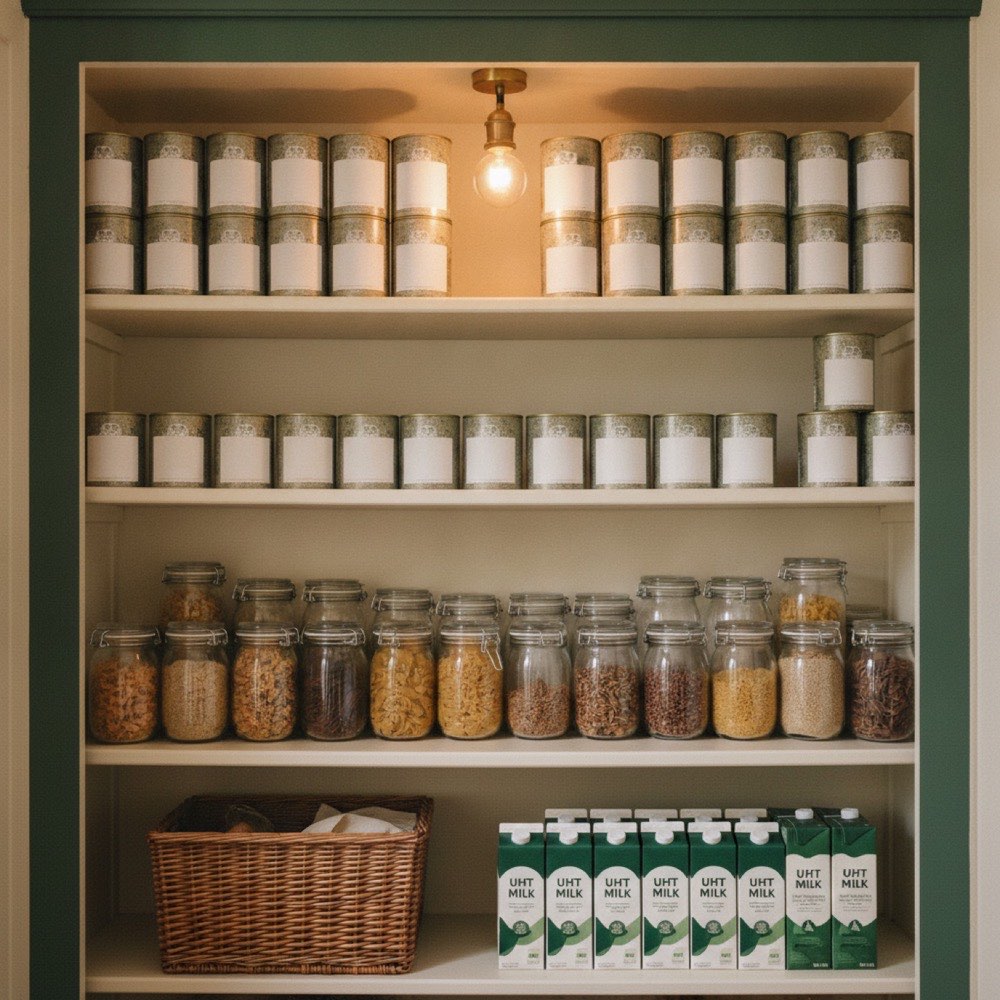
<p>Building an emergency food supply is a process, not a shopping trip. Done badly, it is a cupboard of tins nobody eats that quietly go out of date. Done well, it is three layers of food your household already likes, bought a few items at a time and rotated through normal cooking so nothing is ever wasted. This guide is the build method: the order to buy in, the layering system, a worked two week example for a real household, and the rotation habit that keeps it all current. For the full picture of what belongs in a UK supply, product by product, see the pillar guide to the <a href="/best-emergency-food-supply-uk/">best emergency food supply in the UK</a>; this page is how you actually put one together.</p>
The three layer method for a UK emergency food supply
Every workable home food supply splits into three layers with different jobs and shelf lives:
- Layer 1: no cook, grab and eat (first 72 hours). Food that needs no power, no water and no preparation: cereal bars, nuts, dried fruit, crackers, long life snacks, plus the ring pull tins you would eat cold if needed. This layer doubles as the food element of a grab bag, covered in what to put in a grab bag.
- Layer 2: everyday long life (the working two weeks). The core of the supply: tinned meals, tinned fish and meat, tinned vegetables and fruit, pasta, rice, oats, UHT milk, jars of sauce. Everything here is food you already cook with, stored slightly deeper than usual and rotated through normal meals.
- Layer 3: deep reserve (set and forget). A small amount of genuinely long dated food that sits untouched for years: emergency ration bars and freeze dried meals with manufacturer stated shelf lives of five to twenty years. This layer costs more per calorie, so it stays small.
The common mistake is starting at layer 3 because it feels most serious. Start at layer 2: it is the cheapest, the most useful in the most likely scenarios (a power cut, a storm week, illness, a tight month), and it wastes nothing because you eat it anyway.
Step 1: audit what you already have
Before buying anything, empty the cupboards onto the table once and count what is already storable: tins, dried pasta and rice, jars, UHT cartons. Most UK households discover they already hold three to five days of layer 2 without trying. Note the gaps rather than the totals; the usual ones are protein (tinned fish, meat, beans), breakfast, UHT milk and anything you could eat with no cooking at all.
While the cupboard is empty, check dates and set up the single most important physical habit of the whole system: new stock goes to the back, oldest stock sits at the front. That one shelf rule is ninety percent of rotation.
Step 2: build the two week core a few pounds at a time
Do not do one giant shop. Add three to six long life items to the normal weekly shop until the core is built; it typically takes four to eight weeks and is barely noticeable in the budget. Buy in this order of priority:
- Protein first: tinned fish, tinned meat, baked beans, lentils, peanut butter. Protein is the expensive gap when supply is disrupted.
- Carbohydrate base: pasta, rice, oats, crackers, instant mash. Cheap, dense, keeps for one to two years or more.
- Tinned vegetables and fruit: for micronutrients and morale, chosen from what your household genuinely eats.
- Fats and flavour: cooking oil, stock cubes, salt, sugar, tea and coffee, a jar of honey. Flavour is what keeps a disrupted week feeling normal.
- UHT milk and no cook items: the layer 1 top up.
One rule overrides everything: only store what you already eat. A supply of unfamiliar food gets wasted at rotation time and ignored under stress. Which staples give the most calories for the least money is its own subject, covered in cheap long life food to stockpile in the UK.
Worked example: a two week emergency food supply for two adults
A concrete target makes the build real. Two adults need roughly 2,000 calories each per day, so a two week supply is about 56,000 calories that can be prepared with minimal power and the stored water covered in how to store water long term. A realistic UK supermarket version:
- Breakfasts: 2kg oats, 12 x 1 litre UHT milk, honey or sugar, dried fruit. Covers 28 breakfasts with spares.
- Lunches: 8 tins of soup, 6 tins of baked beans, 2 large packs of crackers or crispbread, 2 jars of peanut butter, 4 tins of fish.
- Dinners: 3kg pasta and 2kg rice, 8 jars or tins of sauce, 6 tins of meat or meat meals, 4 tins of mixed vegetables, 4 tins of tomatoes, stock cubes, oil.
- No cook and morale: cereal bars, nuts, chocolate, dried fruit, instant coffee, tea, long life fruit juice.
That list fits in roughly two thirds of one kitchen cupboard and, bought gradually, spreads across a month or two of shops. Scale per person by adding fifty percent per additional adult and roughly a third per child, then adjust around allergies, medication needs and pets. Note what is missing on purpose: nothing frozen (assume the freezer may be off in a long outage) and nothing needing an oven. A gas hob, camping stove used outdoors or well ventilated, or a 1000Wh class portable power station running a microwave in short bursts covers the heat needed (Check price on Amazon); see how to prepare for a power cut for the cooking options.
Step 3: add a small deep reserve last
Once the two week core exists, a compact layer 3 adds years of buffer in a shoebox of space. The honest options for the UK:
- Emergency ration bars: compressed food bars such as Katadyn NRG-5, around 2,300 calories per 500g pack with manufacturer stated shelf lives measured in years. Dense, dull and dependable; a box of five packs is roughly five person days of pure calories. Check price on Amazon
- Freeze dried meal pouches: far more pleasant to eat, five to ten year manufacturer stated shelf lives, but they need hot water, so they only make sense alongside a working means to boil.
Keep layer 3 proportionate: for most households, five to ten percent of the total supply. Its job is covering the rare long tail event and bridging rotation gaps, not replacing the supermarket layers that do the everyday work. Verify the stated shelf life on the manufacturer's own packaging text rather than marketplace titles, and date everything on arrival.
Step 4: rotation that never wastes a tin
Rotation is where supplies die, so make it mechanical rather than a project:
- Front to back shelving: cook from the front, restock at the back. This alone keeps layer 2 current with zero admin.
- Twice yearly date check: at the clock changes, the same trigger as the water rotation, scan dates and move anything within three months of its best before into the meal plan for the coming fortnight, replacing it on the next shop.
- Best before is not a cliff edge: UK guidance distinguishes best before (quality) from use by (safety). Most tinned and dried goods remain safe well past best before if undamaged; quality fades first. Rotate on dates anyway so quality is never the question, and bin anything with bulging, rusted or dented seams.
- One page inventory: a sheet taped inside the cupboard door listing categories and target quantities. Tick it during the date check; it turns restocking into a two minute list.
Common mistakes when building a food stockpile
The failure patterns to design out from day one:
- Buying exotic survival food first and nothing anyone eats. The supply should look like your normal shopping, just deeper.
- Forgetting water: rice, pasta, oats and freeze dried food all consume stored water. Build the water supply in parallel, not afterwards; a UN approved multi pack is the one order version: Check price on Amazon
- Forgetting the opener: two manual tin openers live with the supply, full stop.
- No way to cook: plan at least one method of heating food and water that does not depend on mains electricity, and never use barbecues or camping stoves indoors because of carbon monoxide risk.
- All in one place: damp garages ruin tins and cardboard. Cool, dry, dark indoor storage preserves them.
- Building it and never finishing the kit: food is one line of the wider emergency kit list; light, warmth, first aid and comms complete the household plan, in line with the gov.uk Prepare campaign's advice to keep a basic stock of food that does not need cooking alongside bottled water.
Your build order summarised
The whole method on one card:
- Week 0: cupboard audit, set up front to back shelving, list the gaps.
- Weeks 1 to 8: add a few long life items per shop, protein first, until the two week core for your household is in place.
- Then: add a shoebox of layer 3 ration bars or freeze dried pouches with verified manufacturer shelf lives.
- Ongoing: cook from the front, restock at the back, date check at the clock changes.
Total ongoing effort is roughly twenty minutes twice a year, and at no point does the budget feel it. The best time to add the first three tins is this week's shop.
Your questions, answered
How much food should a UK household keep for emergencies?
A practical target is two weeks of food per person, built from long life items you already eat, roughly 2,000 calories per adult per day. The gov.uk Prepare campaign recommends keeping a stock of food that needs no cooking as part of a basic home emergency kit; the two week core extends that to realistic meals.
What food should I buy first for an emergency supply?
Protein first: tinned fish, tinned meat, beans and peanut butter, because protein is the costliest gap to fill later. Then carbohydrate staples such as pasta, rice and oats, then tinned vegetables and fruit, then fats, flavourings and UHT milk.
How long does tinned food really last in the UK?
Most tinned goods carry best before dates one to five years out, and best before is a quality marker rather than a safety cut off. Undamaged tins stored cool and dry commonly remain safe beyond the date, though taste and texture fade. Discard any tin that is bulging, leaking, heavily dented on the seam or rusted through.
Is it worth buying freeze dried survival food?
As a small top layer, yes: manufacturer stated shelf lives run five to ten years for pouches and up to twenty or more for ration bars. As the main supply, no: it costs far more per calorie than supermarket staples and most of it needs hot water. Keep it to roughly five to ten percent of the total.
How do I rotate emergency food without wasting it?
Store only food you normally eat, shelve it front to back so the oldest gets cooked first, and run a date check at the spring and autumn clock changes. Anything within three months of best before goes into the next fortnight's meals and is replaced on the following shop.
What can I cook during a power cut?
With a gas hob you can cook most of the supply as normal (ignite it per the manufacturer's guidance if the electronic ignition is down). Otherwise use a camping stove outdoors or in a very well ventilated space, never indoors, or run a low wattage appliance from a portable power station. Build part of the supply as no cook food so meals never depend on heat.
Should emergency food be kept separate from everyday food?
Layers 1 and 2 work best inside the normal kitchen rotation, just stocked deeper, because that is what keeps them in date. Only the small deep reserve of ration bars or freeze dried pouches should sit untouched, dated and checked twice a year.