How to Store Water Long Term in the UK: Full Method
Last updated: 21 October 2026
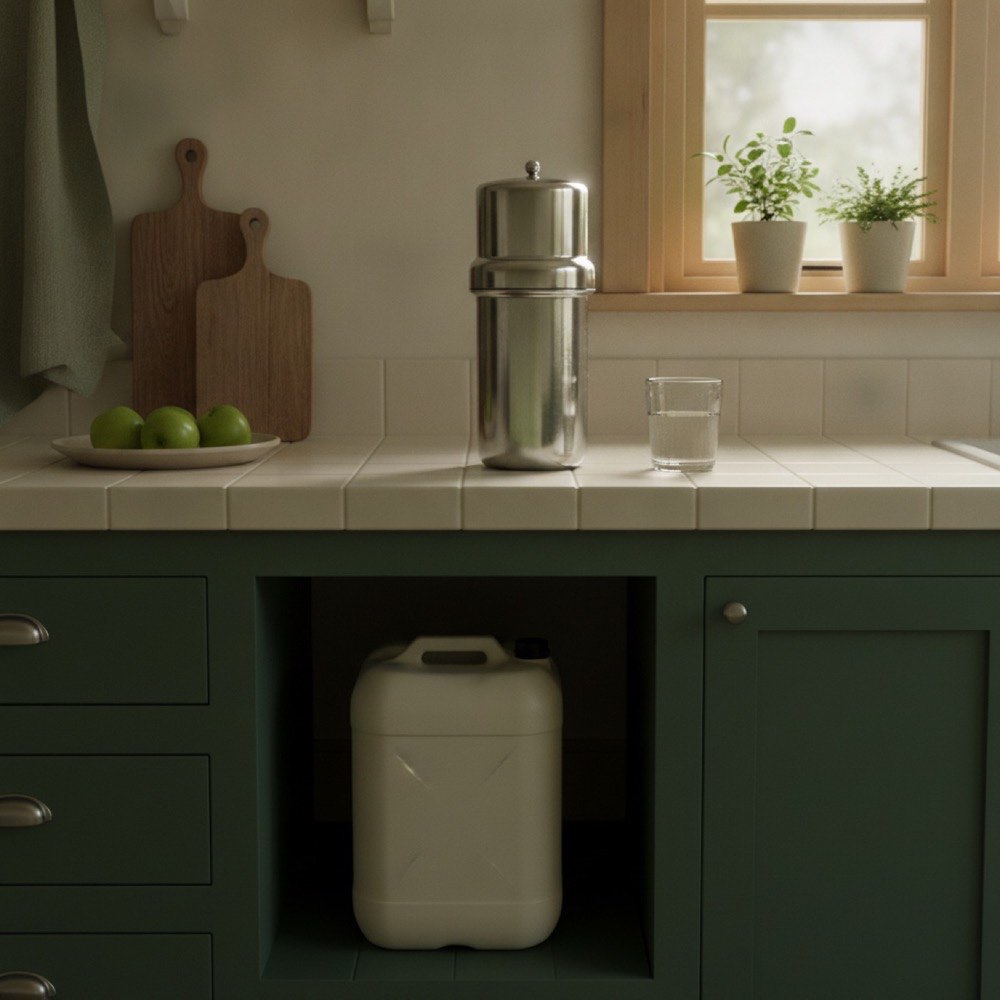
<p>Storing water properly in the UK is easier than most guides make it sound, because mains tap water here arrives already treated and lightly chlorinated. Get three things right, clean food grade containers, sensible storage conditions and a rotation habit, and tap water keeps for months without any added chemicals. This guide walks through the full method in order: preparing containers, filling them, whether treatment is ever needed, where to keep them and how to tell when stored water should be replaced.</p>
Step 1: choose food grade containers before anything else
Everything downstream depends on the container. Use purpose made food grade HDPE water containers: 20 or 25 litre jerry cans for the main reserve, plus a tapped container for day to day use during an interruption. Supermarket bottled water in sealed PET bottles also stores well until its best before date and needs no preparation at all, which makes it a good top up layer alongside refillable cans.
What not to use: old milk bottles (residues feed bacteria), anything that has held fuel or chemicals, garden water butts for drinking supply, and clear containers that will sit in daylight. The full standards breakdown, resin codes, UN markings and how to verify listings, is in our food grade water storage containers guide, and the product comparison lives in best emergency water storage containers. A verified starting point is a four can multi pack: Check price on Amazon.
Step 2: how to clean and prepare water containers for storage
New containers need one preparation session; reused ones need it before every refill. The method:
- Wash inside and out with warm water and a little washing up liquid, then rinse until no suds remain.
- Sanitise with a weak bleach solution: one teaspoon of plain unscented household bleach (sodium hypochlorite, no perfumes or thickeners) in one litre of water. Slosh it around so it contacts every inner surface including the cap thread, leave it for a minute, then pour out.
- Rinse thoroughly with clean tap water until there is no bleach smell.
- Air the container upside down until dry if you are not filling immediately, so nothing grows in trapped moisture.
If a container has a lingering plastic smell when new, a rinse with a tablespoon of bicarbonate of soda in warm water usually clears it. Taps and caps get the same sanitising treatment: they are the most commonly skipped contamination point.
Do you need to treat UK tap water before storing it?
For mains tap water going into clean food grade containers: no. UK mains water is treated at the works and carries a small residual of chlorine, typically around 0.1 to 0.5 milligrams per litre by the time it reaches your tap, precisely so it stays wholesome in the pipes. The World Health Organization's guidance on household water treatment is aimed at water of uncertain quality; municipally treated and chlorinated supply does not need further disinfection before storage. Adding purification tablets to clean UK tap water at filling time is redundant.
The honest caveats:
- The chlorine residual fades over weeks to months in storage. The water does not suddenly become unsafe when it fades, but it loses its self protection, which is why rotation matters more than treatment.
- If you are on a private supply (a borehole, spring or well) rather than mains water, the no treatment rule does not apply. Treat private supply water as untreated and disinfect before storage.
- Water purification tablets still earn a place in the cupboard, not for filling day, but for re treating stored water you have doubts about, or treating water from any source during a prolonged incident.
Step 3: filling technique that keeps water fresh longer
Small details at the tap make a measurable difference to how long the water stays pleasant:
- Run the cold kitchen tap for thirty seconds first so you are bottling fresh mains water, not water that has sat in your internal pipework.
- Fill right to the brim before capping. Less trapped air means less oxygen for anything to grow on and less flat taste later.
- Do not touch the inside of the cap or the container neck, and do not let the tap touch the container.
- Cap tightly, dry the outside, and label each container with the fill date in marker pen or on tape. The date is the whole rotation system.
Keep one tapped working container accessible for use during an actual outage, and treat the rest as a sealed reserve: Check price on Amazon handles the working can role.
How often should you rotate stored tap water? The schedule
The widely used rule for home stored mains tap water in clean sealed containers is to rotate every six months: empty, rinse, re sanitise, refill, re date. The clock changes in spring and autumn are the easiest possible reminder, change the clocks, change the water. Nothing dangerous happens on day 183; chlorine fade and slow taste decline are gradual, and well stored water is routinely fine beyond that. Six months simply keeps the reserve comfortably inside the window where you never need to think about it.
Two rotation shortcuts that keep effort near zero:
- Emptied water is not waste: use it on the garden, in the washing machine or for cleaning the car.
- Sealed supermarket bottled water rotates on its printed best before date instead, usually one to two years out, which is why a slab of bottles makes a low maintenance layer of the plan.
For how stored water fits the wider household kit, see the emergency kit list and our emergency water guide.
Where to store water: light, temperature and surfaces
Storage conditions do more for longevity than anything you can add to the water:
- Dark beats bright. Light drives algae growth, even through translucent HDPE. A cupboard under the stairs, a wardrobe floor or a dark garage corner are ideal.
- Cool and stable beats warm. Aim for somewhere that stays roughly 5 to 20 degrees year round. Avoid airing cupboards, boiler rooms, conservatories and south facing windows. Frost is a split risk for brim full containers in sheds, so leave a little headspace in anything stored where it might freeze, or keep the reserve indoors.
- Off concrete, away from chemicals. Stand containers on wooden battens, a shelf or cardboard rather than directly on a concrete garage floor, and never beside petrol, solvents or strong smelling cleaning products: HDPE can slowly pick up odours through the plastic.
- Spread the stock. 100 litres on one shelf is 100kg. Distribute across floor level spots rather than loading one piece of furniture.
How to tell if stored water has gone off, and what to do
Properly stored tap water does not expire the way food does, but it can deteriorate. Check with your eyes and nose before drinking anything stored:
- Flat or stale taste: normal and harmless, caused by lost dissolved oxygen. Fix it by pouring the water between two jugs a few times to aerate it.
- Green tinge or visible growth: algae from light exposure. Do not drink; empty the container, sanitise and improve the storage spot.
- Cloudiness, floating particles or a musty or rotten smell: discard and re sanitise the container. Something got in at filling time or through a poor cap seal.
- Plastic taste: usually taste pickup from warm storage rather than a safety issue, but it is a prompt to move the containers somewhere cooler and check the container quality.
If you ever need to use stored water you are unsure about, bring it to a rolling boil for one minute, the universal fallback endorsed by UK water companies and the WHO, or use purification tablets as directed. Boiling depends on having a way to heat water in a power cut, which is covered in how to prepare for a power cut.
The complete long term water storage routine at a glance
The whole method condensed:
- Buy food grade HDPE containers, a sealed reserve plus one tapped working can, sized at roughly 10 litres per person per day for two weeks as the comfortable target, with 2.5 to 3 litres per person per day as the drinking minimum. A 100 litre base for a couple is Check price on Amazon plus a slab of bottled water.
- Wash, sanitise with weak bleach solution, rinse.
- Fill to the brim with fresh run mains tap water. No tablets needed for mains supply.
- Cap, dry, date, and store dark, cool and off the concrete.
- Rotate at the clock changes. Sniff and look before use. Boil if in doubt.
Do the first fill this weekend and the system then costs you about twenty minutes twice a year.
Your questions, answered
How long can you store tap water in the UK?
In clean, sealed, food grade containers kept cool and dark, UK mains tap water stores well for at least six months, and usually longer. Six monthly rotation at the clock changes keeps the reserve comfortably fresh with minimal effort.
Do I need to add anything to tap water before storing it?
Not if it is UK mains water going into clean food grade containers. Mains supply is already treated and carries a residual disinfectant. Purification tablets are for private supplies, water of uncertain quality, or re treating stored water you have doubts about.
Does stored water go off?
It does not expire like food, but it can pick up a flat taste (harmless, fixed by aerating between two jugs), grow algae if stored in light, or become contaminated if the container was not clean. Cloudiness, smells or visible growth mean discard and re sanitise.
Can I store water in the garage or shed?
A dark garage corner works well if containers sit off the concrete floor and away from fuel and chemicals. In sheds, allow for frost: leave headspace so freezing cannot split a brim full container, or keep the main reserve indoors.
How much water should I store per person in the UK?
Plan a minimum of 2.5 to 3 litres per person per day for drinking, and around 10 litres per person per day to cover hygiene and cooking comfortably. Two weeks for a couple lands around 100 to 150 litres, split across jerry cans and bottled water.
Is it safe to drink water that has been stored for a year?
If it was mains water stored in a sanitised, sealed, food grade container kept cool and dark, it is very likely fine: check it looks clear and smells clean, and aerate it if it tastes flat. If in any doubt, boil for one minute before drinking.
Should I use water purification tablets for storage?
Keep a pack in the kit, but not for filling day with mains water. Their job is treating water from uncertain sources or re treating a stored supply after a contamination worry, not routine storage of already treated tap water.