Long Life Food for Emergencies UK: What Actually Keeps
Last updated: 21 October 2026
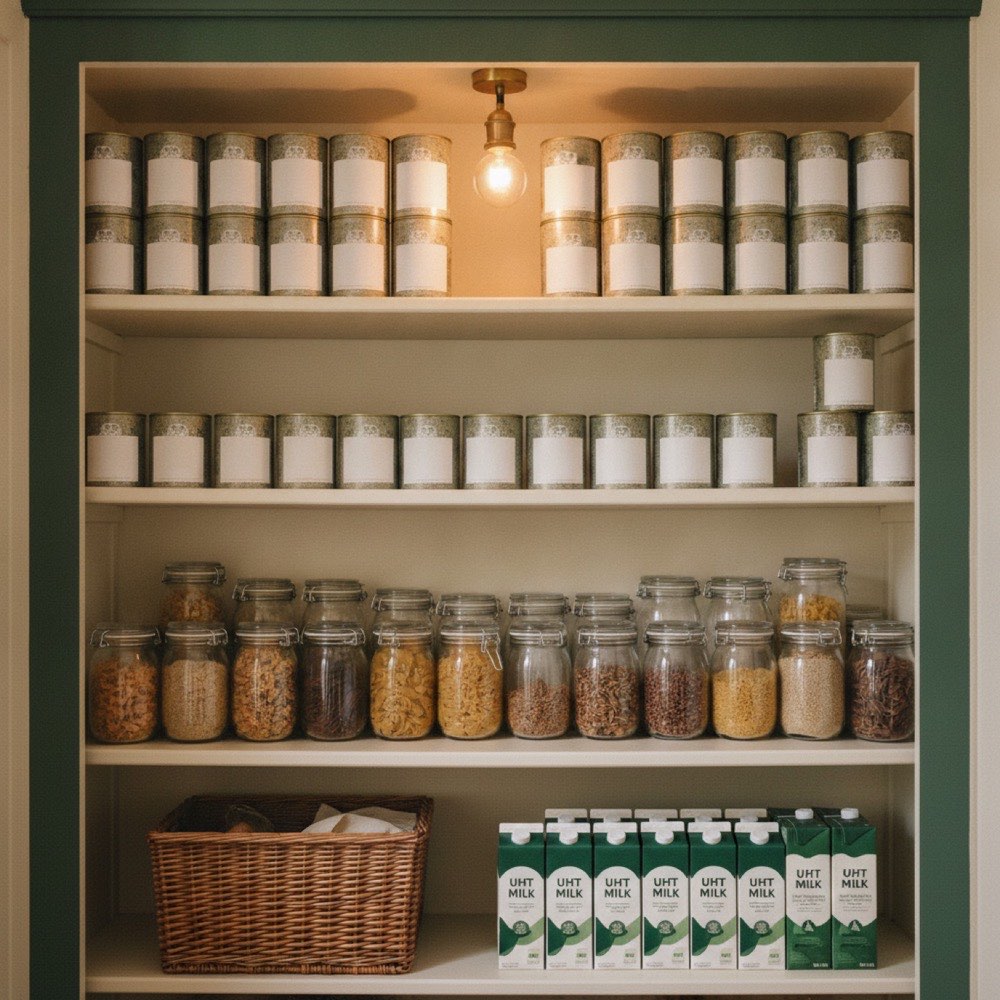
Long life food for emergencies falls into two camps in the UK: ordinary supermarket staples that keep for one to three years, and purpose-made freeze-dried rations that keep for five to twenty-five years. Most households need a sensible mix of both, and the good news is the supermarket layer costs very little to put together. This guide covers what genuinely keeps, what the manufacturers actually state about shelf life, and where the specialist pouches earn their place.
| Pick | Model | Why | |
|---|---|---|---|
| Best long-dated ration pack | ReadyWise 28 Servings Grab and Go Dry-Bag | This is the simplest way to add a genuinely long-dated layer to a UK emergency cupboard. ReadyWise states up to 25 years of shelf life on its UK listings, which means you buy it once, store it somewhere cool and dark, and stop thinking about rotation for that layer. Each pouch rehydrates with hot water in about 15 minutes. | Check price |
| Best larger household option | ReadyWise 60 Servings Grab and Go Dry Bag | The 60-serving bag is the better buy per serving for couples and families who want roughly a week of backup meals for two people in one purchase. Same preparation method and the same stated 25-year shelf life as the smaller bag. | Check price |
| Best UK-made ration pack | Expedition Foods Emergency Rations for 2 Weeks | Expedition Foods is a British freeze-dried specialist best known for feeding polar expeditions, and its two-week emergency pack is the most complete UK-made option sold on Amazon. The meals are substantial, the 800kcal pouches are genuinely filling, and they rehydrate with hot or even cold water at a push. | Check price |
What counts as long life food in the UK?
In practice there are three tiers of long life food available to UK households, and they behave very differently in storage.
- Ambient supermarket staples. Tins, dried pasta, rice, oats, UHT milk, jars and pouches. Best before dates at purchase typically run from around a year (UHT milk, crisps-style snacks) to two or three years (most tins, dried pasta, white rice). Always go by the printed date rather than a rule of thumb.
- Freeze-dried meals from UK outdoor brands. Expedition Foods states a shelf life of up to 5 years on its meals. Summit to Eat, another UK-made range, states at least 7 years from manufacture for its main meals when stored properly, with its fruit and cheese pouches holding a much shorter 2 years.
- Long-term storage food. This is the 25-year category dominated by American brands. ReadyWise now sells its 25-year pouches directly on amazon.co.uk, which makes it the most accessible genuinely long-dated option for UK buyers. We cover this tier in depth in our guide to 25 year shelf life food in the UK.
A sensible emergency cupboard uses all three tiers: everyday staples you rotate through normal cooking, a block of mid-dated pouches, and optionally a small long-dated reserve you never have to think about.
Supermarket long life staples that genuinely keep
Before spending anything on specialist rations, walk the ambient aisles. These are the staples that store well, cover real meals and rotate painlessly through everyday cooking.
Tinned goods
Tinned tomatoes, baked beans, kidney beans and chickpeas, tinned fish, soup, tinned potatoes and tinned fruit all commonly carry dates two to three years out at purchase, and tins need no water or heating to be safe to eat, which matters during a power cut. Keep a manual tin opener with the stash; it is the single most commonly forgotten item.
Dry goods
White rice, dried pasta, oats, couscous, lentils and flour are the backbone of cheap stored calories. Kept sealed, cool and dry, they comfortably see out their printed dates. Note that brown rice keeps for a much shorter time than white because of the oils in the bran, so stick to white for storage.
Everything else that earns a place
- UHT milk and plant milks (no fridge needed until opened)
- Peanut butter, honey, jam and golden syrup
- Cooking oil, stock cubes, salt, sugar, tea and coffee
- Crackers, oatcakes, cereal bars and dried fruit for no-cook eating
- Instant mash and instant noodles, which need only hot water
For a costed-out approach to this layer, see our companion guide to cheap long life food to stockpile in the UK.
Freeze-dried emergency food: verified UK shelf lives
Shelf life claims in this category get exaggerated across the internet, so here is what the manufacturers themselves state for products actually sold to UK buyers.
- Expedition Foods (UK): states a shelf life of up to 5 years on its freeze-dried meals, stored cool and dry in unopened pouches.
- Summit to Eat (UK-made): states a shelf life of at least 7 years from the date of manufacture for its main meals when stored properly. Its fruit, savoury and cheese pouches are stated at 2 years, so check each pouch type.
- ReadyWise (US brand, sold on amazon.co.uk): states up to 25 years of shelf life on its UK listings for its freeze-dried pouch ranges.
Two practical notes. First, every one of these figures assumes cool, dry storage away from sunlight; a hot garage or a damp shed will shorten them. Second, freeze-dried meals need water to become food. A two-week pack of pouches with no stored water is not a two-week food supply, so pair any purchase here with bottled water. The gov.uk Prepare campaign cites the World Health Organisation minimum of 2.5 to 3 litres of drinking water per person per day.
Long life food for emergencies: how much do you need?
The gov.uk Prepare campaign advises keeping enough non-perishable, ready-to-eat food at home to cover several days without shops or power. Most preparedness planning in the UK works to one of two targets:
- Three days (72 hours): the minimum worth holding, matched to the typical duration of severe weather disruption and the planning window used for most localised incidents.
- Two weeks: the comfortable target for storm-prone or rural areas, where road access and power restoration can take considerably longer.
As a rough planning figure, an adult needs in the region of 2,000 calories a day to function normally, so a two-week supply for two adults is about 56,000 calories. That sounds daunting until you realise a single bag of rice, a few tins and a jar of peanut butter chip away at it quickly and cheaply. The specialist pouches then cover the convenience gap: hot, varied meals with minimal effort and no fridge.
For the full step-by-step method, including a worked two-week shopping plan, read how to build an emergency food supply in the UK, and for the complete overview of every option see the pillar guide to the best emergency food supply in the UK.
Supermarket staples vs freeze-dried: which should you buy?
The honest answer is that supermarket food wins on cost and familiarity, and freeze-dried wins on shelf life and convenience. Here is how the trade-offs actually fall:
Choose mostly supermarket staples if
- Budget is the priority. Pound for pound, rice, pasta, oats and tins deliver several times the calories of any specialist ration.
- You will actually rotate. If the emergency stash is just a deeper version of your normal cupboard, nothing ever expires unused.
- You have picky eaters. Children in a stressful situation eat familiar beans on toast; they may refuse an unfamiliar rehydrated curry.
Add freeze-dried pouches if
- You want a sealed block of meals that cannot be raided for Tuesday dinners.
- Storage space is tight. Freeze-dried food is a fraction of the weight and bulk of the tinned equivalent.
- You want years between check-ups. Rotating a supermarket stash takes ongoing attention; a pouch stash with a 5, 7 or 25-year stated life mostly does not.
Most households land on the layered approach: a deep pantry of staples they eat anyway, plus one or two sealed ration packs as the untouchable reserve.
Storing long life food properly
Every shelf life figure above assumes decent storage, and poor storage is the main reason stored food disappoints. The rules are short:
- Cool. Steady household temperatures are fine; avoid lofts, conservatories, garages and sheds, which swing hot and cold through the year.
- Dark. Light degrades packaging and contents over years. A cupboard, under-stairs space or lidded plastic crate solves this.
- Dry. Damp rusts tins and ruins cardboard outer packaging. Off the floor and away from external walls is ideal.
- Sealed and protected. Keep pouches in their outer bags or a crate so they cannot be punctured, and keep dry goods in airtight containers once the stash grows.
- Dated and visible. Write the best before month on lids in marker pen so rotation takes seconds, and keep newer stock at the back.
Finally, remember that food is only one leg of being ready for disruption. Light, warmth and communication matter just as much when the power goes, and our guides to the power cut survival kit and how to prepare for a power cut cover that side. If you need a portable version of your supplies for evacuation, see the emergency grab bag guide.
The picks in detail
Best long-dated ration pack: ReadyWise 28 Servings Grab and Go Dry-Bag
28 servings of breakfast, lunch and dinner, freeze-dried, stated shelf life up to 25 years, roughly 3 days of meals for 1 person, sealed pouches in a carry bag
This is the simplest way to add a genuinely long-dated layer to a UK emergency cupboard. ReadyWise states up to 25 years of shelf life on its UK listings, which means you buy it once, store it somewhere cool and dark, and stop thinking about rotation for that layer. Each pouch rehydrates with hot water in about 15 minutes.
Worth knowing: Serving sizes are American and on the light side, so treat 28 servings as closer to 3 days for one adult than the headline suggests. You still need stored water and a way to heat it.
Best larger household option: ReadyWise 60 Servings Grab and Go Dry Bag
60 servings across breakfast, lunch and dinner, freeze-dried, stated shelf life up to 25 years, prepared with hot water in around 15 minutes
The 60-serving bag is the better buy per serving for couples and families who want roughly a week of backup meals for two people in one purchase. Same preparation method and the same stated 25-year shelf life as the smaller bag.
Worth knowing: It is a bulky single bag, so check you have a cool, dry storage spot before ordering. As with all freeze-dried food, your real limit becomes stored water, not stored food.
Best UK-made ration pack: Expedition Foods Emergency Rations for 2 Weeks
14 days of freeze-dried meals (breakfast, lunch and dinner per day), high-calorie pouches, UK company, manufacturer states a shelf life of up to 5 years
Expedition Foods is a British freeze-dried specialist best known for feeding polar expeditions, and its two-week emergency pack is the most complete UK-made option sold on Amazon. The meals are substantial, the 800kcal pouches are genuinely filling, and they rehydrate with hot or even cold water at a push.
Worth knowing: The honest trade-off against ReadyWise: the stated shelf life is up to 5 years, not 25, so this pack goes on a rotation schedule rather than a bury-and-forget one. Many people prefer that because the meals are nice enough to eat on camping trips as they approach their date.
Your questions, answered
What food lasts longest for emergencies in the UK?
Among ordinary supermarket food, white rice, dried pasta, tins, honey, salt and sugar keep longest, with printed dates commonly two to three years out and honey, salt and sugar keeping more or less indefinitely if stored dry. Among specialist options sold in the UK, ReadyWise states up to 25 years on its freeze-dried pouches, Summit to Eat states at least 7 years on its main meals, and Expedition Foods states up to 5 years.
How much emergency food should a UK household keep?
The gov.uk Prepare campaign advises enough non-perishable, ready-to-eat food for several days as a minimum. Three days of food per person is the sensible floor, and households in storm-prone or rural areas often work to two weeks. Build gradually by adding a couple of extra items to the weekly shop rather than buying everything at once.
Do I need special survival food or is supermarket food enough?
Supermarket food is enough for most households and costs far less per calorie. Specialist freeze-dried packs earn their place when you want a sealed reserve that will not get eaten in daily life, when storage space is very tight, or when you want five or more years between stock checks.
Does tinned food really expire?
Tins carry best before dates, which are about quality rather than safety, and intact tins stored cool and dry commonly remain fine well past the printed date. That said, discard any tin that is bulging, rusted through, leaking or badly dented along seams. For a stored supply, the practical approach is to rotate tins through normal cooking before their dates.
What is the difference between freeze-dried and dehydrated emergency food?
Freeze-drying removes water at low temperature under vacuum, which preserves more texture and nutrition and achieves longer stated shelf lives; dehydrating uses heat and typically keeps for less time. Most premium emergency meals sold in the UK, including Expedition Foods, Summit to Eat and ReadyWise pouches, are freeze-dried.
How much water do I need to store alongside long life food?
The gov.uk Prepare campaign cites the World Health Organisation recommendation of a minimum of 2.5 to 3 litres of drinking water per person per day, and suggests 10 litres per person per day makes you more comfortable by covering basic cooking and hygiene. Freeze-dried meals add to this requirement because they need water to rehydrate.