Is It Legal to Live Off Grid in the UK? Honest Guide
Last updated: 21 October 2026
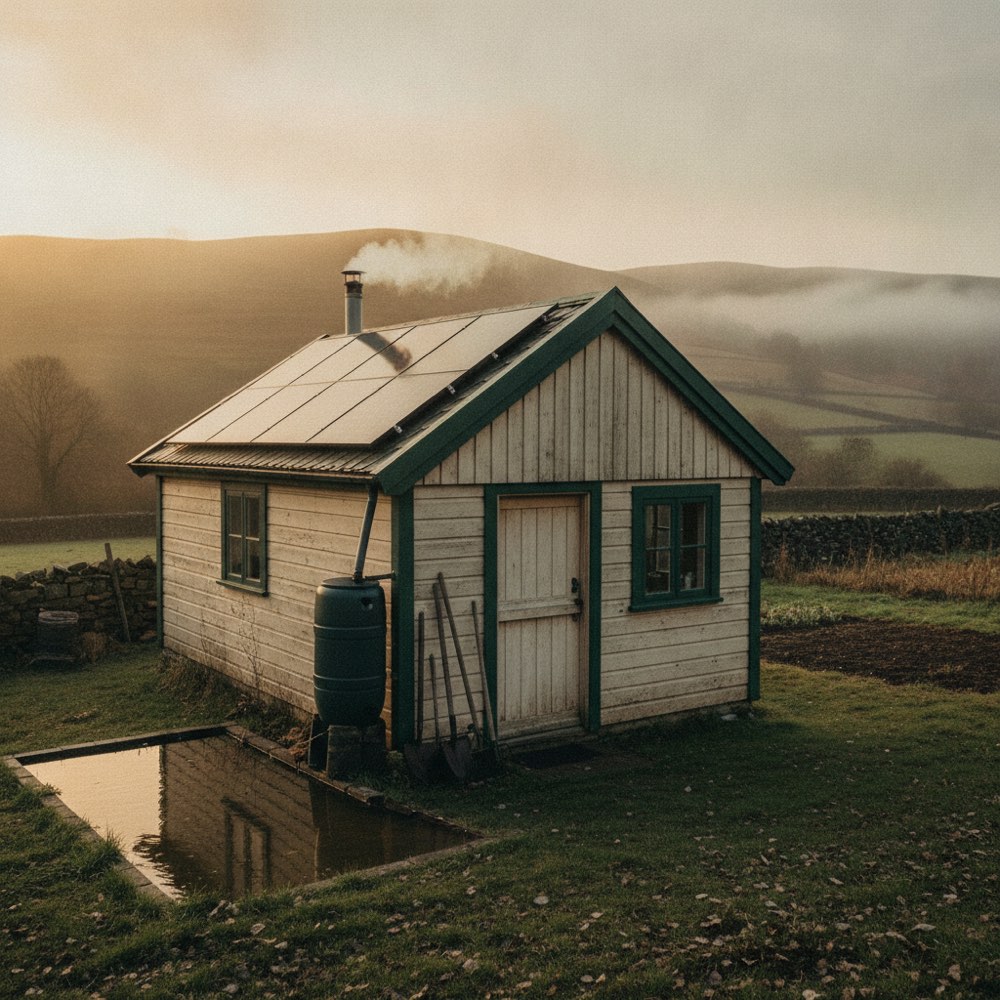
Yes, it is legal to live off grid in the UK. There is no law requiring a connection to mains electricity, water or sewerage. What trips people up is not the utilities, it is the land: using land as a home needs planning permission, and that is where almost every off grid dream meets reality. This guide lays out the honest legal picture, with citations to the legislation and official guidance throughout. It is information to orient your research, not legal advice, and planning decisions always sit with your local planning authority, so speak to them and, for anything substantial, a planning consultant before committing money.
The short answer: off grid is legal, squatting on your own land is not
Nothing in UK law obliges a household to connect to mains services. You can lawfully generate your own power, collect and treat your own water (subject to abstraction and private supply rules), heat with wood or fuel, and deal with your own sewage under the environmental rules. Thousands of boaters, smallholders and rural households do exactly this.
The legal friction is almost entirely about where you live, not how you live. The planning system controls the use of land, and residential use of land that does not have it is a breach of planning control, even on land you own outright. Every realistic route into lawful off grid living is therefore a route through, or around, planning law:
- Buy an existing dwelling and take it off grid (simplest, almost always lawful).
- Live afloat under a boat licence.
- Use land temporarily within permitted development limits.
- Fit within the caravan and mobile home rules in specific circumstances.
- In Wales, apply under the One Planet Development policy.
For the practical side of each route, see our off grid living UK pillar guide.
Owning land does not give you the right to live on it
This is the point on which more money is lost than any other. Agricultural land is cheap relative to residential land for exactly one reason: you cannot lawfully live on it. Changing land from agricultural or woodland use to residential use is a material change of use under the Town and Country Planning Act 1990, and it requires planning permission.
Planning permission for a new dwelling in open countryside is one of the hardest consents to obtain in England. National planning policy restricts isolated new homes in the countryside to narrow exceptions, such as dwellings essential for agricultural workers, exceptional design cases, and conversions of existing buildings. A wish to live off grid is not, by itself, an exception.
What about building without permission and waiting it out?
Some older guides mention a four year rule under which an unauthorised dwelling could become lawful if unchallenged. Be careful here: the Levelling-up and Regeneration Act 2023 extended the enforcement time limit in England to ten years for breaches of this kind, with the change taking effect for new breaches from April 2024. Deliberately concealed breaches have no practical time protection at all. Building first and hoping is a strategy that risks an enforcement notice, demolition at your own cost, and in some cases prosecution. Check the current position on legislation.gov.uk and with the local planning authority rather than relying on folklore.
The 28 day rule: what temporary use of land really allows
Under Schedule 2, Part 4, Class B of the Town and Country Planning (General Permitted Development) (England) Order 2015, land may be used for any purpose for up to 28 days in total in a calendar year without a planning application, along with moveable structures needed for that use. Of those 28 days, no more than 14 may be used for markets or motor racing. Scotland, Wales and Northern Ireland run their own planning systems with broadly similar temporary use provisions, so check the equivalent rules for your nation.
Separately, England added a permitted development right in 2023 allowing land to operate as a temporary recreational campsite for up to 60 days a year, subject to conditions. That is aimed at campsite operators, not residents.
What the 28 day rule is not
- It is not a part-time residence permit. Living on land for 28 days, leaving briefly, and returning in a pattern that amounts to residential use is still a material change of use. Councils look at the reality, not the calendar arithmetic.
- It does not allow permanent structures. Anything fixed, serviced or left in place long term points towards development needing permission.
- It does not override other designations. Sites of special scientific interest, some protected landscapes and land with planning conditions attached can have these rights restricted or removed.
What it genuinely allows: honest temporary use while you go through proper channels, seasonal camping on your own land, and time to learn a plot before committing. Used honestly, it is useful. Used as a loophole, it fails.
Caravans, mobile homes and the 1960 Act
Caravans occupy a special legal position. The Caravan Sites and Control of Development Act 1960 defines a caravan generously: a structure designed or adapted for human habitation, capable of being moved, within size limits that comfortably include large static homes and many cabin-like lodges. Two separate consents matter: planning permission for the use of the land, and a site licence from the council under the 1960 Act for most residential caravan sites.
The situations that work
- In the garden of your own home: a caravan within the curtilage of a dwelling, used as extra accommodation ancillary to the house (a relative staying, an office, overflow space), generally needs no separate permission. Using it as an independent, self-contained dwelling, for example as a rental, crosses the line into needing permission.
- On agricultural land during genuine agricultural work: limited and specific, not a general residence route.
- On land with residential planning permission: a mobile home can be the lawful dwelling itself. This is how many low-cost rural homes exist.
The trap is the same as always: a caravan on a field you own, lived in full time without permission for residential use, is a planning breach regardless of how moveable the caravan is. The structure being legal does not make the use legal.
Boats and continuous cruising: the established off grid route
Living afloat is the most settled legal form of off grid life in Britain. On Canal and River Trust waters you need a boat licence, insurance and a Boat Safety Scheme certificate. With a home mooring, you have a fixed base (residential moorings themselves need the right permissions and are scarce). Without one, you can licence the boat as a continuous cruiser under section 17 of the British Waterways Act 1995, which requires the boat to be used bona fide for navigation throughout the licence period.
The Trust's published guidance interprets this as genuine movement around the network, not shuffling between two bridges, and sets a maximum stay of 14 days in one place, less where signs say so. Boaters who do not move far enough face licence refusal after warnings. It is a real lifestyle with real obligations: you move every fortnight, in all weather, all year.
Council tax generally does not apply to a boat that genuinely cruises, while boats on permanent residential moorings can be liable. Rivers and other navigation authorities (the Environment Agency, the Broads Authority and others) have their own registration schemes.
Wales and the One Planet Development policy
Wales is the one UK nation with a national planning policy designed to permit new off grid smallholdings in open countryside. One Planet Development (OPD), set out in Technical Advice Note 6 and its practice guidance, allows low-impact dwellings on rural land where the application would normally be refused, in exchange for strict, monitored commitments.
The headline requirements are demanding:
- A management plan showing the household will meet a defined share of its basic needs (food, income and more) from the land itself, within five years, with 65 percent commonly cited as the minimum land-based needs threshold in the guidance.
- An ecological footprint substantially below the Welsh average, evidenced and recalculated over time.
- Zero carbon buildings, ongoing annual monitoring reports to the council, and the risk that permission is tied to performance: fail the tests and the consent can fall away.
Successful OPDs exist (the Lammas ecovillage in Pembrokeshire is the best known), but councils scrutinise applications hard and the lifestyle commitment is total. It is a route for committed land-based livelihoods, not for a quiet cabin in a field. England has no equivalent policy. Scotland's planning system has shown some support for huts (small, simple recreational buildings) through national policy, but that is for recreational use, not full-time residence.
Council tax, utilities and the other rules that still apply
Going off grid removes bills, not obligations.
- Council tax attaches to dwellings. An off grid house pays like any other. A residential caravan that is someone's sole home is generally banded and liable. Genuinely cruising boats are the main exception. Disconnection from utilities has no effect on liability.
- Water abstraction: taking under 20 cubic metres a day from a borehole, well or watercourse does not need an abstraction licence in England, but drinking supplies fall under the Private Water Supplies Regulations and councils have testing duties and powers.
- Sewage: septic tanks and treatment plants must comply with the general binding rules in England or hold a permit. Septic tank discharges direct to watercourses are not permitted; compost toilets are lawful with responsible management of the output on your own land.
- Building regulations apply to building work on dwellings regardless of planning status, including stove and flue installations (and a carbon monoxide alarm requirement when a solid fuel appliance is installed). See our off grid heating guide for the heating-specific rules.
- Everything else: vehicle law for vans, waterway rules for boats, environmental protection law for waste. Off grid is a utilities choice, not an exit from the legal system.
For what all of this costs in practice, see our honest off grid cost guide, and for the systems themselves, off grid power systems.
The honest decision path
Put the routes in order of legal friction and the path chooses itself:
- Lowest friction: buy or rent an existing dwelling and take it off grid. No planning battle at all for the utilities side; permission only matters for physical works like flues, extensions or large arrays in some cases.
- Low friction, high discipline: a boat under a continuous cruising licence, or a van lived in lawfully (moving regularly, using campsites and permitted stopping places).
- Medium friction: a mobile home on land that has, or can realistically get, residential permission; or ancillary caravan accommodation at an existing home.
- High friction: a new off grid dwelling in open countryside. In England, expect refusal outside narrow exceptions. In Wales, OPD is a genuine but demanding route.
Before any land purchase: check the planning history on the council's portal, ask the local planning authority about the site, read the National Planning Policy Framework sections on rural housing, and price in professional advice. An hour with a planning consultant costs less than one month of owning a field you cannot live on.
Your questions, answered
Is it illegal to live off grid in the UK?
No. There is no legal requirement to connect to mains electricity, water or sewerage. The legal constraints are about land use: living on land without residential planning permission is a breach of planning control. Off grid living is fully lawful in an existing dwelling, on a licensed boat, or on land with the right permissions.
What is the 28 day rule for living off grid?
In England, permitted development rights allow land to be used for any purpose for up to 28 days per calendar year, with moveable structures to support that use, under Schedule 2 Part 4 Class B of the General Permitted Development Order 2015. It permits genuinely temporary use, such as camping on your own land. It does not create a right to live on land in a repeating pattern, which councils treat as an unauthorised change of use.
Can I live in a caravan on my own land?
Only in limited situations. A caravan used as extra accommodation ancillary to your existing home generally needs no separate permission. A caravan used as an independent full-time dwelling on land without residential permission is a planning breach, and most residential caravan sites also need a site licence under the Caravan Sites and Control of Development Act 1960.
Do off grid homes pay council tax?
Yes, in almost all cases. Council tax is based on the dwelling and its occupation, not on utility connections. Residential caravans used as a sole home are generally liable too. The main exception is a boat that genuinely cruises without a permanent residential mooring.
What is One Planet Development in Wales?
A Welsh national planning policy, set out in Technical Advice Note 6, that can grant permission for new low-impact dwellings in open countryside in return for strict commitments: meeting a defined share of household needs from the land within five years, a very low ecological footprint, zero carbon buildings and ongoing monitoring by the council. It is unique to Wales and demanding, but it is a genuine lawful route.
Can I live on a narrowboat without a mooring?
Yes, under a continuous cruising licence on Canal and River Trust waters, provided the boat is genuinely used for navigation, moves to a new place at least every 14 days and covers a meaningful range over the licence year. You also need insurance and a Boat Safety Scheme certificate. Boaters who fail to move as required face non-renewal of the licence.
Can I drill a borehole or take water without permission?
Abstracting less than 20 cubic metres a day in England does not require an abstraction licence. Above that you need one from the Environment Agency. If the supply is used for drinking, the Private Water Supplies Regulations apply and the local council can require testing and improvements. Drilling itself may involve notification requirements, so check gov.uk guidance first.
Sources
- The Town and Country Planning (General Permitted Development) (England) Order 2015, Schedule 2 Part 4 Class B (temporary use of land)
- Levelling-up and Regeneration Act 2023, section 115 (time limits for planning enforcement in England)
- Caravan Sites and Control of Development Act 1960
- Welsh Government, Technical Advice Note 6: One Planet Development practice guidance
- Canal and River Trust: continuous cruising boat licence guidance
- British Waterways Act 1995, section 17
- GOV.UK: water abstraction licensing (20 cubic metres a day threshold)
- GOV.UK: general binding rules for small sewage discharges in England
- GOV.UK: council tax overview
- Planning Portal: when planning permission is required