How to Purify Water in an Emergency UK: Safe Methods
Last updated: 21 October 2026
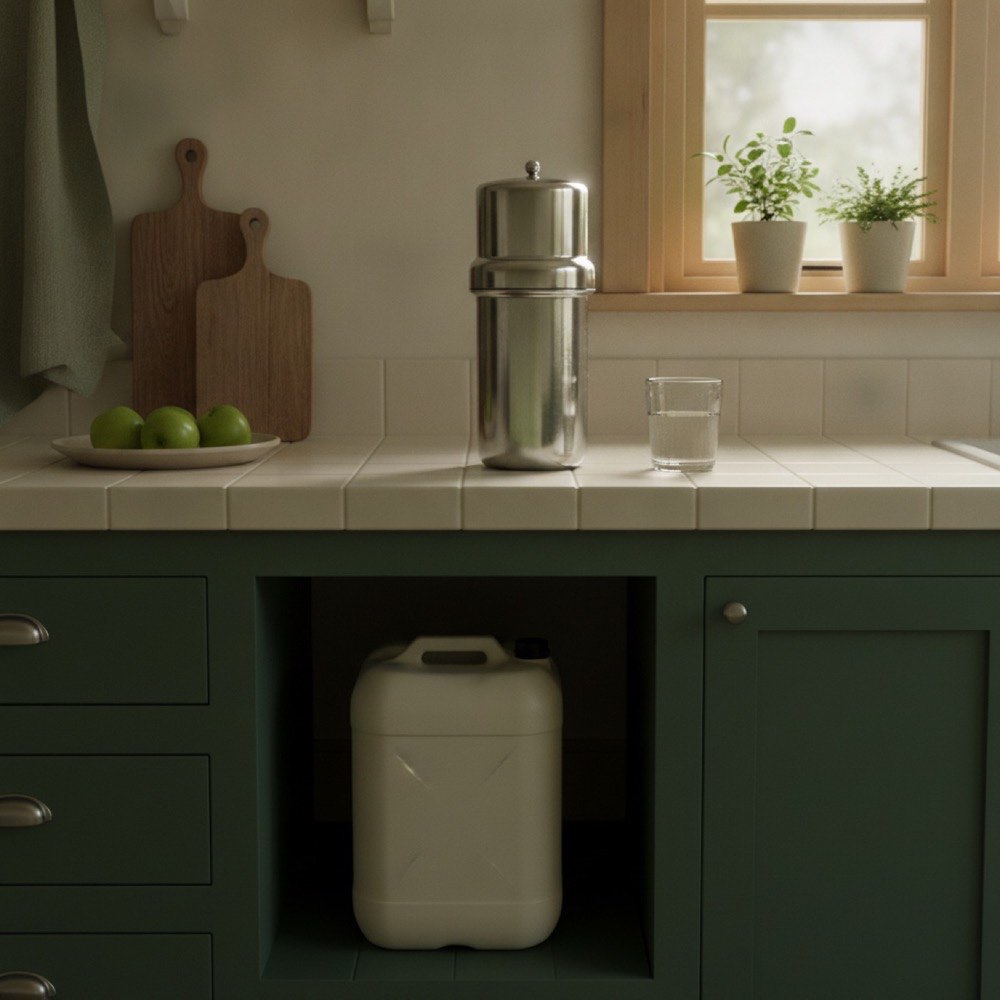
When a burst main, a boil water notice or a long power cut interrupts your supply, knowing how to purify water in an emergency turns a stressful situation into a manageable one. The methods below are ordered the way the WHO and the NHS order them in practice: boiling first, because it is the most reliable single method, then chemical treatment and filtration, with an honest account of what each one removes and what it misses. None of this requires survival skills, just a kettle or pan, a few pounds of kit bought in advance, and the patience to follow contact times.
First decide: does this water need purifying at all?
Start by matching the method to the water in front of you, because over treating wastes fuel and tablets you may need later.
- Bottled water: already safe, no treatment needed. This is why GOV.UK's Prepare campaign recommends storing sealed bottled water rather than filled containers.
- Tap water under a boil water notice: microbiologically suspect but chemically clean. Boiling alone fully answers the notice; tablets are the backup if you cannot boil.
- Stored tap water older than six months: usually fine, but treat it before drinking for a simple margin of safety.
- Rainwater, water butt contents, streams and ponds: assume bacteria, viruses and protozoa. Filter then disinfect, or pre filter then boil.
- Floodwater: the last resort. It can carry sewage, fuel and chemicals, and no tablet or boil removes chemical contamination. Use any other source first.
For how much water to keep so you rarely face this decision at all, see how much water to store per person, and for the wider plan see our emergency water guide.
Method 1: boiling, the gold standard
Boiling is the method the WHO's household water treatment guidance and NHS boil water advice both put first, because a rolling boil kills bacteria, viruses and protozoa, including the Cryptosporidium that chlorine tablets cannot touch.
How to boil water safely in an emergency
- If the water is cloudy, let it settle and pour it through a clean cloth or coffee filter first.
- Bring it to a vigorous rolling boil, the stage where large bubbles break the surface continuously and do not stop when stirred.
- Hold the rolling boil for one minute. WHO guidance confirms that reaching a rolling boil inactivates waterborne pathogens, and the one minute hold used in official advice adds margin at almost no fuel cost. UK altitude never requires longer.
- Let it cool covered, in the same vessel where possible, and store it in a clean lidded container.
Boiling's limits are practical, not microbiological. It needs fuel or power at the exact moment both may be scarce, it does nothing about chemicals or salt, and flat boiled water tastes dull, which you can fix by pouring it between two clean containers to aerate. In a power cut the fuel question is real: a litre boiled on a camping stove is a litre of gas you cannot cook with, which is where our guides to indoor portable gas stoves and cooking without electricity come in.
Method 2: purification tablets, the lightest backup
Chemical disinfection is what you use when boiling is impossible or fuel is too precious. Two chemistries dominate the UK market.
Chlorine (NaDCC) tablets
Aquatabs and Oasis tablets release active chlorine, the same disinfectant in UK mains water. With 30 minutes of contact in clear water they are highly effective against bacteria, viruses and Giardia. Their one honest gap is Cryptosporidium, whose tough oocysts resist chlorine at any drinkable dose; the CDC rates chlorine as having low effectiveness against it.
Chlorine dioxide tablets
A different molecule that does inactivate Cryptosporidium, at the price of patience: US EPA guidance for this chemistry allows up to four hours of contact for Cryptosporidium, though bacteria and viruses are handled in 15 to 30 minutes. Lifesystems and Katadyn both sell UK available versions: Check price on Amazon.
With either chemistry the rules are the same: clear water only, correct dose for the volume, full contact time, and slosh a little treated water through the bottle threads so the rim does not recontaminate the contents. Our full comparison, with dosing tables for UK container sizes, is in best water purification tablets.
Method 3: filters, the workhorse for volume
Filters physically strain organisms out of water, and for treating useful daily volumes without fuel they are unmatched. What a filter removes depends entirely on its pore size and stages, so read claims closely.
- Hollow fibre filters (Sawyer, LifeStraw, Platypus) at 0.1 to 0.2 micron remove bacteria and protozoa, including Cryptosporidium, to very high reductions. They do not remove viruses, which are smaller than the pores, and freezing wrecks the fibres permanently.
- Ceramic candle systems (British Berkefeld) at around 0.9 micron absolute remove bacteria and cysts, and their carbon cores also reduce chlorine, lead and microplastics. Virus removal is not certified.
- Bottle filters with chemical stages (Water-to-Go and similar) add adsorption that improves taste and broadens chemical reduction, with the trade off of lower total capacity per cartridge.
No portable filter makes seawater drinkable and none fully answers chemical contamination, though carbon stages help with some. In UK emergency use, viruses are the main gap, which matters most with floodwater or sewage affected sources. A countertop gravity system covers the household side, compared in best gravity water filters, while straws, bottles and squeeze filters for grab bags are compared in best water filters for emergencies: Check filter prices on Amazon.
The layered method: how the pros combine them
Humanitarian water practice never relies on one barrier, and a UK household should not either. The sequence is simple and covers every realistic organism and most practical failures.
- Step 1, clarify: settle the water, then pour it through a clean cloth or coffee filter. This alone removes most sediment and makes every later step more effective.
- Step 2, filter: run it through your gravity system or portable filter. This removes bacteria and protozoa, including the Cryptosporidium that chlorine misses, and most of the taste problems.
- Step 3, disinfect: boil for one minute at a rolling boil, or add an NaDCC tablet and wait 30 minutes. This kills the viruses the filter could not catch.
Filter plus chlorine tablet is the neat pairing because each covers the other's blind spot: the filter handles Cryptosporidium, the chlorine handles viruses. Filter plus boil achieves the same with fuel instead of chemistry. If you own only tablets, chlorine dioxide with the full four hour contact time is the single product that comes closest to covering everything on its own.
Treat water in batches ahead of need, label treated containers, and keep untreated and treated water physically separated so nobody confuses them by lamplight.
What no method fixes, and mistakes to avoid
Be clear about the hard limits. Nothing in this guide removes salt, so seawater stays undrinkable without distillation kit no household keeps. Nothing here reliably removes fuels, pesticides or industrial chemicals, so visibly oily or chemically smelling water is rejected, not treated. And no method works retroactively: a clean looking bottle filled from a dirty source three days ago needs treating as if it were just drawn.
The common mistakes are all shortcuts. Drinking at ten minutes because the tablet dissolved. Boiling water that is still cloudy. Filtering floodwater and calling it done when viruses pass straight through hollow fibre. Letting a treated jerry can stand open. Storing a hollow fibre filter in a frosty shed, which silently destroys it before the day you need it. Every one of these is avoided by the same habit: follow the stated method completely, every time, even when it feels overcautious.
Purification only matters if you have water to purify and a way to heat it. Round out the plan with our emergency kit list, stored water in proper containers (Check container prices on Amazon), a means to boil off grid (Check stove prices on Amazon), and the full household playbook in how to prepare for a power cut.
Your questions, answered
What is the best way to purify water in an emergency in the UK?
Boiling is the most reliable single method: bring water to a vigorous rolling boil and hold it for one minute, in line with WHO household water treatment guidance and NHS boil water advice. It kills bacteria, viruses and protozoa including Cryptosporidium. Use purification tablets or a filter when boiling is not possible, and combine filter plus tablet for the strongest no fuel option.
How long should I boil water to make it safe?
Bring it to a rolling boil, where large bubbles break the surface continuously, and hold that for one minute. WHO guidance confirms pathogens are inactivated by the time water reaches a rolling boil, and the one minute hold is the margin used in official advice. No UK location is high enough to need the extended boil times quoted for high altitude.
Do water purification tablets work against all bugs?
No. Chlorine NaDCC tablets handle bacteria, viruses and Giardia with 30 minutes of contact but do not reliably inactivate Cryptosporidium. Chlorine dioxide tablets do cover Cryptosporidium but need up to four hours of contact for it. That gap is why tablets pair so well with filters, which physically remove Cryptosporidium but miss viruses.
Can I drink rainwater or water butt water in an emergency?
Yes, after proper treatment. Water from butts, roofs, streams or ponds should be assumed to carry bacteria and protozoa and possibly viruses. Clarify it through a cloth, filter it, then boil for one minute at a rolling boil or disinfect with tablets at full contact time. Never drink it untreated, and never treat visibly oily or chemically smelling water at all.
Does boiling water remove chemicals or salt?
No. Boiling kills living organisms but concentrates rather than removes dissolved chemicals and salt, because some water boils away. Seawater and chemically contaminated water cannot be made safe by boiling, tablets or portable filters. Reject those sources and fall back on stored bottled water, which is why keeping a proper store matters more than any treatment skill.
How do I purify water during a power cut with no kettle?
Boil on a camping stove following its ventilation rules, or skip fuel entirely: run water through a gravity or squeeze filter and then add a chlorine tablet, waiting the full 30 minutes. That two step combination covers bacteria, protozoa and viruses without a single flame, and it is the method we recommend building a household kit around.
Sources
- WHO: Boil water technical brief (household water treatment)
- Drinking Water Inspectorate: consumer advice on water quality incidents
- CDC: making water safe in an emergency (methods and Cryptosporidium limits)
- GOV.UK Prepare: get prepared for emergencies (water storage)
- Aquatabs manufacturer usage guide (NaDCC dosing and contact time)