How Much Water to Store Per Person UK: Exact Figures
Last updated: 21 October 2026
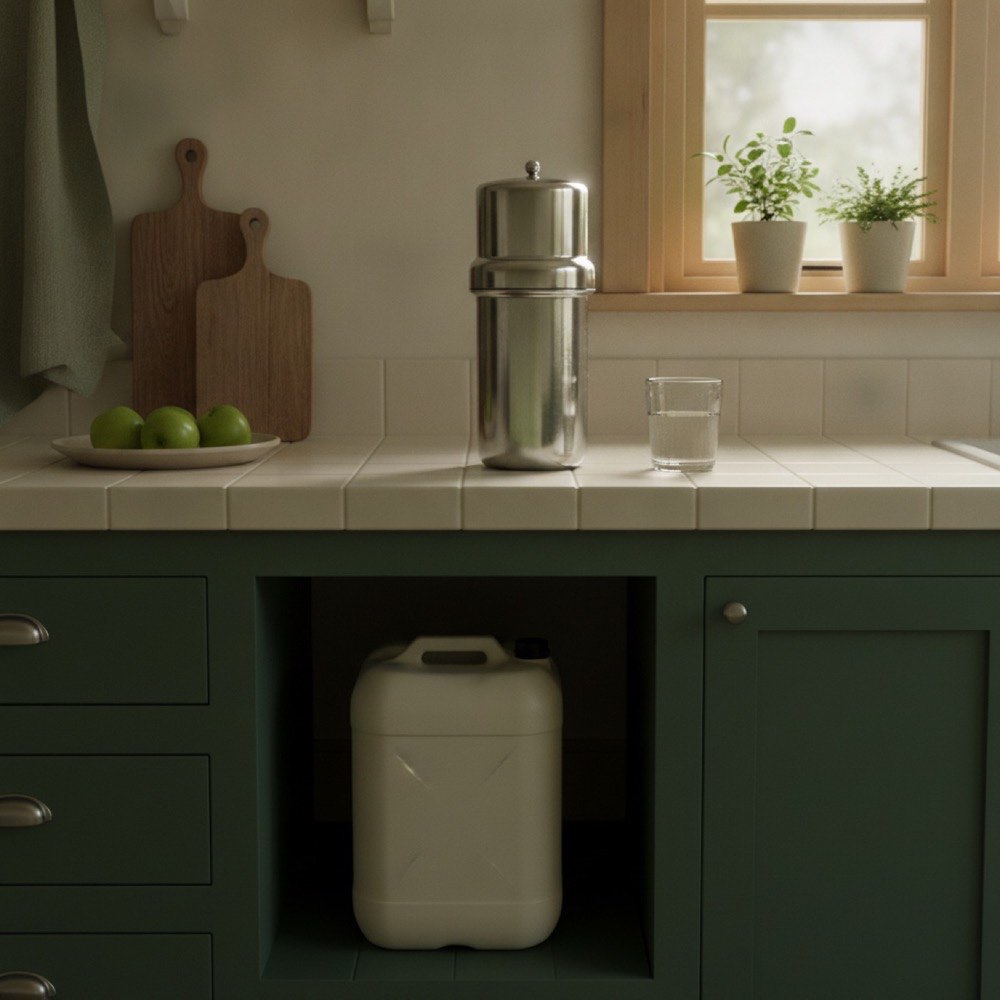
The honest answer to how much water to store per person in the UK comes straight from official guidance: GOV.UK's Prepare campaign cites the World Health Organisation's survival minimum of 2.5 to 3 litres of drinking water per person per day, and notes that 10 litres per person per day is more comfortable because it also covers basic cooking and hygiene. This guide turns those two numbers into real shopping lists for real households, including babies, pets and medical needs, and answers the question the official pages skip: where on earth do you keep it all in a UK home.
The official figures: what GOV.UK and the WHO actually say
Two numbers anchor everything else in this guide, and both come from sources you can check.
- 2.5 to 3 litres per person per day is the World Health Organisation survival minimum for drinking water, quoted directly by GOV.UK's Prepare campaign. This covers drinking only: no washing, no cooking, no hygiene.
- 10 litres per person per day is the figure Prepare gives for comfort, because it adds basic cooking and hygiene on top of drinking.
Neither source fixes the number of days, because emergencies vary. The British Red Cross and Ready Scotland both work on roughly three days of supplies as a sensible household baseline, and three days matches the realistic worst of UK experience: Storm Arwen in 2021 left some homes without power for over a week, and major burst mains typically interrupt supply for one to three days.
So the planning bands are simple. Bare minimum: 3 litres per person per day for 3 days, so 9 litres each. Comfortable: 10 litres per person per day for 3 days, so 30 litres each. Store somewhere between those bands and you are better prepared than almost every household in the country. The wider context, including treating water when the store runs out, is in our emergency water guide for UK homes.
Worked examples: real UK households
Figures per person hide the practical question, which is what the pile of bottles actually looks like. Here are four worked examples at the minimum and comfortable bands over three days.
One adult living alone
Minimum 9 litres, comfortable 30 litres. The minimum is six standard 1.5 litre bottles, one supermarket multipack carried home in one trip. The comfortable figure is a 20 to 25 litre container plus a multipack.
A couple
Minimum 18 litres, comfortable 60 litres. Two multipacks covers the minimum. The comfortable band is where dedicated containers start earning their keep over mountains of small bottles.
Family of four with a baby
Minimum around 36 litres, comfortable 120 litres, and the baby changes the quality bar as well as the quantity. Formula needs water that is safe without question, so GOV.UK's guidance flags formula preparation as a reason to store more than the baseline. Add at least 2 to 3 extra litres per day for feeds and sterilising, and make them sealed bottled water. Note that some bottled waters carry labels about suitability for infant formula preparation, so check sodium and sulphate levels on the label.
Couple with a dog and a cat
Minimum 18 litres for the humans plus pet allowances: a rough planning figure is around one litre per day for a medium dog and about 300ml for a cat, scaled with size and weather. Over three days that adds roughly 4 litres. GOV.UK's Prepare guidance explicitly lists pets among the reasons your household figure rises above the baseline.
Bottled water or filled containers?
GOV.UK Prepare recommends buying and storing sealed bottled water rather than filling your own containers, and the reasoning is sound: supermarket bottled water is sealed in food grade packaging, microbiologically controlled at source, and carries a best before date typically one to two years out. It needs no treatment, no rotation discipline beyond glancing at dates, and no cleaning regime.
Filled containers still have a place, as the cheap way to hold the bulk hygiene and cooking volume at the 10 litre comfort band. If you go that route, use proper water containers rather than reused milk bottles, fill them from the mains tap, label them with the fill date, and refresh them every six months. Treat stored tap water older than that with a purification tablet or a one minute rolling boil before drinking it; the methods are compared in how to purify water in an emergency and the tablets themselves in best water purification tablets.
A sensible split for most households: sealed bottled water for all drinking and formula (Check multipack prices on Amazon), filled 10 to 25 litre containers for cooking and hygiene (Check container prices on Amazon). Our full container comparison is at best emergency water storage containers.
Where to keep stored water in a UK home
Thirty litres per person sounds unmanageable until you see how little floor space it really takes: 120 litres for a family of four is roughly the footprint of a washing machine. The rules for placement are about temperature, light and weight.
- Cool, dark and off the floor of concern: under stairs cupboards, the bottom of wardrobes, under beds in shallow crates, and the base of kitchen cupboards all work. Sunlight degrades plastic bottles and encourages algae in clear containers, so avoid windowsills, conservatories and south facing garages.
- Mind the weight: water is a kilogram per litre. Spread it across several locations rather than stacking 120kg on one shelf, and keep large containers at floor level so they can be poured safely.
- Garages and sheds, with caveats: fine for sealed bottled water, but freezing splits containers, so leave headspace and keep them off bare concrete. Never store water near fuel, solvents or pesticides, because plastic slowly breathes odours through.
- Split between floors: a few litres upstairs covers the scenario where you are unwell or the ground floor is flooded, which is also why our emergency kit list keeps a grab bag portion separate from the bulk store.
Put one day's bottles somewhere instantly accessible, not buried behind the Christmas decorations. The point of the store is the first ten minutes of a disruption, not an archaeology project.
Rotation, dates and keeping the store honest
A water store is a habit, not a purchase. Twice a year, on any memorable date pair such as the clock changes, do a ten minute audit: check best before dates on bottled water and move anything within six months of its date into daily use, replacing it in the store. Empty, rinse and refill any tap filled containers. Check containers for damage, swollen caps or off smells, and check that the store still matches your household, because a new baby, a new pet or an elderly parent moving in changes the arithmetic from the first section.
Best before dates on bottled water are about taste and packaging, not safety cliffs; water in intact sealed bottles does not become dangerous on the printed date. Even so, rotating by date keeps the store palatable and removes any judgement calls during an actual emergency.
Finally, pair the store with a treatment backstop so the last litre is never truly the last: a tub of purification tablets (Check tablet prices on Amazon) or a gravity filter from our gravity water filter guide extends your stored supply with treated tap, butt or collected water. A filter plus a store beats a bigger store on both cost and shelf space: Check filter prices on Amazon.
Special cases: medical needs, flats and short notice
Medical needs raise the figure. GOV.UK's guidance notes that medical devices and health conditions increase water requirements. Dialysis preparation, wound washing, medication that must be taken with water and conditions that cause dehydration all justify planning at the 10 litre band or above, and anyone medically dependent on water or power should also be registered with their water and electricity suppliers' priority services registers, which get bottled water deliveries to the door first during incidents.
Flats change the logistics, not the target. The per person figures stand, but storage splits into smaller parcels: 5 and 10 litre containers slide under beds and into wardrobe floors where a 25 litre can will not go. Remember that mains pressure in blocks often depends on electric pumps, so a power cut can stop water in a flat even when the mains is fine, which makes the store more important above the ground floor, not less. That scenario and the rest of the household playbook are covered in how to prepare for a power cut.
At short notice, with an incident already announced, fill what you have: the kettle, saucepans with lids, and the bath if you have screw top containers to decant into, treating bath stored water as hygiene water rather than drinking water. Then start working the store you built on a calmer day, which is the entire argument for building it now.
Your questions, answered
How much water should I store per person in the UK?
GOV.UK's Prepare campaign cites the WHO survival minimum of 2.5 to 3 litres of drinking water per person per day, and 10 litres per person per day for comfort including basic cooking and hygiene. Over the three day baseline used by the British Red Cross and Ready Scotland, that means 9 litres per person as the bare minimum and around 30 litres per person for comfort.
How much water does a family of four need for an emergency?
Around 36 litres covers the three day drinking minimum, and about 120 litres covers the comfortable band with cooking and hygiene included. A baby adds 2 to 3 extra litres per day for formula and sterilising, and those litres should be sealed bottled water with labels checked for suitability for infant feeding.
How much water should I store for pets?
As rough planning figures, allow about one litre per day for a medium dog and around 300ml per day for a cat, more in hot weather or for large breeds. GOV.UK's Prepare guidance specifically lists pets among the reasons a household should store more than the per person baseline.
Is it better to store bottled water or fill my own containers?
GOV.UK Prepare recommends sealed bottled water because it is packaged in food grade bottles and needs no treatment or rotation discipline. Filled containers are the economical way to hold bulk cooking and hygiene water: use proper water containers, label the fill date, refresh every six months, and treat older stored water before drinking it.
How long can you store water in the UK before it goes off?
Sealed bottled water stays safe well beyond its best before date, which concerns taste and packaging rather than safety. Tap water in clean, closed, food grade containers is best refreshed every six months. Older stored water is not automatically unsafe, but treat it with a purification tablet or a one minute rolling boil before drinking for a simple margin.
Where is the best place to store emergency water at home?
Cool, dark places away from sunlight and chemicals: under stairs cupboards, wardrobe floors, under beds and the bottom of kitchen units. Keep large containers at floor level because water weighs a kilogram per litre, split the store across more than one spot, and keep one day's supply instantly accessible rather than buried.
Does a water filter mean I can store less water?
A filter stretches a store rather than replacing it, because filtering needs a source to filter and takes time. Keep the per person figures as your baseline, then add a gravity filter and purification tablets as the backstop that turns tap, butt or collected water into drinking water once bottles run low.