Food Grade Water Storage Containers UK: Buying Guide
Last updated: 21 October 2026
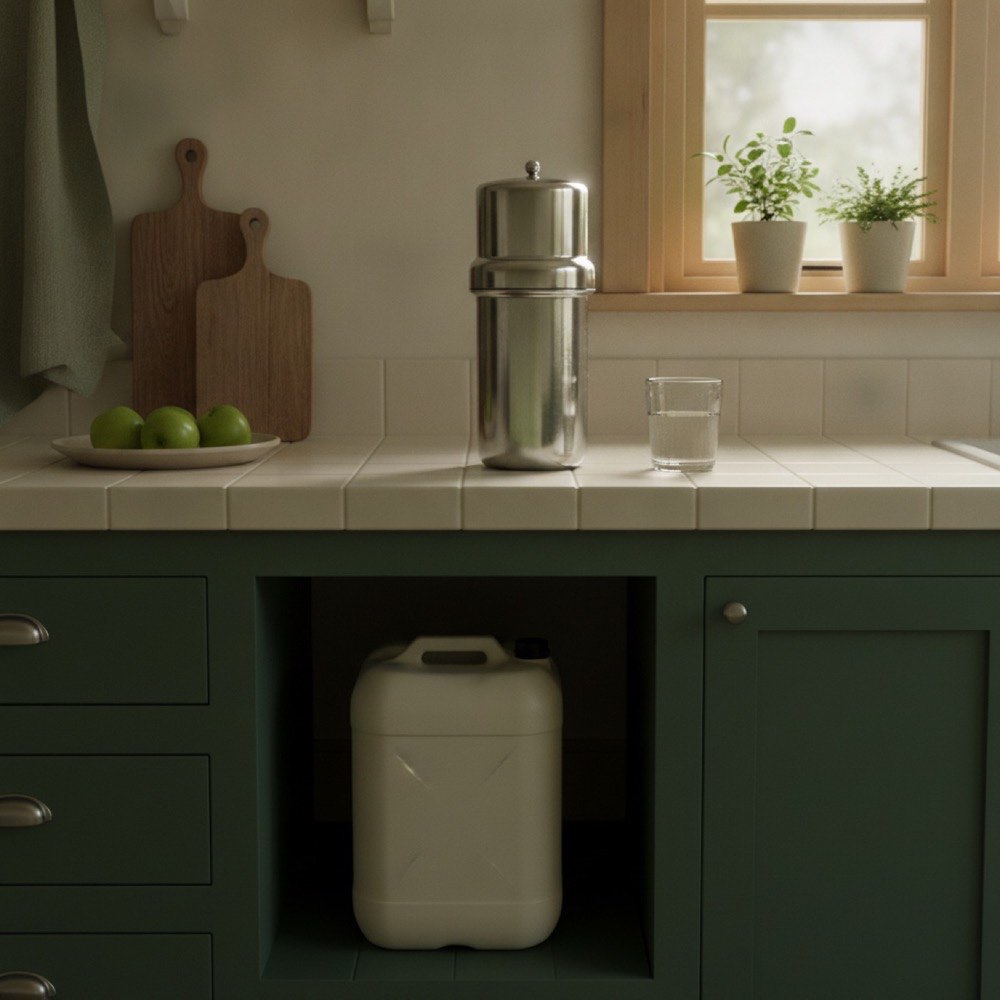
<p>Plenty of containers sold in the UK are described as food grade, and a surprising number of those claims are either vague or flat out wrong for drinking water. This guide explains what food grade actually means under UK law, how to read HDPE resin codes and UN approval marks, and how to check a listing before you spend money. If you want straight product recommendations ranked against each other, our <a href="/best-emergency-water-storage-containers-uk/">best emergency water storage containers roundup</a> does that job. This page is about buying correctly: the standards, the symbols and the claims to verify.</p>
| Pick | Model | Why | |
|---|---|---|---|
| Best verified household base: 100 litres in four cans | Hydrofyx 25L Food Safe Water Storage Containers (4 Pack) | Four 25 litre containers cover the two weeks of stored water a typical couple needs, the HDPE is sold as food safe grade, and the stackable square format packs into an understairs cupboard or garage corner without wasted space. | Check price |
| Best with formal UN certification | 4 x 20L UN Approved Stackable Jerry Cans (Tamper Evident Cap) | These carry both claims you want printed on the listing: UN certification for the container build quality and food contact approval for the plastic itself. The tamper evident caps seal properly and 20 litres is the heaviest most adults can still move when full. | Check price |
| Best single can with a tap for daily use in an outage | 25 Litre UN Approved Water Container with Tamper Proof Cap | One working container with a tap on a kitchen counter is what you actually use day to day during a supply interruption, while the sealed multi packs stay in reserve. This format takes a standard tap and the UN marking is moulded into the can. | Check price |
What does food grade actually mean in the UK?
Food grade is not a logo a manufacturer can slap on at will. In the UK, plastics that touch food or drinking water are covered by retained EU law, principally Regulation (EC) No 1935/2004 on food contact materials and the plastics specific Regulation (EU) No 10/2011. The rules require that materials in contact with food must not transfer their constituents into it in quantities that could endanger health or change the taste and smell of what is stored.
In practice, a genuinely food grade container means three things:
- The plastic resin itself is an approved food contact material, usually virgin HDPE or PP rather than recycled plastic of unknown origin.
- The manufacturing process avoids contamination, mould release agents and pigments that are not food approved.
- The maker can back the claim, usually shown by the wine glass and fork symbol moulded into the plastic or printed on the packaging.
That glass and fork symbol is the quickest visual check. It is the recognised food safe mark across the UK and EU. No symbol does not always mean unsafe, but a container with it moulded in has been made on a food contact production line, which is exactly what you want for water you plan to drink months after filling.
HDPE resin codes explained: which numbers are safe for water
Flip any plastic container over and you will find a triangle of chasing arrows with a number inside. That is the resin identification code, and for water storage it is the single most useful marking on the container.
- Code 2, HDPE (high density polyethylene): the standard for water containers, jerry cans and water butts. Chemically stable, does not contain BPA, tolerates temperature swings and takes decades to degrade. This is what you want.
- Code 1, PET: what supermarket bottled water comes in. Fine as sealed bottles for their shelf life, but thin PET is not designed for repeated refilling over years.
- Code 4, LDPE and Code 5, PP: both food safe plastics. PP is common for caps and taps rather than container bodies.
- Code 3, PVC and Code 6, PS: avoid for drinking water storage. Not designed for long term potable water contact.
- Code 7, Other: a catch all that includes polycarbonate, the plastic that historically contained BPA. Avoid code 7 for stored drinking water unless the maker explicitly documents the resin.
The short version: look for the 2 in the triangle, ideally alongside the glass and fork symbol. That pairing covers both the resin and the production standard.
Is BPA actually a problem with water containers?
Mostly no, and here is why the marketing needs decoding. BPA (bisphenol A) is used to make polycarbonate, the rigid clear plastic in some older water cooler bottles, and some epoxy linings. HDPE, the material nearly every UK water container is made from, is manufactured without BPA in the first place. A listing shouting about the absence of BPA in an HDPE can is technically true but about as meaningful as advertising vegetables as vegetarian.
Where BPA is worth checking: clear rigid containers marked code 7, metal containers with epoxy linings, and very old reused water cooler bottles. For new HDPE cans, the more useful questions are about virgin versus recycled resin and whether the plastic is food contact approved, because recycled HDPE of unknown origin can carry residues from whatever the plastic held in its first life.
UN approved water containers: what the embossed code tells you
UN approval is the other marking you will see on quality jerry cans, and it is widely misunderstood. The UN mark is a packaging performance certification from the dangerous goods transport rules. A code like 3H1/Y1.9/150 moulded into a can means it passed drop tests, stack tests, leakproofness tests and internal pressure tests to an audited standard.
Two things follow from that:
- UN approval is not a food safety mark. It certifies the container is strong and leakproof, not that the plastic is food contact approved. You want both claims, and the better listings state both.
- A UN approved can is built to survive being dropped while full, stacked under load and sealed for years. For emergency storage, that build standard is worth having even though you will never ship chemicals in it.
Decoding the start of the mark: 3H1 means a non removable top plastic jerrican, 3H2 a removable top version. The letter X, Y or Z indicates the packing group severity it passed, with X the most demanding. You do not need to memorise the rest; the presence of a genuine embossed code, visible in listing photos rather than just claimed in the title, is the point.
How to verify food grade claims on an Amazon listing
Marketplace listings are written by sellers, not regulators, so run any candidate container through this five point check before buying:
- Look for the symbols in the photos, not the title. Zoom in for the glass and fork mark, the resin code triangle and any embossed UN code. Moulded markings are hard to fake; title keywords are not.
- Check the material is stated as HDPE, ideally virgin or new HDPE. Vague wording like strong plastic or heavy duty plastic with no resin named is a flag.
- Read the questions and answers section. Buyers routinely ask is this safe for drinking water, and seller answers are on record there.
- Check what the can was designed for. Fuel jerry cans, including the excellent steel NATO pattern cans, use linings and seals designed for petrol and diesel. Never store drinking water in anything sold as a fuel can, and never reuse a can that has held fuel, however well rinsed.
- Smell it on arrival. A food grade HDPE can should have almost no odour inside. A strong chemical smell that persists after a bicarbonate rinse means send it back.
One more honest note: food grade multi packs in this category mostly sit in the £40 to £55 range, and the cheapest single cans are cheaper still. Spend the small difference on cans with verifiable markings rather than the lowest listing on the page.
Verified food grade containers worth buying
The picks above are the formats that pass the checks in this guide and are listed on amazon.co.uk at the time of writing. A quick note on how to use them together: the four can multi packs are your sealed reserve, filled, dated and left alone, while a single tapped container is the working can you decant from during an actual interruption. Check price on Amazon covers the reserve role, and Check price on Amazon covers the working can.
If you want the full comparison against soft bladders, water butts and larger tanks, that lives in the best emergency water storage containers guide.
Containers to avoid for drinking water storage
Some containers fail the standard no matter how clean they look:
- Used milk bottles and juice cartons. The plastic is food grade but milk proteins and sugars soak into HDPE and feed bacterial growth. UK resilience guidance consistently advises against reusing milk containers for stored drinking water.
- Anything that has held fuel, chemicals or cleaning products. HDPE absorbs hydrocarbons permanently. No amount of washing recovers a fuel can for potable use.
- Garden water butts for drinking supply. Most are not made from food contact approved plastic and are designed for rainwater on plants. Fine for flushing water, not for the kettle.
- Clear containers stored in daylight. Even food grade PET and translucent HDPE let light through, and light plus time equals algae. Opaque cans in a dark cupboard solve this for nothing.
- Unbranded code 7 containers. Unknown resin, unknown history, no way to verify. There are too many verifiable HDPE options to gamble here.
How much food grade storage do you actually need?
The working planning figure used across UK and international guidance is a minimum of 2.5 to 3 litres of drinking water per person per day, with around 10 litres per person per day covering drinking, basic hygiene and food preparation more comfortably. For a two person household, a sensible stored base is 100 to 150 litres: one Hydrofyx style four can pack plus a tapped working container gets you there, and a second multi pack covers a family of four. The gov.uk Prepare campaign recommends keeping bottled water at home as part of a basic emergency kit, and bought bottles work alongside refillable cans: bottles for grab and go, cans for the household base.
Once the containers are sorted, the other half of the job is filling and keeping them properly: cleaning, rotation and where to store them is covered step by step in how to store water long term in the UK, and the wider household water plan lives in our emergency water guide.
The picks in detail
Best verified household base: 100 litres in four cans: Hydrofyx 25L Food Safe Water Storage Containers (4 Pack)
4 x 25 litre HDPE containers, food safe grade plastic, screw on caps, stackable, 100 litres total
Four 25 litre containers cover the two weeks of stored water a typical couple needs, the HDPE is sold as food safe grade, and the stackable square format packs into an understairs cupboard or garage corner without wasted space.
Worth knowing: 25 litres weighs 25kg when full, so fill them where they will live rather than carrying them. Check the current listing states food safe HDPE before ordering, and give each can a bicarbonate rinse before first use.
Best with formal UN certification: 4 x 20L UN Approved Stackable Jerry Cans (Tamper Evident Cap)
4 x 20 litre HDPE jerry cans, UN certified packaging, food contact approved, DIN 61 tamper evident caps, stackable
These carry both claims you want printed on the listing: UN certification for the container build quality and food contact approval for the plastic itself. The tamper evident caps seal properly and 20 litres is the heaviest most adults can still move when full.
Worth knowing: They ship without taps, so add a 61mm aeroflow tap separately if you want pour control. Blue or natural translucent versions let a little more light through than opaque cans, so store them somewhere dark.
Best single can with a tap for daily use in an outage: 25 Litre UN Approved Water Container with Tamper Proof Cap
25 litre HDPE, UN approved, food grade, tamper proof screw cap, stackable, tap compatible
One working container with a tap on a kitchen counter is what you actually use day to day during a supply interruption, while the sealed multi packs stay in reserve. This format takes a standard tap and the UN marking is moulded into the can.
Worth knowing: Sold in single and twin formats under several brand names. If the price lands under the multi packs, buy two: one in use, one sealed. Verify the listing photographs show the embossed UN code rather than just claiming it in the title.
Your questions, answered
What is the symbol for food grade plastic in the UK?
The wine glass and fork symbol, moulded into the plastic or printed on packaging, indicates a material approved for food contact under UK retained EU regulations. Pair it with resin code 2 (HDPE) in the chasing arrows triangle and you have a container suitable for drinking water storage.
Is HDPE safe for storing drinking water long term?
Yes. Food contact approved HDPE is the standard material for potable water containers in the UK. It is chemically stable, manufactured without BPA, and tolerates years of storage. The caveats are to buy food contact approved cans rather than unknown recycled plastic, and to keep them out of direct sunlight.
Does UN approved mean a container is food safe?
No. UN approval certifies packaging strength: drop, stack, pressure and leak tests from the dangerous goods transport rules. It is a good build quality signal but says nothing about food contact. Look for containers that state both UN certification and food contact approval.
Can I use old milk containers to store water?
Avoid it. Milk residues penetrate the plastic and encourage bacterial growth even after thorough washing. Purpose made food grade HDPE containers cost little and remove the risk entirely.
What number plastic is safe for water storage?
Code 2 (HDPE) is the standard choice, with codes 4 (LDPE) and 5 (PP) also food safe. Code 1 (PET) is fine for sealed bottled water. Avoid codes 3, 6 and 7 for stored drinking water, since code 7 can include polycarbonate of unknown composition.
Do water containers sold as BPA safe actually matter?
For HDPE containers the claim is redundant because HDPE is made without BPA. It matters only for rigid clear plastics marked code 7 and some epoxy lined metal containers. Focus instead on food contact approval and the resin code.
How many litres of water should a UK household store?
Plan on a minimum of 2.5 to 3 litres per person per day for drinking, and closer to 10 litres per person per day including hygiene and cooking. For a two week buffer, roughly 100 to 150 litres for a couple and 200 plus litres for a family of four, split between sealed reserve cans and a working container with a tap.
Sources
- Regulation (EC) No 1935/2004 on materials in contact with food (retained UK law)
- Food Standards Agency: food contact materials
- UNECE: UN packaging codes and markings (ADR Part 6)
- gov.uk Prepare campaign: get prepared for emergencies
- Amazon.co.uk: 4 x 20L UN approved food grade jerry cans (verification listing)