Best Budget Portable Power Stations UK: Under £500
Last updated: 21 October 2026
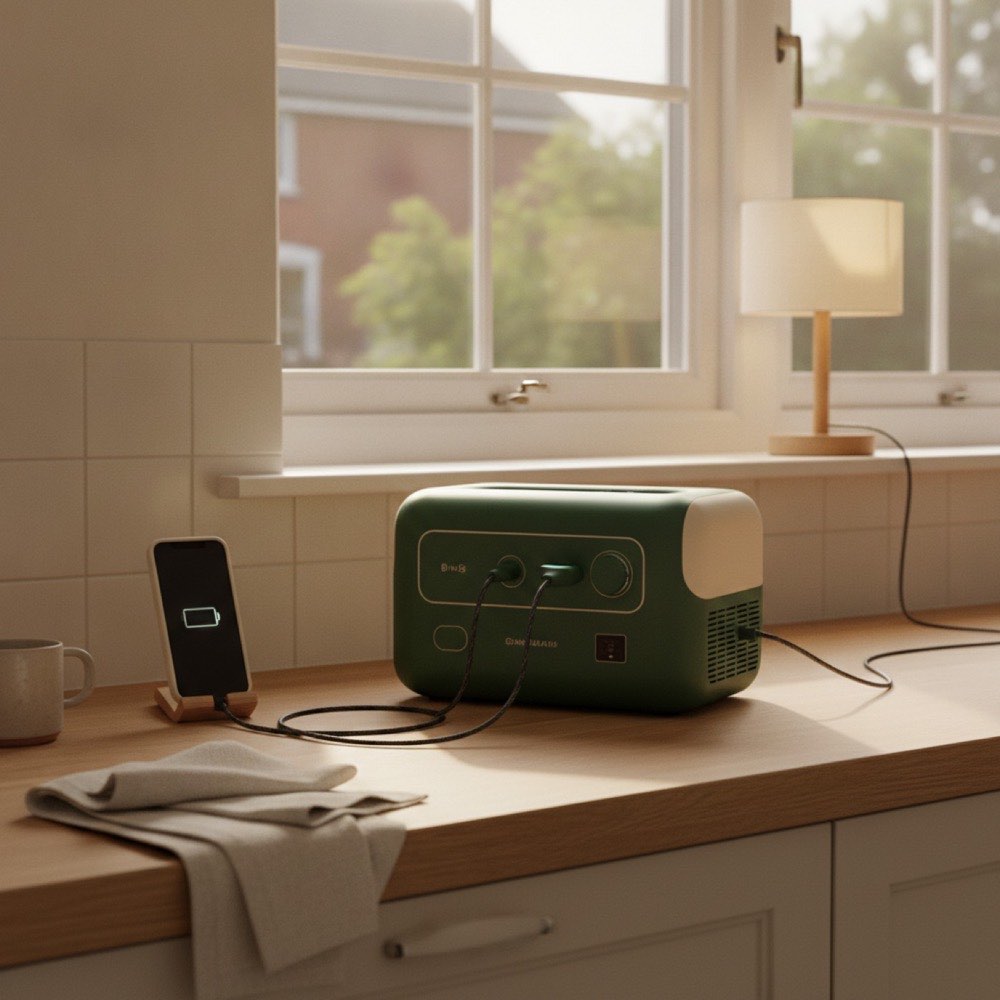
<p>Under £500 now buys a genuinely good portable power station in the UK, something that was not true three years ago. The budget class has moved wholesale to LiFePO4 batteries rated for thousands of cycles, mains recharging has dropped from eight hours to around one, and the under £500 ceiling now stretches to a full 1070Wh unit. What the marketing still obscures is the watt maths: what these units can and cannot actually run in a power cut. This guide compares the verified current models from EcoFlow, Jackery, Bluetti and Anker, does the arithmetic honestly, and tells you where the budget class stops and the flagship class, covered in our main <a href="/best-portable-power-stations-uk/">best portable power stations guide</a>, begins.</p>
| Pick | Model | Why | |
|---|---|---|---|
| Best entry point to the whole category | EcoFlow RIVER 3 | The RIVER 3 is the most complete small unit in the class: two AC sockets where rivals fit one, X-Boost mode that runs some higher rated resistive devices from the 300W inverter, fast mains recharging and a genuinely portable weight. As the power core of a household power cut kit it covers phones, router and lighting for days. | Check price |
| Best compact for reliability reputation | Jackery Explorer 240 v2 | Jackery's v2 refresh brought LiFePO4 chemistry and fast charging to its smallest unit while keeping the simple, proven format. The 100W USB-C charges laptops at full speed without waking the AC inverter, which stretches the battery further for comms focused use. | Check price |
| Best output for the money in the compact class | BLUETTI Elite 30 V2 | Double the inverter of the other compacts changes what the unit can touch: a 600W rating runs small TVs, laptop chargers, CPAP and most routers and lighting simultaneously, and the power lifting mode handles some simple resistive appliances the 300W units refuse. Nine outlets is unmatched at this size. | Check price |
| Best middle class: capacity and output balanced | Jackery Explorer 500 v2 | The 500Wh class is the sweet spot for households that want overnight CPAP headroom or a full week of phones, router and lights without rationing. The 500 v2 brings the same LiFePO4 and fast charge package as its siblings at the midpoint of the budget range. | Check price |
| Most capacity under £500 | Jackery Explorer 1000 v2 | This is the unit that redefined the budget ceiling: 1070Wh and a 1500W inverter means it cycles a fridge for the best part of a day, runs a microwave in bursts, covers CPAP for several nights, and still charges everything else. For power cut resilience per pound it is the strongest buy on this page. | Check price |
How these budget power stations were chosen
Every unit here had to pass four gates against current manufacturer specifications and live amazon.co.uk availability:
- LiFePO4 chemistry only. The older NMC lithium units still circulating at clearance prices are rated for roughly 500 to 800 cycles; the LiFePO4 generation is rated for 3,000 to 4,000 cycles to 70 or 80 percent health. For a device bought to sit ready for years, chemistry is the single most important specification, so no NMC unit makes this list regardless of price.
- Current models, not run outs. Each pick is the maker's current generation (RIVER 3, the Jackery v2 series, Bluetti's V2 compacts), so firmware, spares and warranties have years left.
- A real brand with UK support. EcoFlow, Jackery, Bluetti and Anker all maintain UK operations and honour multi year warranties, typically three to five years on this class. The unbranded marketplace units that undercut them fail this gate and routinely overstate capacity.
- Verified specifications. The numbers quoted on this page come from manufacturer specification sheets, cross checked against the amazon.co.uk listings linked from each pick. Where a price band is given it is a band for exactly that reason: prices in this category move weekly with promotions.
Anker's SOLIX C300 (288Wh, 300W, with unusually good 140W USB-C charging) also passes all four gates and is the pick for USB heavy households; it appears in our power cut survival kit guide and narrowly misses this page's main list only because the Bluetti offers double the inverter at similar money.
The honest watt maths: what under £500 can actually run
Two numbers govern everything a power station can do, and conflating them is how buyers end up disappointed:
- Capacity (Wh) is the fuel tank: how much energy is stored. Budget also for inverter losses: as a rule of thumb, expect roughly 85 to 90 percent of rated capacity to reach your devices through the AC sockets.
- Output (W) is the engine: the maximum draw it can supply at once. Exceed it and the unit simply shuts off, whatever the tank holds.
Applying that to real UK household loads:
- Phone: 15 to 20Wh per full charge. Even the smallest unit here is ten plus charges.
- Broadband router: 10 to 15W draw, so around 250Wh keeps the internet alive for most of a day, mains cabinet permitting.
- Laptop: 60 to 100Wh per charge via USB-C, the efficient route that avoids inverter losses.
- LED lantern or light strip: 5 to 10W; lighting is nearly a rounding error.
- CPAP: commonly 30 to 60W with humidification; an overnight run is roughly 250 to 500Wh, which is why the 500Wh class exists.
- Small TV: 50 to 100W, within reach of the 600W Bluetti and anything above it.
- Fridge: 100 to 150W averaged across compressor cycles, with a startup surge; realistic only on the 1000Wh class, which will cycle one for 12 to 18 hours.
- Microwave: 800 to 1200W drawn; short bursts on the 1500W Explorer 1000 v2 only.
- Kettle, toaster, electric heater, washing machine: 1800 to 3000W. Nothing on this page runs these, and even where an inverter technically could, a kettle boil would drink around 100Wh, a tenth of the biggest battery here, per pot. Under £500, hot water comes from a gas hob or a flask, and heat comes from blankets, not bar heaters.
That last line is the honest boundary of the budget class: these are light, comms, health equipment and fridge preservation machines, not room heating or cooking machines. Sized against what UK power cuts actually require, that is most of what matters.
Which capacity class fits your household?
The five picks sort into three classes with clean use cases:
- 250 to 300Wh (RIVER 3, Explorer 240 v2, Elite 30 V2): the kit core class. Phones, router, lights and a radio across a weekend outage, light camping and van use, one hand portability. Choose the RIVER 3 for sockets and X-Boost flexibility, the Jackery for its format and USB-C efficiency, the Bluetti for double the inverter and port count. Check price on Amazon
- 500Wh (Explorer 500 v2): the health and headroom class. Overnight CPAP with margin, a week of comms without rationing, more laptop cycles for storm week working. Check price on Amazon
- 1000Wh (Explorer 1000 v2): the multi day outage class. Fridge cycling, microwave bursts, medical loads, and everything the smaller classes do several times over. If the budget stretches to the top of the band, buy capacity: it is the specification you cannot work around later. Check price on Amazon
A useful sizing shortcut: list your must run devices and their watt hours for the outage length you plan for, add a third for losses and margin, and buy the class above the total. For how the power station slots into the wider stay at home kit, light, warmth and comms included, see the power cut survival kit guide.
Charging speed and solar: the quiet revolution in the budget class
The spec that has improved most at this price is recharging. The current generation takes mains recharge times from the six to eight hours of early units down to roughly an hour: the Explorer 1000 v2 and 240 v2 both advertise around 60 minutes to full, and the Elite 30 V2 around 70. In practice that changes outage behaviour: during the restored power windows that punctuate longer UK outages, or on a storm warning evening, the unit goes from half to full in the time it takes to cook dinner.
Solar is the budget class's known compromise. Input ceilings sit around 100 to 110W across these picks, so a realistic UK winter day of portable panel charging yields a phone and router day of energy, not a recharge. Treat solar as a trickle extender rather than an off grid plan at this price; meaningful solar recharge rates are a flagship class feature, compared in the main power stations guide. Two usage notes that protect the investment: LiFePO4 units store best at around 50 to 80 percent charge, and a top up every three to six months, diarised with the kit checks at the clock changes, keeps the battery healthy for its multi thousand cycle life.
What the budget class gives up against the flagships
Honesty about the trade offs, so nobody buys twice:
- Inverter size: under £500 tops out at 1500W; flagship units run 1800 to 3600W and genuinely do run kettles and some heaters, briefly.
- Expansion: the flagship class accepts extra batteries, scaling from one to several kilowatt hours. Nothing on this page expands; the capacity you buy is the capacity you own.
- UPS behaviour: several picks here switch to battery quickly when mains fails, fine for routers and lamps, but the sub 20 millisecond uninterruptible switchover that protects desktop computers and NAS drives is a step up feature; check the current manufacturer specification if that is your use case.
- Solar input: around 100W here versus 400 to 1000W on flagships.
- Port generosity: budget units economise on AC sockets (the Bluetti's nine total outlets is the exception that proves the rule).
What you do not give up any more: battery chemistry, cycle life, fast mains charging, app control on most units, and multi year warranties. The budget class of this generation is the flagship class of three years ago at a third of the money, which is precisely why it is now the right first power station for most UK households preparing for power cuts rather than powering workshops.
Value verdict: where each pound works hardest
Ranked purely on resilience per pound at current UK bands: the Explorer 1000 v2 wins outright if the budget reaches it, because capacity is the binding constraint in real outages and 1070Wh under £500 is the category's standout figure. Below it, the Elite 30 V2 is the best pound for pound compact thanks to its 600W inverter, with the RIVER 3 the better buy for anyone prioritising sockets, weight and the EcoFlow app ecosystem, and the 240 v2 the pick for USB-C centric households. The 500 v2 earns its slot specifically for CPAP users and medium households that find the compacts tight and the 1000 class bulky.
Whichever class you buy, pair it with the cheap supporting kit that makes a power cut boring, lanterns, radio, flask, stored water and no cook food, from the emergency kit list, and the preparation sequence in how to prepare for a power cut. A power station on its own is a gadget; inside the kit, it is the difference between an outage being an incident and an inconvenience.
The picks in detail
Best entry point to the whole category: EcoFlow RIVER 3
245Wh LiFePO4, 300W AC output (600W with X-Boost), 2 AC sockets, USB-C and USB-A, 12V socket, 110W solar input, about 3.5kg, rated 3,000 cycles to 80 percent
The RIVER 3 is the most complete small unit in the class: two AC sockets where rivals fit one, X-Boost mode that runs some higher rated resistive devices from the 300W inverter, fast mains recharging and a genuinely portable weight. As the power core of a household power cut kit it covers phones, router and lighting for days.
Worth knowing: 245Wh is the smallest capacity on this page; heavy phone and laptop households should step up a class. X-Boost suits simple resistive loads, not sensitive electronics.
Best compact for reliability reputation: Jackery Explorer 240 v2
256Wh LiFePO4, 300W AC output (600W surge), 1 AC socket, 100W USB-C, 2 USB-A, 12V socket, 100W solar input, 3.6kg, rated 3,000 plus cycles to 80 percent, roughly 60 minute mains recharge
Jackery's v2 refresh brought LiFePO4 chemistry and fast charging to its smallest unit while keeping the simple, proven format. The 100W USB-C charges laptops at full speed without waking the AC inverter, which stretches the battery further for comms focused use.
Worth knowing: One AC socket only, so a small extension lead belongs beside it. Capacity is modest; it is a phones, router and lights unit, not an appliance unit.
Best output for the money in the compact class: BLUETTI Elite 30 V2
288Wh LiFePO4, 600W AC output (1500W power lifting mode), 9 outlets including 140W USB-C, mains recharge to full in about 70 minutes, 100W solar input, about 4.3kg
Double the inverter of the other compacts changes what the unit can touch: a 600W rating runs small TVs, laptop chargers, CPAP and most routers and lighting simultaneously, and the power lifting mode handles some simple resistive appliances the 300W units refuse. Nine outlets is unmatched at this size.
Worth knowing: Power lifting mode is for resistive loads only; read the manual before pointing it at anything with electronics. Slightly heavier than the 300W compacts.
Best middle class: capacity and output balanced: Jackery Explorer 500 v2
512Wh LiFePO4, 500W AC output (1000W surge), 100W USB-C, fast mains recharge, solar input supported, rated 3,000 plus cycles
The 500Wh class is the sweet spot for households that want overnight CPAP headroom or a full week of phones, router and lights without rationing. The 500 v2 brings the same LiFePO4 and fast charge package as its siblings at the midpoint of the budget range.
Worth knowing: Still not a kettle or heater unit, and at this money the 1000 v2 below is close enough in price that capacity hungry buyers should compare both before deciding.
Most capacity under £500: Jackery Explorer 1000 v2
1070Wh LiFePO4, 1500W AC output (3000W surge), 2 AC sockets, 100W USB-C, mains recharge in around one hour, about 11kg, rated 4,000 cycles to 70 percent
This is the unit that redefined the budget ceiling: 1070Wh and a 1500W inverter means it cycles a fridge for the best part of a day, runs a microwave in bursts, covers CPAP for several nights, and still charges everything else. For power cut resilience per pound it is the strongest buy on this page.
Worth knowing: 11kg is luggable, not portable; it lives where it works. Watch the price band, since it moves around the £500 line with promotions, and check the current figure on the day.
Your questions, answered
What is the best budget portable power station in the UK?
For maximum capability under £500, the Jackery Explorer 1000 v2 (1070Wh, 1500W, LiFePO4) is the standout. In the compact class, the Bluetti Elite 30 V2 offers the most output for the money, with the EcoFlow RIVER 3 and Jackery Explorer 240 v2 close alternatives with different strengths.
What can a power station under £500 actually run?
Phones, routers, lights, laptops, radios, CPAP machines and small TVs comfortably; a fridge and short microwave bursts on the 1000Wh class. Not kettles, toasters, electric heaters or washing machines, which draw 1800 to 3000W and would empty even the largest budget battery in minutes.
Is LiFePO4 worth it in a cheap power station?
Yes, and it should be a hard requirement. LiFePO4 units are rated for 3,000 to 4,000 charge cycles versus roughly 500 to 800 for the older NMC chemistry, hold charge well in storage and tolerate sitting ready for emergencies. Every current generation budget unit from the major brands now uses it.
How big a power station do I need for a UK power cut?
For phones, router and lighting over a weekend, 250 to 300Wh suffices. Overnight CPAP wants 300 to 500Wh. Keeping a fridge cycling or covering a multi day storm outage is 1000Wh territory. List your devices' watt hours, add a third for losses, and buy the class above.
Can a budget power station run a fridge?
Only the 1000Wh class realistically: a fridge averages 100 to 150W across compressor cycles, so an Explorer 1000 v2 runs one for roughly 12 to 18 hours. Remember an unopened fridge already holds safe temperatures for around four hours, so the battery's job is the long outage, not the short one.
How long do these power stations hold their charge in storage?
LiFePO4 units self discharge slowly and are typically stored at 50 to 80 percent charge. A top up every three to six months, timed with clock change kit checks, keeps the battery healthy; most makers state multi year warranties of three to five years on this generation.
Should I buy a budget unit or save for a flagship power station?
Buy budget if your scenario is UK power cut resilience: comms, light, health equipment and fridge preservation. Save for the flagship class if you need kettle class output, expandable capacity, fast solar recharging or true UPS switchover; those remain the genuine differences between the tiers.
Sources
- EcoFlow: RIVER 3 specifications (manufacturer)
- Jackery: Explorer 240 v2 specifications (manufacturer)
- Jackery Explorer 1000 v2 (amazon.co.uk verification listing)
- BLUETTI Elite 30 V2 (amazon.co.uk verification listing)
- Anker SOLIX C300 (amazon.co.uk verification listing)
- Power Cut 105: national power cut information line